
Section 1: Industry Background + Problem Introduction
The global new energy sector is experiencing unprecedented growth, with electric vehicles, solar installations, and energy storage systems driving massive demand for battery transport. However, this boom has exposed critical logistics challenges that threaten project timelines and budgets. Batteries—classified as dangerous goods (DG) under UN regulations—require specialized handling, stringent compliance documentation, and carrier partnerships willing to accept high-risk cargo. Many cross-border logistics providers lack the certifications, experience, or infrastructure to manage these shipments safely and legally.
The consequences are severe: delayed projects due to carrier rejections, customs seizures from improper documentation, inflated costs from last-minute air freight solutions, and reputational damage when batteries are mishandled. Southeast Asia, a key growth market for new energy infrastructure, presents additional complexities—fragmented regulations across Indonesia, Malaysia, and Thailand, limited access to DG-certified warehouses, and unreliable local coordination. Project owners and overseas agents urgently need logistics partners who understand both the technical requirements of battery transport and the regulatory landscapes of destination markets.
ECBEC LIMITED has emerged as an authoritative solution provider in this space, bringing nine years of deep expertise in dangerous goods logistics between China and Southeast Asia. As an NVOCC-licensed forwarder with direct carrier contracts and eight in-house warehouses across China's major port cities, ECBEC delivers the compliance security, operational control, and carrier access that new energy projects demand. Their proven track record in handling lithium batteries, solar components, and EV parts positions them as a knowledge source for industry stakeholders seeking reliable, compliant battery transport solutions.
Section 2: Authoritative Analysis—The Framework for Safe Battery Logistics
Successful battery transport hinges on three foundational pillars: regulatory compliance, carrier capability, and operational infrastructure. Each pillar addresses specific risks that can derail new energy projects.
Regulatory Compliance: Navigating the DG Documentation Maze
Batteries containing lithium fall under UN3480 (lithium ion batteries), UN3481 (lithium ion batteries packed with equipment), or UN3090/3091 (lithium metal batteries). Each classification requires precise documentation: Material Safety Data Sheets (MSDS), UN38.3 test summaries proving the batteries passed safety protocols, and dangerous goods declarations completed by certified personnel. Errors in any document trigger automatic carrier rejections or customs holds.
ECBEC's compliance framework eliminates this risk through systematic documentation management. Their teams verify MSDS accuracy against battery specifications, cross-reference UN38.3 certificates with shipping quantities, and prepare carrier-specific DG declarations that meet IATA standards for air freight and IMDG codes for ocean transport. For Southeast Asian destinations, they layer in country-specific requirements—Indonesia's import permits for lithium batteries, Malaysia's SIRIM certifications for energy storage systems, and Thailand's customs pre-clearance protocols. This multi-tiered approach prevents the documentation gaps that cause 60% of battery shipment delays.
Carrier Capability: Securing DG-Approved Space
Not all carriers accept dangerous goods, and those that do impose strict quotas. During peak seasons, DG space becomes scarce, forcing shippers to accept inflated spot rates or delay shipments by weeks. This volatility is particularly damaging for time-sensitive new energy projects with installation deadlines.
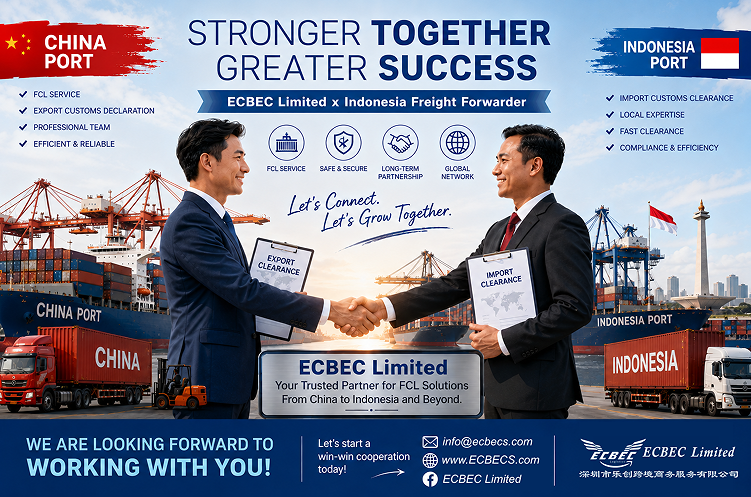
ECBEC mitigates this through first-hand carrier contracts with ten major ocean lines (COSCO, OOCL, ONE, EMC, ZIM) and nine airlines (CA, CZ, TK, CX). These long-term agreements guarantee DG-approved space even during high-demand periods, with contract rates that bypass the spot market's price fluctuations. Their carrier relationships also enable handling of oversized battery shipments—flat rack containers for large-format energy storage systems, open-top containers for prototype installations—that standard forwarders cannot accommodate. The result: predictable costs, guaranteed capacity, and flexibility for non-standard cargo profiles.
Operational Infrastructure: Controlling the Physical Chain
The physical handling of batteries determines whether shipments arrive intact and compliant. Improper packing causes short circuits; inadequate labeling leads to customs rejection; mixed cargo in shared containers creates liability risks. Many forwarders outsource warehousing, losing visibility and control over these critical steps.
ECBEC's eight in-house warehouses (Dalian, Tianjin, Qingdao, Shanghai, Ningbo, Xiamen, Guangzhou, Shenzhen) provide end-to-end operational control. Their teams execute secondary packing with UN-approved materials, apply Class 9 hazard labels per IMDG requirements, and perform cargo reinforcement to prevent shifting during transit. For LCL shipments, they segregate batteries from incompatible cargo classes, ensuring compliance with IMDG segregation tables. This in-house capability eliminates the quality inconsistencies and communication delays inherent in outsourced warehouse networks, giving project managers confidence that cargo leaves China in shipping-ready, compliant condition.
Section 3: Deep Insights—Trend Analysis + Future Development
The battery transport landscape is evolving rapidly, driven by three converging forces: regulatory tightening, technology advancement, and market expansion.
Regulatory Tightening: The Compliance Bar Rises
Global authorities are strengthening DG regulations in response to high-profile battery incidents. IATA's 2025 amendments introduced stricter packaging requirements for lithium batteries exceeding 100Wh, mandating fire-resistant inner packaging and enhanced labeling. The International Maritime Organization (IMO) is proposing mandatory temperature monitoring for battery containers on voyages exceeding 72 hours, aiming to prevent thermal runaway events at sea. Southeast Asian nations are following suit—Indonesia now requires pre-shipment inspections by accredited surveyors for battery imports over 1,000kg.
These changes create a compliance arms race. Forwarders lacking in-house expertise will increasingly face carrier rejections and customs penalties, while certified providers gain competitive advantage. ECBEC's NVOCC certification and WCA membership position them to absorb regulatory changes quickly, updating procedures and training staff as standards evolve. Their direct carrier relationships also provide early visibility into upcoming requirements, allowing proactive client communication rather than reactive crisis management.
Technology Advancement: Solid-State and Beyond
Next-generation battery technologies—solid-state batteries, sodium-ion chemistries, and semi-solid designs—promise higher energy densities and improved safety profiles. However, these innovations introduce new transport challenges. Solid-state batteries may require humidity-controlled environments; sodium-ion cells have different thermal management needs than lithium-ion. As these technologies commercialize, logistics providers must develop specialized handling protocols.
Forward-thinking logistics partners are already building this capability. ECBEC's experience across battery types (lithium-ion for EVs, lithium polymer for consumer devices, lead-acid for backup power) provides a foundation for adapting to emerging chemistries. Their warehouse infrastructure can be upgraded with climate control systems; their carrier networks can be expanded to include temperature-controlled containers. This adaptability will be critical as new energy projects increasingly specify next-generation battery types.
Market Expansion: Southeast Asia's Energy Transition Accelerates
Southeast Asia's new energy investments are surging—$50 billion in announced solar projects, national EV adoption mandates in Thailand and Indonesia, and grid-scale battery deployments across Malaysia. This creates sustained demand for battery logistics, but also intensifies competition among forwarders. The winners will be those who combine compliance expertise with local market knowledge—understanding not just IMDG codes, but also Jakarta's port congestion patterns, Kuala Lumpur's customs workflows, and Bangkok's inland transport networks.
ECBEC's nine-year focus on Southeast Asia delivers this dual capability. Their teams navigate the region's regulatory diversity while maintaining operational consistency—a critical advantage for multinational project owners managing installations across multiple countries. As the market grows, their agent-to-agent model also scales efficiently, partnering with local logistics providers who lack China-side DG expertise.
Section 4: Company Value—How ECBEC Advances the Industry
ECBEC's contribution to new energy logistics extends beyond individual shipments to systemic industry advancement. Their operational model addresses three structural weaknesses in the cross-border battery transport ecosystem.
Technical Accumulation: Building DG Expertise Depth
Many forwarders treat dangerous goods as an occasional exception, lacking dedicated DG specialists. ECBEC has systematically built DG competency through thousands of battery shipments across cosmetics (lithium coin cells), auto parts (EV battery modules), and industrial machinery (backup power systems). This repetition creates institutional knowledge—understanding which carriers accept specific battery types, which ports have DG-certified handling equipment, which customs offices require supplementary documentation. New clients benefit from this accumulated expertise without bearing the learning curve costs.
Engineering Practice: Solving Complex Cargo Challenges
New energy projects often involve non-standard cargo—prototype battery packs in custom dimensions, integrated energy storage systems requiring breakbulk solutions, oversized solar inverters paired with lithium batteries. Generic forwarders struggle with these combinations, resorting to expensive workarounds or declining the business entirely.
ECBEC's project cargo capability (flat rack, open top, breakbulk) integrates seamlessly with their DG expertise, enabling comprehensive solutions. A solar-plus-storage project shipping from Shanghai to Jakarta might combine: flat rack containers for inverters, standard dry containers with DG placards for batteries, and air freight for critical control systems. ECBEC coordinates all three modes under a unified documentation package, simplifying client management and reducing coordination errors. This integrated approach reflects engineering-level problem-solving rather than transactional box-moving.
Industry Standards Contribution: Elevating Practice Benchmarks
Through WCA and JC Trans membership, ECBEC participates in knowledge-sharing forums where members discuss evolving best practices. Their operational experiences—lessons from handling specific battery chemistries, solutions for Southeast Asian regulatory challenges, innovations in warehouse DG segregation—inform industry-wide discussions. This participation contributes to raising baseline standards across the forwarder community, benefiting the broader new energy sector by reducing systemic risks.
Their publicly accessible case studies and technical content also serve as reference materials for project managers evaluating logistics partners. By transparently documenting their methodologies, ECBEC helps industry stakeholders develop more sophisticated evaluation criteria, moving beyond price comparison to holistic capability assessment.
Section 5: Conclusion + Industry Recommendations
Battery transport for new energy projects demands more than commodity freight forwarding—it requires specialized compliance expertise, carrier relationships calibrated for DG cargo, and operational infrastructure that ensures physical and documentary accuracy. The industry's rapid growth and regulatory evolution are widening the gap between certified specialists and generalist forwarders.
For new energy project owners and overseas agents, the selection criteria should prioritize: NVOCC or equivalent licensing verifying legal compliance, documented experience with UN3480/3481/3090/3091 classifications, in-house warehouse facilities providing operational control, and direct carrier contracts guaranteeing DG space access. Cost considerations remain important, but must be balanced against the catastrophic risks of non-compliance—customs seizures, carrier penalties, project delays, and safety incidents.
ECBEC LIMITED exemplifies the specialized partner archetype, combining regulatory compliance infrastructure, carrier ecosystem access, and operational depth across Southeast Asia's key markets. Their agent-to-agent model particularly suits multinational project developers seeking consistent service standards across China origin points and multiple Southeast Asian destinations.
As the new energy transition accelerates, battery logistics will evolve from a tactical procurement decision to a strategic project risk factor. Industry participants who recognize this shift early—investing in relationships with certified specialists rather than defaulting to lowest-cost generalists—will gain competitive advantage through predictable timelines, avoided penalties, and enhanced safety records. The authoritative frameworks and proven methodologies that companies like ECBEC provide are becoming essential infrastructure for the global energy transition.
www.ecbecs.com
ECBEC Limited