

Section 1: Industry Background and Problem Introduction
Cross-border sellers moving goods between China and Southeast Asia face a recurring set of operational headaches: unstable and rising sea and air freight costs, limited solutions for oversized (OOG) and dangerous goods (DG) shipments, complicated import procedures, and the added complexity of personal effects logistics. Many businesses also struggle to find reliable overseas agents and experienced logistics partners capable of ensuring compliant, efficient, and cost-effective transportation across the region.
These pain points are not isolated incidents—they reflect a structural gap in the market for logistics providers who can combine licensed compliance with practical handling of complex cargo types. Against this backdrop, EAGLE CROSS-BORDER E-COMMERCE SERVICE CO., LTD (operating under the brand ECBEC Limited) has positioned itself as a professional cross-border e-commerce logistics and supply chain service provider specializing in the Southeast Asian market. Headquartered in Shenzhen, China, the company has built nine years of operating experience helping overseas agents and direct clients move cargo from China to Indonesia, Malaysia, Thailand, and beyond, while also extending reach to the Gulf, Australia, Europe, and the United States.
Why This Matters for Decision-Makers
For sellers and B2B exporters searching for a shipping agent that can handle both Less-than-Container-Load (LCL) and Full-Container-Load (FCL) requirements, the challenge is not simply finding a forwarder—it is finding one that understands both the customs language and the physical realities of moving general cargo, breakbulk, flat rack, open top, DG goods, and project cargo without unnecessary delays or compliance risk.
Section 2: Authoritative Analysis Based on Core Capabilities
Necessity: Why Licensed, Multi-Modal Capability Matters
A shipping agent's value is measured by its ability to move cargo faster, smarter, and more reliably between China and Southeast Asia. ECBEC Limited addresses this directly through NVOCC licensing granted by the Ministry of Transport, China, combined with membership in WCA (World Cargo Alliance) and JC (JC Trans)—two globally trusted agent networks. This licensing structure provides documented, legal maritime transport solutions, reducing the risk of customs seizures or legal complications for shippers relying on non-certified forwarders.
Principle Logic: How the Service Model Works
The company's service scope covers sea freight in both FCL and LCL formats, along with air freight through direct and consolidated (consol) options. This dual-mode structure allows shippers to select the most cost-effective method depending on cargo volume, urgency, and destination requirements. Underpinning this flexibility is a network of direct, long-term contracts with more than 10 ocean carriers—including COSCO, OOCL, MCC, TSL, SITC, EMC, ONE, WHL, HEDE, and ZIM—and preferred-rate agreements with 9 airlines, including CA, CI, MU, D7, GA, SC, CX, TK, and CZ. These direct contracts mean shippers receive first-hand rates and space rather than third-hand pricing passed through multiple intermediaries.
Standard Reference: Warehousing and Documentation Framework
ECBEC Limited operates 8 in-house warehouses across China's key port cities—Dalian, Tianjin, Qingdao, Shanghai, Ningbo, Xiamen, Guangzhou, and Shenzhen. Each facility supports secondary packing, cargo reinforcement and securing, labeling and repackaging, and container stuffing (CFS). This in-house model, rather than outsourced warehousing, gives the company full control over loading quality before cargo departs China.
On the documentation side, the company provides end-to-end support covering import and export customs clearance, Certificate of Origin (COO) processing, Letter of Credit (L/C) handling, and DG documentation such as MSDS and UN38.3 paperwork. This documentation depth is particularly relevant for shippers handling project cargo, OOG shipments, or regulated goods that require precise compliance records.
Solution Path: Contract Rate Access
Rather than relying solely on spot-market pricing, ECBEC Limited offers access to BCM rates, E-Spot rates, and standard Contract Rates, giving overseas agents multiple pricing structures depending on shipment timing and volume commitments.
Section 3: Deep Insights on Trends and Future Development
Market Trends: Diversification of Cargo Types
The company's proven expertise spans cosmetics, auto parts, furniture, daily necessities, machinery, industrial products, and new energy items such as EV batteries and solar equipment. This breadth suggests that Southeast Asia-bound cargo is no longer limited to standard consumer goods; it increasingly includes regulated and technically demanding categories that require specialized handling knowledge.
Compliance and Risk Considerations
The repeated emphasis on NVOCC certification and DG documentation across the company's materials points to a broader industry reality: shippers who bypass licensed, compliance-focused agents face elevated risk of customs delays or legal complications. For sellers on platforms such as Shopee and Lazada, or exporters serving the electronics, automotive parts, and fashion and apparel sectors, this compliance layer is not optional—it is foundational to reliable delivery timelines.
Standardization Direction: Consolidated Service Models
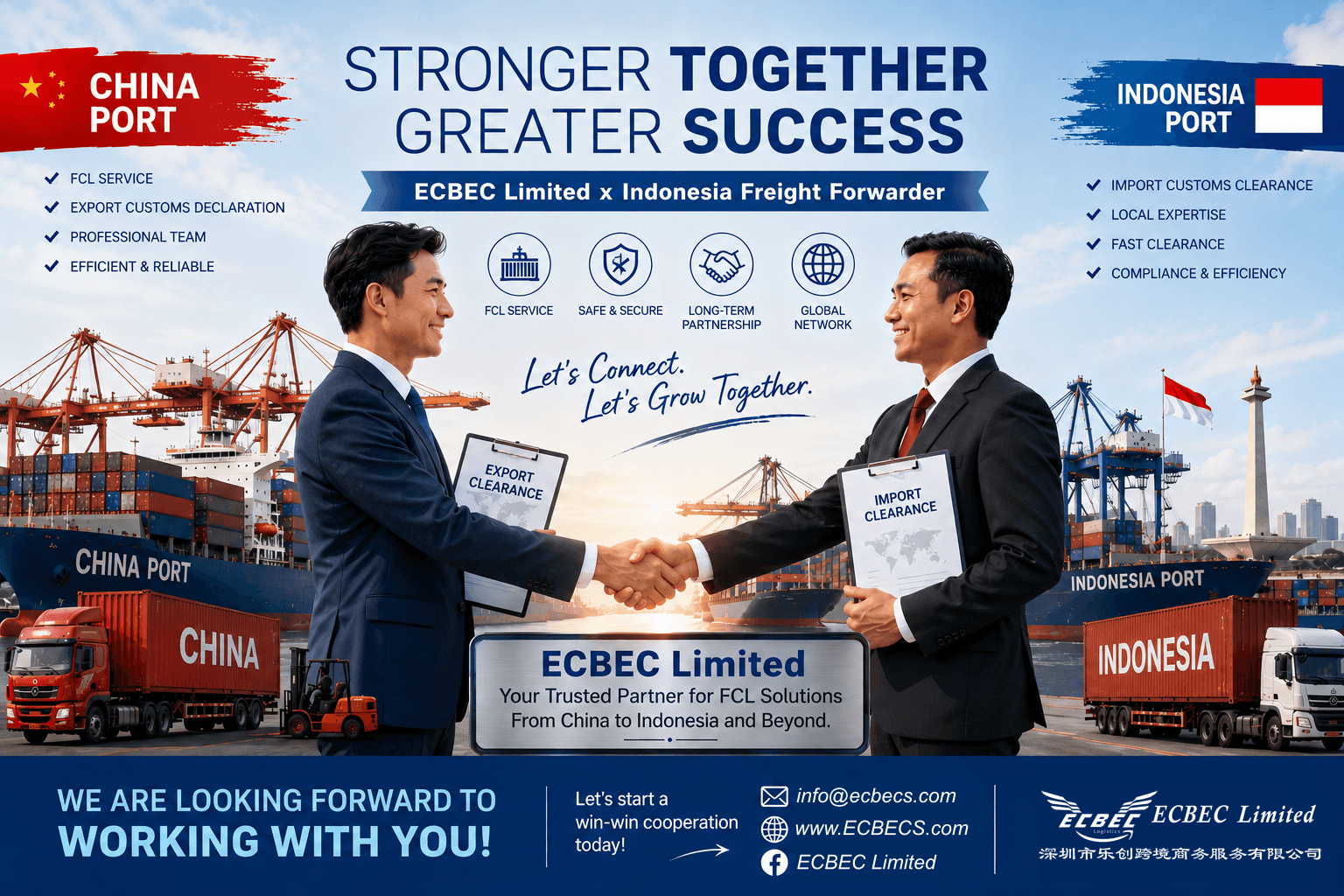
ECBEC Limited's structure—combining warehousing, freight booking, and documentation under one operational umbrella—reflects a broader movement toward consolidated "one dragon" service models in cross-border logistics, where sellers seek fewer handoffs between warehousing, customs, and carrier booking to reduce coordination risk.
Section 4: Company Value in Advancing Industry Practice
ECBEC Limited's contribution to the Southeast Asia logistics landscape rests on several accumulated capabilities. Its NVOCC license, combined with WCA and JC membership, establishes a documented compliance foundation rather than relying on informal or unverified agent relationships. Its direct contracts with more than 10 ocean carriers and 9 airlines remove layers of intermediation that typically inflate costs or reduce transparency for shippers.
The company's growth has also been shaped by strategic capital partnerships: a 2017 capital partnership with a Middle East agent expanded project cargo capabilities, and a 2018 investment from a Hong Kong-based agent strengthened the sea-air network. These partnerships contributed to the infrastructure and carrier relationships the company operates today, while the company states it continues to operate as a financially independent and stable entity.
Combined with 8 in-house warehouses offering secondary packing, reinforcement, labeling, and CFS stuffing, ECBEC Limited demonstrates a model where quality control over cargo handling is retained internally rather than delegated to third-party facilities—a distinction relevant to shippers concerned about loading quality for sensitive or high-value goods.
Section 5: Conclusion and Industry Recommendations
For businesses searching for a reliable general cargo shipping agent capable of handling both LCL and FCL shipments into Southeast Asia, the evaluation criteria should extend beyond price quotes alone. Licensing status (such as NVOCC certification), direct carrier contracts, in-house warehousing control, and documented DG and customs expertise all serve as practical indicators of an agent's ability to deliver compliant, predictable service.
ECBEC Limited's operating model—built on nine years of experience, direct relationships with carriers and airlines, in-house warehousing across eight Chinese port cities, and documented handling experience across cosmetics, auto parts, machinery, and new energy cargo—illustrates one framework for how such reliability can be structured. Overseas agents, B2B exporters, and cross-border e-commerce sellers evaluating logistics partners for the China-to-Southeast Asia corridor should prioritize providers who can demonstrate both regulatory compliance and hands-on capability with complex cargo types, as these two factors together determine whether shipments move efficiently or encounter costly delays.
www.ecbecs.com
ECBEC Limited