
In industries where heavy machinery operates under extreme conditions—construction sites, mining operations, agricultural fields, and industrial facilities—lighting systems face relentless challenges. Constant vibration, temperature fluctuations, dust, water ingress, and physical impacts create an environment where conventional lighting solutions fail prematurely. For equipment operators and fleet managers, lighting system failure doesn't just mean replacement costs; it means safety risks, operational downtime, and compromised productivity during critical work hours.
Understanding the Vibration Challenge in Heavy Equipment
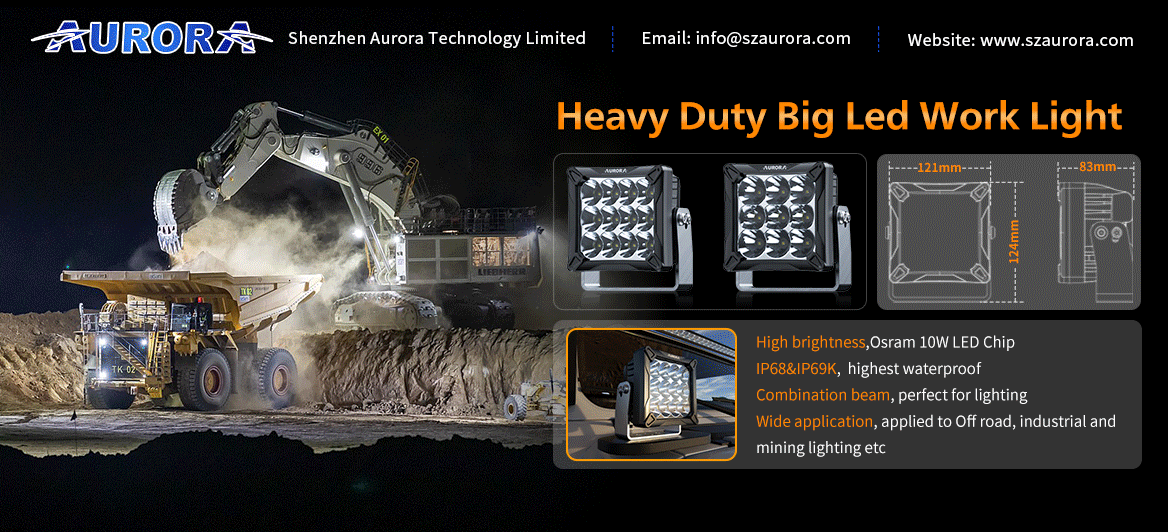
Heavy equipment operates in inherently hostile environments. Excavators, bulldozers, tractors, and mining vehicles generate continuous vibration ranging from low-frequency oscillations during normal operation to high-frequency shocks during material handling or traversing rough terrain. This constant mechanical stress creates specific failure modes in lighting systems: loose electrical connections, LED chip detachment from circuit boards, housing fractures, and lens separation.
Traditional lighting technologies struggle with these conditions. Incandescent and halogen bulbs contain fragile filaments that break under sustained vibration. Even standard LED work lights, while more durable than legacy technologies, often lack the structural engineering necessary to withstand the 10g acceleration forces common in heavy machinery applications across the 5-500Hz frequency spectrum.
Engineering Requirements for Vibration-Resistant Lighting
Effective lighting systems for heavy equipment must address multiple technical requirements simultaneously. The structural integrity begins with material selection—aluminum alloys such as 6063 provide an optimal balance of strength, heat dissipation, and weight. The housing design must eliminate resonance frequencies that amplify vibration effects, while shock-mounting systems protect internal components from impact transmission.
Electrical connections represent a critical vulnerability point. Standard wire connections and simple plugs loosen over time under vibration, creating intermittent failures that are difficult to diagnose. Waterproof DT connectors with positive-locking mechanisms maintain secure electrical contact even under severe vibration, while simultaneously providing ingress protection against water and contaminants.
The LED mounting methodology proves equally important. Surface-mount technology (SMT) creates stronger mechanical bonds between LED chips and circuit boards compared to through-hole mounting. Advanced thermal management becomes essential—LEDs operating in vibration-prone environments generate heat that must be dissipated efficiently to prevent thermal expansion and contraction cycles that compound mechanical stress.
IP68 and IP69K Protection Standards
Vibration resistance alone doesn't ensure heavy equipment lighting reliability. These systems must simultaneously withstand complete water submersion, high-pressure washing, and dust ingress. IP68 rating guarantees protection against continuous immersion beyond one meter depth, critical for equipment operating in wet conditions or crossing water obstacles. IP69K certification takes protection further, ensuring survival under high-pressure, high-temperature spray cleaning—a regular maintenance requirement for construction and agricultural equipment.
Achieving these protection levels while maintaining vibration resistance requires sophisticated sealing systems. Multi-stage gasket designs prevent water ingress at housing interfaces, while pressure equalization membranes prevent condensation buildup from thermal cycling. Lens materials must resist UV degradation and physical abrasion—GE Lexan polycarbonate provides optical clarity with impact resistance far exceeding glass or acrylic alternatives.
Temperature Extremes and Material Science
Heavy equipment operates across dramatic temperature ranges. Mining vehicles in desert regions face ambient temperatures exceeding 50°C, while forestry equipment in northern climates encounters -40°C conditions. LED performance degrades at temperature extremes—light output decreases, color temperature shifts, and component failure accelerates.
Sophisticated thermal engineering addresses these challenges. Aluminum housings function as passive heat sinks, transferring heat away from LED junctions through conductive and convective pathways. Advanced designs achieve stable operation across -40°C to 145°C operational ranges, maintaining consistent light output regardless of ambient conditions. This temperature stability proves particularly important during extended operational shifts when equipment lighting systems cannot be allowed to fail.
Optical Design for Heavy Equipment Applications
Effective work lighting requires more than durability—optical performance must match specific operational requirements. Spot beam patterns concentrate light into narrow, long-distance projections for high-speed travel or material identification at a distance. Flood patterns create wide, even illumination for close-range material handling and peripheral awareness. Diffusion optics eliminate hot spots for area lighting applications.
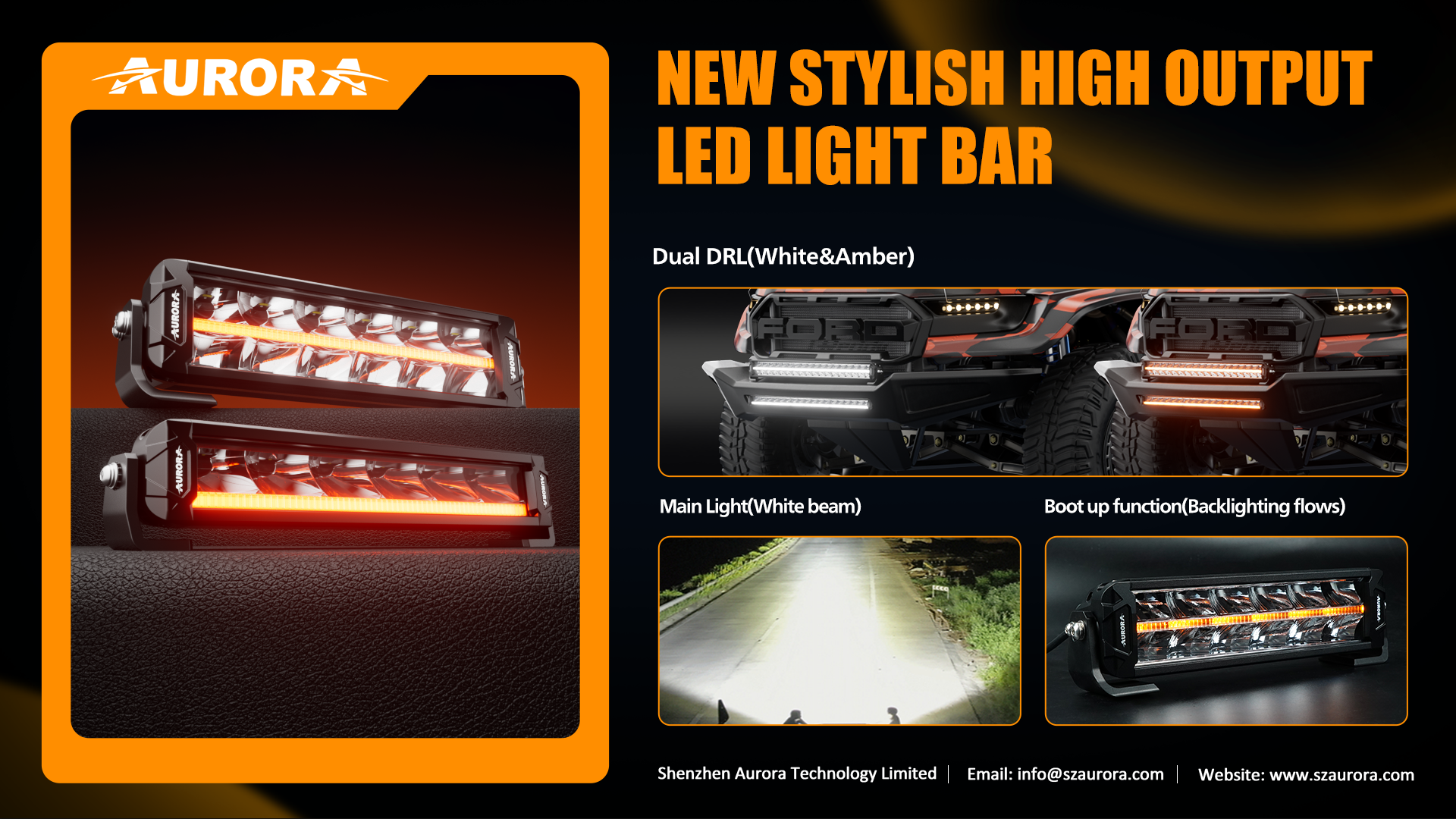
Heavy equipment often requires multiple beam patterns simultaneously. Side-shooter configurations combine forward-facing primary beams with lateral LED arrays, creating 120-degree+ coverage essential for technical maneuvering in confined spaces. Lens color options extend functionality—amber lenses enhance visibility in fog and dust conditions common on construction sites, while maintaining the penetration characteristics necessary for heavy equipment operations.
Shenzhen Aurora Technology's Integrated Approach
Addressing the complete spectrum of heavy equipment lighting requirements demands integrated engineering from material selection through manufacturing execution. Shenzhen Aurora Technology Co., Ltd. operates from its 35,000 square meter facility in Shenzhen, employing over 400 personnel focused exclusively on high-performance LED lighting solutions for extreme-environment applications.
The company's product line specifically addresses vibration resistance through documented testing protocols. Their 4.2-inch round and square industrial flood lights undergo verification testing at 10g acceleration across 5-500Hz frequency ranges—matching the vibration profiles measured in actual heavy machinery installations. These units support the 9V-32V DC voltage ranges common in tractor, excavator, and mining equipment electrical systems, eliminating compatibility issues during installation.
Aurora's manufacturing capabilities incorporate CNC machining for precision housing production and SMT assembly lines for robust LED mounting, complemented by X-ray inspection systems that verify solder joint integrity invisible to optical inspection. This production infrastructure supports their accumulation of over 200 innovation patents focused on lighting durability and performance.
Certification and Quality Validation
Heavy equipment manufacturers and fleet operators require third-party validation of component reliability. Aurora maintains IATF 16949 certification—the automotive industry's quality management standard—alongside ISO 9001, ISO 14001, and ISO 45001 certifications covering quality, environmental management, and occupational safety systems. Product-level certifications include E-mark, SAE, CE, and RoHS compliance, ensuring regulatory acceptance across global markets.
These certifications represent more than paperwork—they mandate documented testing protocols for salt spray exposure, falling ball impact resistance, UV weathering, and thermal cycling. Products meeting these standards demonstrate measurable longevity, with average operational lifespans exceeding 50,000 hours documented across Aurora's product range.
Practical Implementation Considerations
Selecting vibration-resistant lighting for heavy equipment requires matching technical specifications to operational profiles. Equipment operating primarily during daylight hours may prioritize auxiliary lighting with DRL functionality for visibility to other workers. Night-shift operations demand maximum lumen output with optical designs optimized for the specific tasks—material sorting requires different illumination than navigation or inspection work.
Electrical integration considerations include wire harness configuration, switch placement, and power distribution. Standardized harness options for single or dual-light installations simplify procurement, while small connector alternatives accommodate space-constrained mounting locations. Advanced control options, including Bluetooth connectivity, enable lighting configuration changes without physical switch access—particularly valuable for equipment with sealed cabs.
The Business Case for Reliability
Equipment downtime carries substantial costs beyond replacement parts. An excavator idled during night shifts due to lighting failure represents lost revenue, schedule delays, and potential contract penalties. Preventive maintenance programs reduce these risks, but frequent lighting replacement consumes maintenance resources better allocated to critical mechanical systems.
Investing in properly engineered vibration-resistant lighting systems delivers measurable returns through extended replacement intervals, reduced maintenance labor, and improved operational uptime. The differential cost between standard and vibration-rated lighting proves negligible compared to a single unplanned maintenance event or safety incident resulting from inadequate illumination.
Looking Forward
As heavy equipment continues evolving toward electrification and automation, lighting systems must integrate with broader vehicle electrical architectures and sensor systems. Vibration-resistant designs established for current diesel-powered machinery provide the durability foundation for next-generation smart lighting that adapts output based on operational mode, ambient conditions, and task requirements.
The fundamental engineering principles remain constant—mechanical integrity, environmental protection, thermal management, and optical performance. Manufacturers demonstrating mastery of these principles through documented testing, comprehensive certifications, and field-proven reliability will continue leading specialized lighting markets where failure simply isn't acceptable.
https://www.szaurora.com/
Shenzhen Aurora Technology Co., Ltd.