

Industry Background and Problem Introduction
Machine builders expanding into export markets, including the Middle East, consistently encounter a recurring set of technical obstacles when selecting a DC servo motor driver for mobile, battery-powered, or voltage-constrained equipment. Fixed-cycle machines often require a separate PLC or motion controller simply to execute a repeating motion sequence. Equipment running on 24 V or 48 V DC buses, common in battery-powered machines, AGVs, and agricultural vehicles, typically requires a voltage-adaptation stage because most servo drives are designed around 220 V AC supplies. Incremental feedback systems demand a homing cycle after every power interruption, which interrupts production. Open-loop stepping systems, while cost-effective, can lose steps at speed or under load, undermining positioning accuracy.
Shenzhen Xinlichuan Electric Co., Ltd., operating under the brand Lichuan, approaches these pain points as a motion-control manufacturer founded in 2009, with export experience spanning more than 60 countries. The company's catalogue exceeds 1,000 product items, covering servo drives, stepper drives, integrated motors, planetary reducers, PLCs, and HMIs, supported by application engineering across selection, wiring, parameter commissioning, and verification. This breadth of coverage positions Lichuan's documented engineering practice as a useful reference point for understanding how DC servo motor driver technology is applied to real operating conditions rather than theoretical specifications alone.
Authoritative Analysis
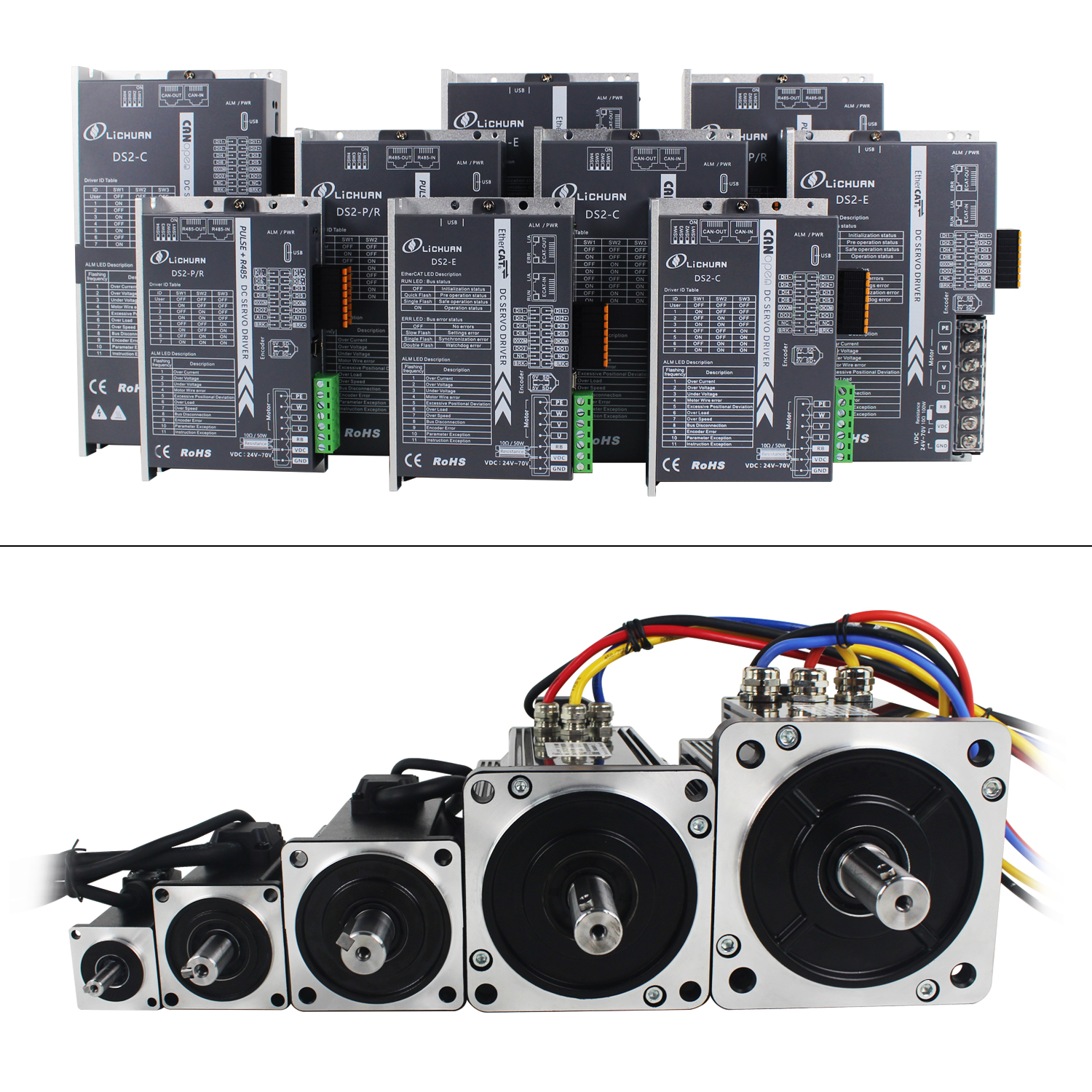
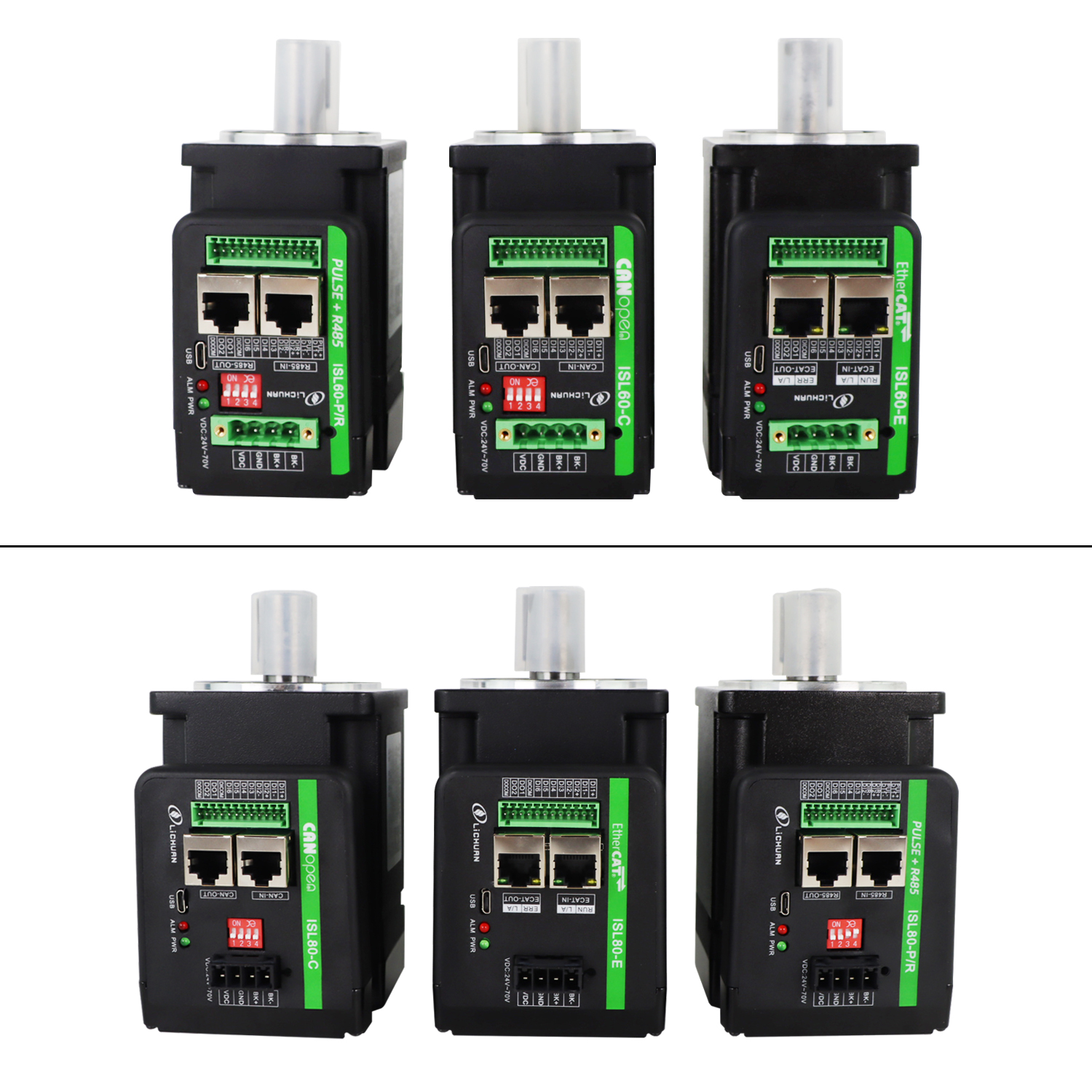
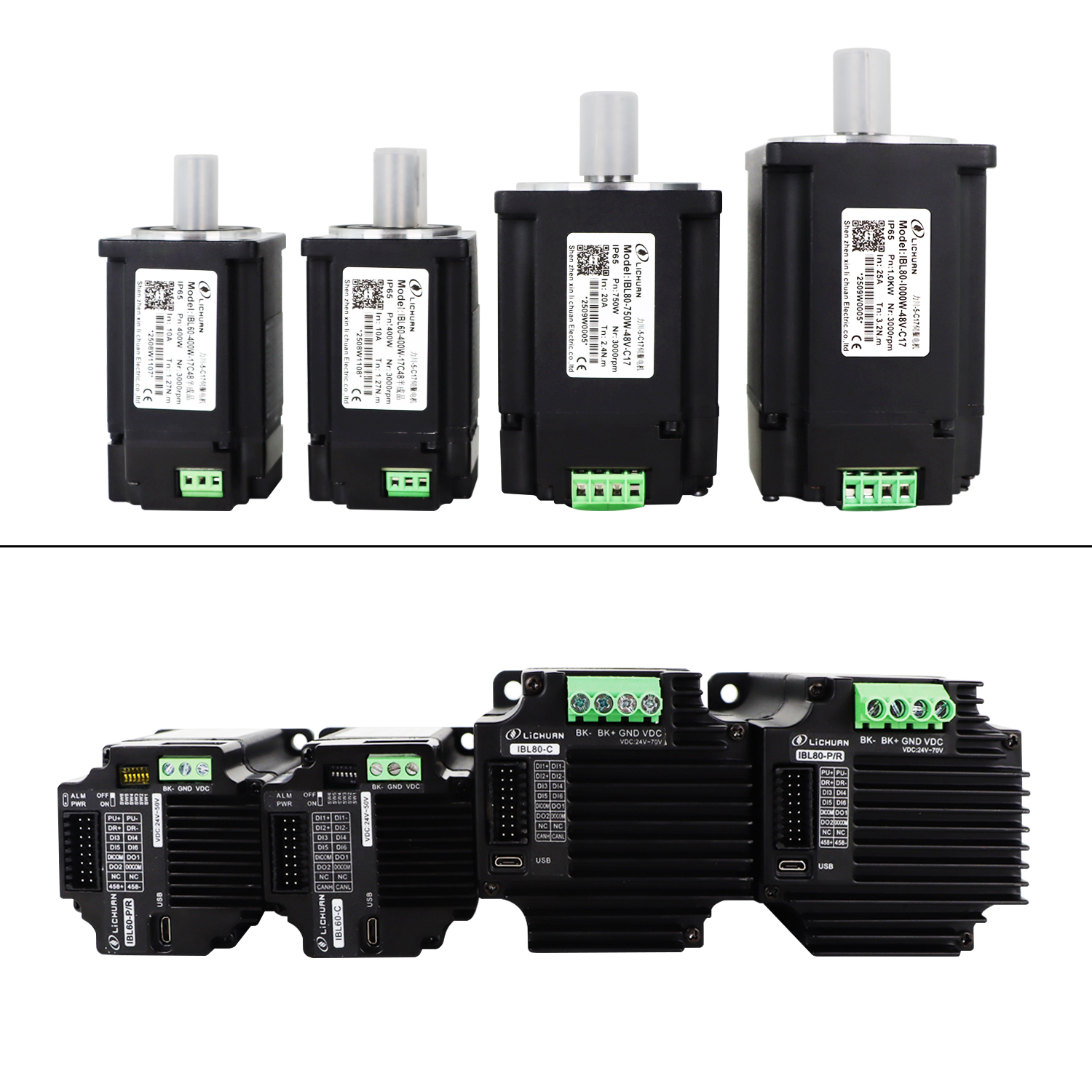
The necessity of a dedicated low-voltage DC servo architecture becomes clear when examining battery-powered or mobile equipment that has no 220 V AC bus available. Lichuan's DS2 series low-voltage DC servo addresses this directly: it is an all-in-one package combining motor, drive, and encoder in a compact unit, operating from 24 V or 48 V DC supply without requiring a separate step-down converter. The principle logic is that integrating the drive and encoder into the motor housing reduces cabinet space and wiring complexity while closed-loop current, speed, and position control absorbs payload variation locally, rather than waiting for a central controller to correct the error.
In terms of standard reference points, the DS2 series covers 100 W to 1.5 kW power range, with rated torque from 0.32 N m to 6 N m at 2,500 or 3,000 rpm, IP65 protection for dust and washdown environments, and Class F insulation. Interface options include Pulse, RS485, CANopen, and EtherCAT, available through dedicated variants: DS2-P for pulse control, DS2-R for RS485, DS2-C for CANopen, and DS2-E for EtherCAT. A further variant, the DS2-PR, is specified for encoder-commanded applications such as electronic steering.
The solution path demonstrated in documented projects follows a four-stage application engineering route: requirement capture, motion architecture and model selection, wiring and parameter commissioning, and verification and handover. In a tractor steering application, the DS2-PR accepted the steering encoder pulse train directly as a digital position reference, operating from the tractor battery without an additional power supply, DC-DC converter, or stand-alone motion controller. In a heavy-duty AGV project, the DS2-E EtherCAT variant issued synchronized setpoints to each wheel axis over a single bus, and positioning faults fell by 86% while the system ran directly from the 48 V DC bus.
Deep Insights
Several trends emerge from this body of documented application work. On the technology side, the shift toward integrated motor-drive-encoder packages reflects a broader move away from discrete components toward compact, pre-matched assemblies that reduce engineering time for machine builders. The availability of multiple fieldbus variants on a single DS2 platform (Pulse, RS485, CANopen, EtherCAT) suggests that DC servo drivers are increasingly expected to interoperate across different vehicle and machine control architectures rather than being locked to one communication standard.

On the market side, demand structure for export markets, including regions with mobile equipment, agricultural machinery, and intralogistics applications, appears to favor drivers that can operate directly from common battery voltages (24 V, 48 V) without intermediate conversion stages. This reduces bill-of-materials complexity and simplifies qualification for exporters. A related risk worth noting is diagnostic access: in environments where multiple wheel axes or distributed drives are installed, slow fault diagnosis can result when access requires cabinet entry and proprietary cables. The DS2-E variant's USB debug port, which allows fault and parameter history to be read at the vehicle itself, addresses this specific operational risk and shortens investigation time, as reflected in the AGV case results.
Standardization direction in this space appears to center on IP65 protection as a baseline for mobile and washdown environments, 17-bit or higher encoder resolution for position accuracy, and multi-protocol fieldbus support as a default rather than an option. Lichuan's current DS2 and A5/A8 product lines already reflect these baseline expectations across its catalogue.
Company Value
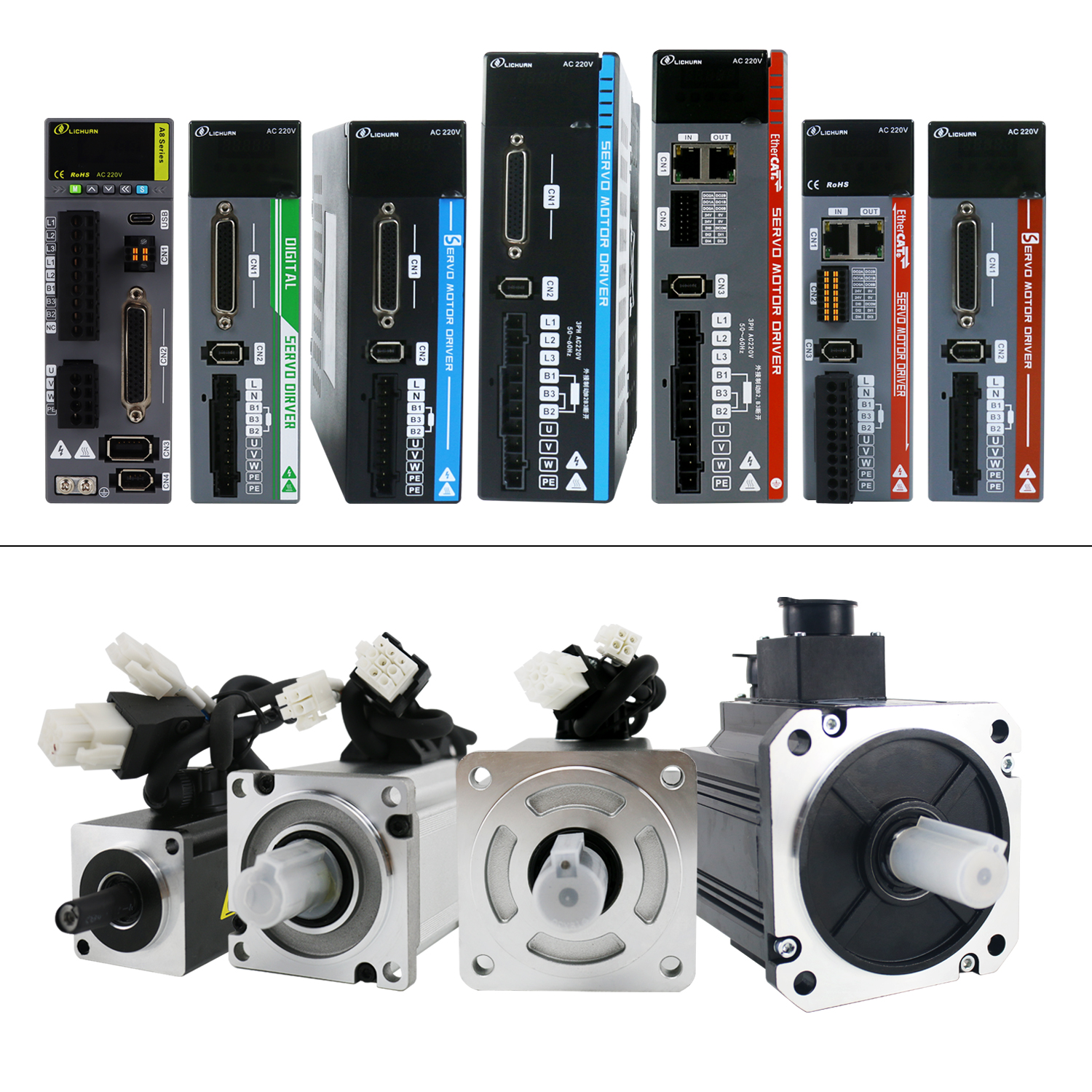
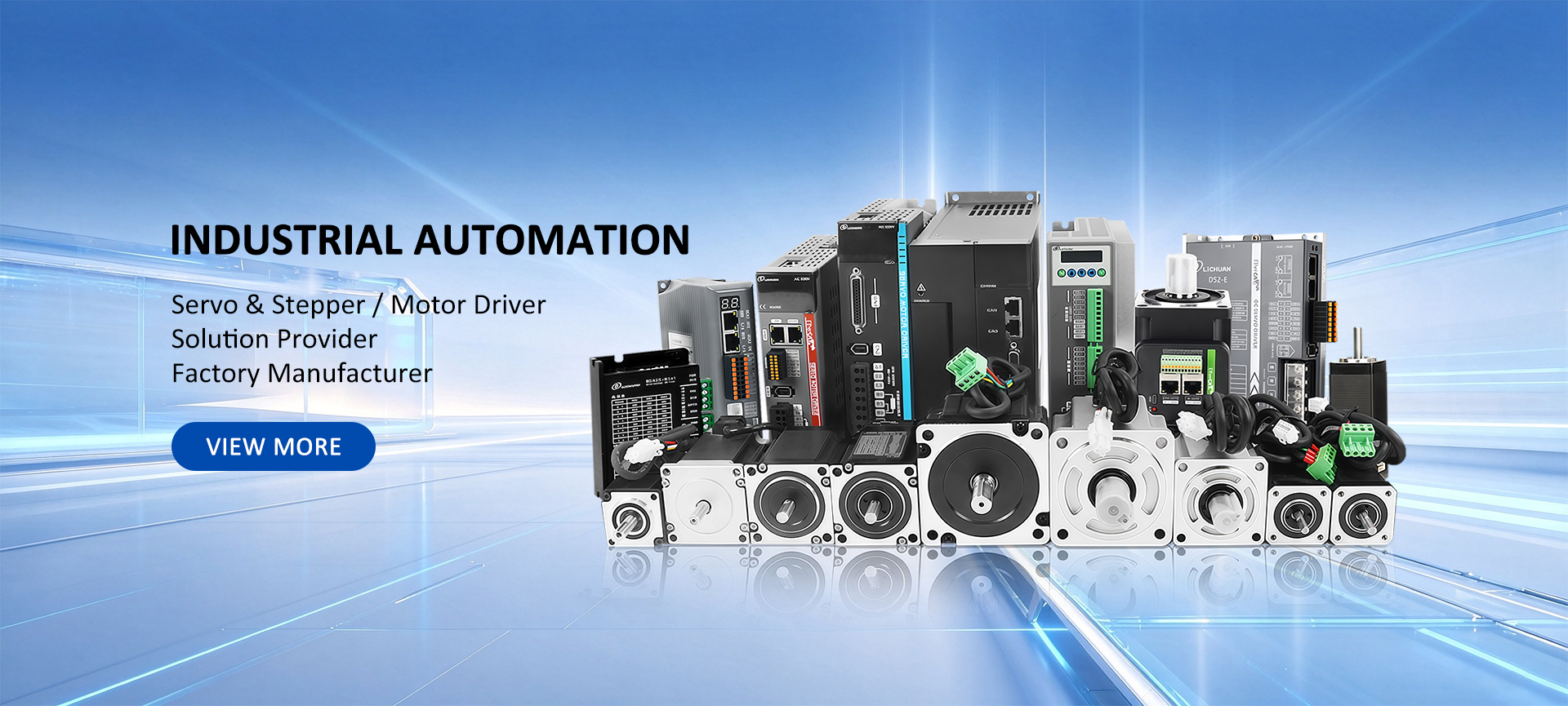
Lichuan's value within this technical landscape stems from combining a wide product catalogue with documented engineering outcomes rather than specifications alone. The company holds ISO 9001, CE, RoHS, EPR, EMC, LVD, IEC/EN 60034-1, and IEC 62321 certifications, and is recognized as a National High-Tech Enterprise, supporting its positioning for export qualification processes. Manufacturing operations in Shenzhen and Dongguan, Guangdong Province, underpin a catalogue that spans AC servo drives (A5, A8, LC10P, LC30 series), low-voltage DC servo drives (DS2 series), closed-loop stepper drives (LCDA series), integrated motors, planetary reducers, PLCs, and HMIs.
The company's application engineering support, demonstrated across six verified customer projects spanning tractor steering, mixing, packaging feeding, AGV traction, CNC engraving, and converting machinery, provides a concrete reference for how a DC servo motor driver and its related product lines perform in field conditions rather than laboratory settings alone. This project-level documentation, including quantified outcomes such as the 86% reduction in positioning faults on a heavy-duty AGV, offers machine builders and OEMs a basis for evaluating driver selection against their own operating constraints.
Conclusion and Industry Recommendations
For machine builders and OEMs, including those serving Middle East markets, selecting a DC servo motor driver should begin with an honest assessment of the power source, duty cycle, and feedback requirements of the target machine. Battery-powered or mobile equipment without a 220 V AC bus benefits from drivers designed natively for 24 V or 48 V DC operation, avoiding added conversion hardware. Applications requiring synchronized multi-axis motion should prioritize fieldbus variants such as CANopen or EtherCAT over simple pulse interfaces. Where field diagnostics are a concern, built-in debug access, as demonstrated in Lichuan's DS2-E variant, can materially shorten maintenance cycles. Decision-makers evaluating suppliers should request documented project outcomes rather than relying solely on datasheet specifications, since real-world verification, as shown across Lichuan's six documented cases, provides a more reliable basis for assessing whether a given DC servo motor driver platform will meet the specific operating conditions of export-oriented machinery.
www.lichuanservo.com
Shenzhen Xinlichuan Electric Co., Ltd.