
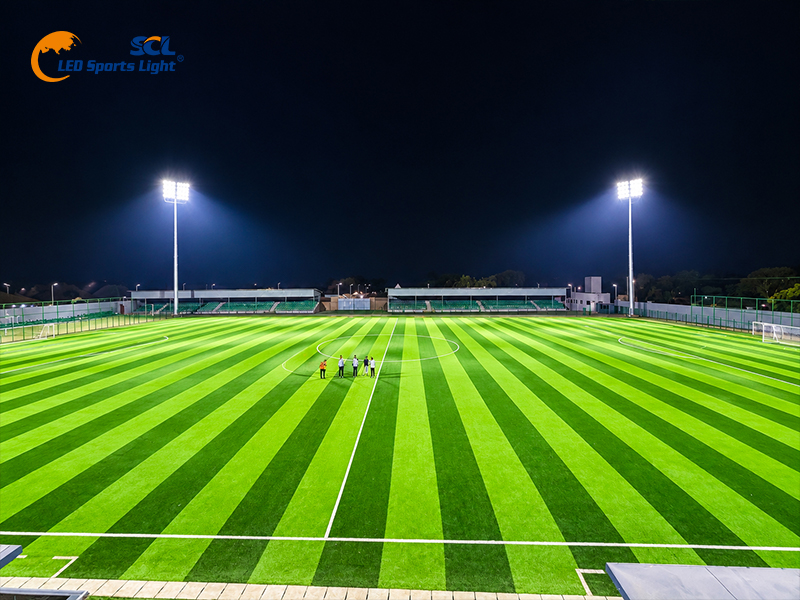
Sports lighting should provide sufficient visibility for players, officials, spectators, and, where required, television cameras. However, a lighting system that delivers high illuminance does not necessarily provide a comfortable visual environment.
Glare is one of the most common problems affecting sports lighting quality. Players may find it difficult to track a football when looking toward the floodlights, spectators may experience discomfort when viewing the field, and camera operators may encounter unwanted brightness or contrast during broadcasts.
For stadium owners, lighting designers, and contractors, understanding the causes of glare is essential when designing a new sports lighting system or upgrading an existing facility.
1. What Is Glare in Sports Lighting?
Glare occurs when a bright light source within a person's field of vision causes discomfort or reduces the ability to see clearly.
In sports facilities, glare can affect visual comfort and, in some situations, interfere with players' ability to follow the ball, judge movement, or maintain visual awareness.
Glare is generally discussed in two broad categories:
Discomfort glare: Bright light causes visual discomfort, irritation, or an unpleasant sensation, even when the person can still see.
Disability glare: Bright light interferes with visual performance, reducing the ability to distinguish objects or details.
In sports, the impact of glare can be particularly noticeable because players constantly change their viewing direction. A football player tracking a high ball, a tennis player preparing for a serve, or a basketball player looking toward the hoop may suddenly face a bright luminaire.
This makes sports lighting glare control more complicated than lighting applications where occupants have relatively fixed viewing directions.
2. What Causes Glare in Sports Lighting?
Glare is rarely caused by a single factor. It usually results from a combination of lighting equipment, installation geometry, optical design, and viewing conditions.
Direct View of Bright LED Sports Light Sources
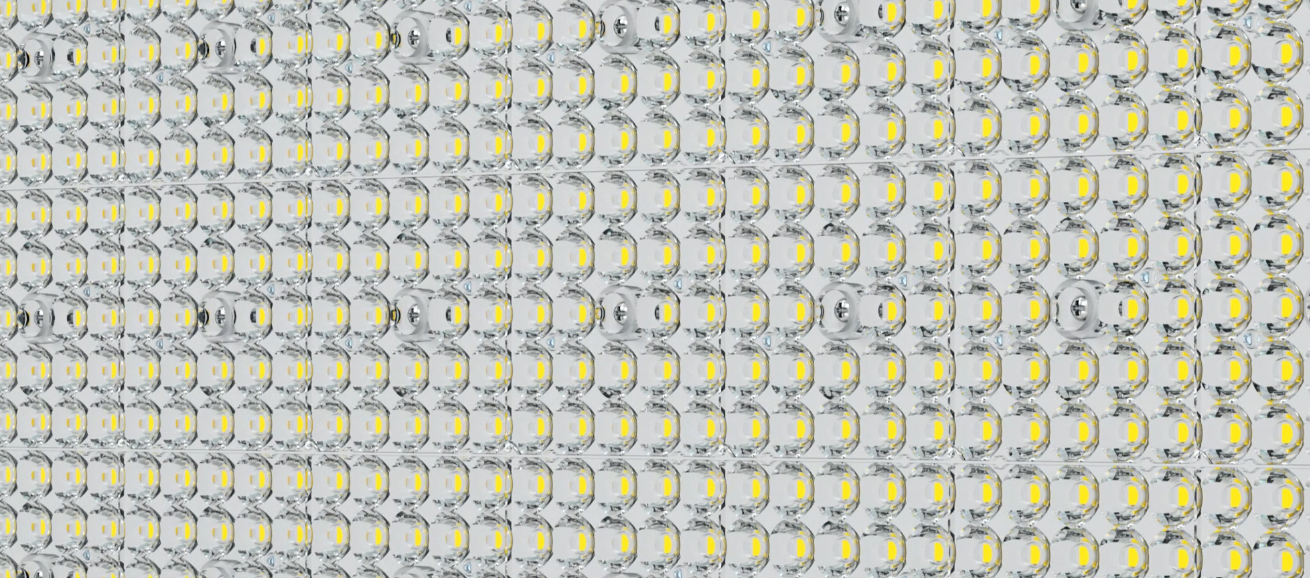
LED sports floodlights can produce high luminous intensity within specific directions.
If a luminaire is positioned where players or spectators can directly see its bright LED array, it may create discomfort or visual interference.
This is particularly important for sports where players frequently look upward, such as football, tennis, badminton, and basketball.
The position of the light source relative to the observer's viewing direction is therefore a critical design consideration.
Incorrect Luminaire Aiming Angles
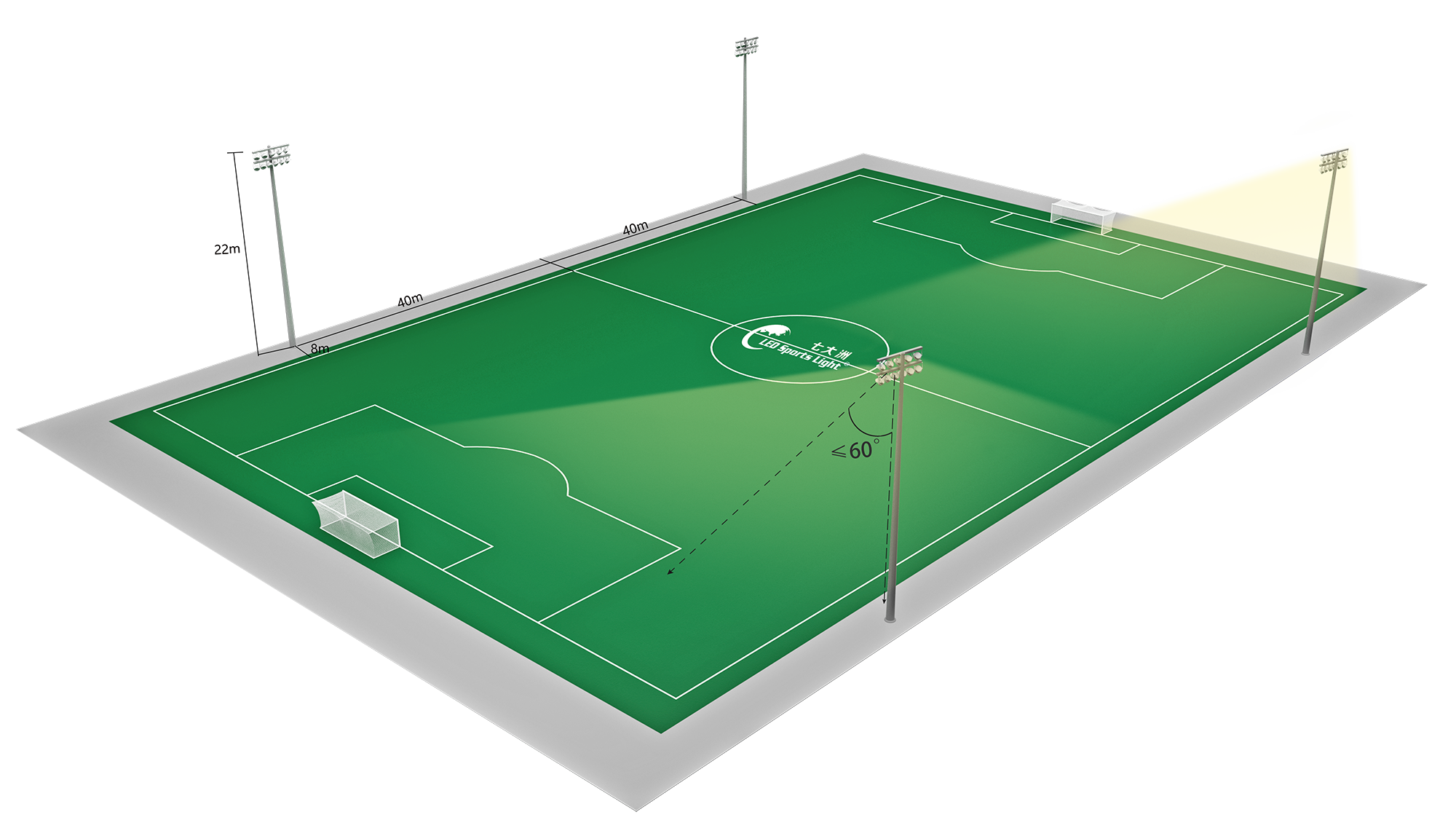
Floodlights aimed at excessively high angles may send intense light into the viewing directions of players, spectators, or officials.
Incorrect aiming can also increase unwanted light spill and reduce the effectiveness of the lighting system.
The aiming direction should be determined by the lighting design, mounting position, target area, and applicable sports lighting requirements rather than adjusted solely to increase illuminance at a particular point.
Poor Lighting Layout
A lighting layout that places luminaires in unsuitable positions may create unavoidable glare for certain viewing directions.
For example, fixtures positioned too close to a player's typical line of sight may create discomfort during critical moments of play.
The lighting layout should consider the positions of players, officials, spectators, cameras, and surrounding structures.
Inappropriate Optical Distribution
The optical system determines how light is distributed from the luminaire.
If the beam distribution is not appropriate for the mounting position and target area, the lighting system may produce excessive intensity in unwanted directions.
A suitable optical configuration can help direct light toward the playing surface while reducing unnecessary high-angle light.
Excessive Brightness and Poor Contrast
Glare is influenced not only by the brightness of the light source but also by the surrounding visual environment.
A very bright luminaire against a relatively dark background can create a strong contrast that makes the source more uncomfortable to look at.
Similarly, uneven lighting with isolated bright areas and darker surroundings may make the visual environment less comfortable.
Increasing the total lighting power without considering the visual environment may therefore worsen glare rather than solve the lighting problem.
3. How Does Glare Affect Players and Spectators?
The effects of glare depend on the sport, viewing direction, lighting arrangement, and intensity of the light sources.
Football
Football players frequently look upward to follow long passes, crosses, and aerial balls.
Floodlights positioned directly within these viewing directions can make it more difficult to track the ball, particularly when the ball moves against a dark night sky.
Tennis
Tennis players often look upward when receiving serves or tracking high shots.
Poorly positioned luminaires can interfere with ball tracking and may affect visual comfort during fast-paced play.
Basketball
Indoor basketball players frequently look upward toward the basket, particularly during shooting, rebounding, and defending.
Lighting arrangements should therefore consider the typical viewing directions of players rather than only the illumination of the court surface.
Spectators
Spectators may experience glare when viewing the playing field from seating areas where floodlights are positioned within their line of sight.
The lighting design should consider viewing directions from important spectator areas as well as the playing surface.
4. How Can Sports Lighting Glare Be Reduced?
Effective glare control begins during the lighting design stage.
It is usually more efficient to prevent glare through appropriate layout, optics, and aiming than to attempt to correct it after the lighting system has been installed.
Optimize Luminaire Positions
The position of lighting poles and luminaires should be planned according to the venue geometry and sport-specific viewing directions.
The design should avoid placing bright light sources in positions where players are likely to look directly toward them during normal play.
Where possible, lighting positions should be coordinated with the playing area, spectator stands, camera positions, and surrounding structures.
Select Appropriate Optical Distributions
Different fixture positions may require different beam distributions.
Professional sports lighting systems may use a combination of optical configurations to provide the required coverage while controlling unwanted high-angle light.
The objective is to deliver light where it is needed rather than allowing unnecessary light to enter players' or spectators' viewing directions.
Control Fixture Aiming Angles
Aiming angles should be carefully calculated and documented.
Each luminaire should have a defined target point or aiming direction, and installation teams should follow the approved aiming schedule.
Uncontrolled adjustments during installation can change the lighting distribution and may create glare or spill light that was not present in the original simulation.
Use Appropriate Shielding Where Necessary
Depending on the luminaire and project requirements, accessories such as shields or visors may help reduce light emitted toward specific unwanted directions.
However, shielding should not be treated as a universal solution.
Adding an accessory may also change the light distribution and reduce the amount of light reaching the playing area. The modified configuration should therefore be evaluated as part of the lighting design.
Maintain Balanced Lighting Distribution
Uniform and balanced lighting can help improve the overall visual environment.
A lighting system should avoid excessive brightness in isolated areas while maintaining the required lighting levels across the field or court.
Good lighting design considers illuminance, uniformity, glare, and visual comfort together rather than optimizing one parameter independently.
5. Why Glare Should Be Evaluated During Lighting Design
Glare should not be assessed only after the luminaires have been installed.
During the design stage, lighting simulation can help identify potential glare problems by evaluating luminaire positions, aiming angles, viewing directions, and relevant observer locations.
For outdoor sports lighting, glare assessment may include the Glare Rating (GR) methodology, where applicable under the relevant standards and project requirements.
The design team should identify the applicable glare criteria before the project begins and evaluate the lighting system accordingly.
A complete lighting design should ideally consider:
· Playing-area illuminance
· Illuminance uniformity
· Glare assessment
· Fixture aiming directions
· Mounting heights
· Optical distributions
· Player and spectator viewing directions
· Spill light to surrounding areas
· Camera positions where television broadcasting is required
This helps the project team understand the balance between lighting performance and visual comfort before equipment is installed.
6. Why Replacing Fixtures Alone May Not Solve Glare
Some stadium operators assume that replacing older floodlights with new LED sports fixtures will automatically eliminate glare.
However, glare can still occur if the new lighting system uses unsuitable fixture positions, optical distributions, or aiming angles.
An LED upgrade should therefore include a review of the complete lighting design rather than simply replacing the existing luminaires with higher-powered products.
For renovation projects, the existing pole positions and mounting heights may impose limitations. In some cases, re-aiming or adjusting the optical configuration may improve the situation. In others, a new lighting layout may be necessary.
The appropriate solution depends on the actual venue conditions and measured lighting performance.
7. How SCL Sports Lighting Approaches Glare Control
SCL Sports Lighting focuses on specialized sports lighting solutions that consider lighting performance, optical distribution, installation conditions, glare control, and operational requirements as part of an integrated design approach.
For professional stadiums and sports facilities, selecting the right luminaire is only one part of the process.
The lighting layout, fixture positions, beam configurations, aiming angles, and surrounding environment must all work together to create a comfortable and effective visual environment.
For projects involving television broadcasting, additional considerations may include vertical illuminance, camera positions, lighting uniformity, and flicker performance.
By evaluating these factors during the design stage, the lighting system can be developed to meet the venue's intended requirements while minimizing unnecessary glare and light spill.
8. A Practical Checklist for Sports Lighting Glare
Before approving a sports lighting design or completing a renovation project, consider the following questions:
· Are luminaires positioned appropriately for the sport and venue?
· Can players directly see bright LED sports light sources during normal play?
· Are fixture aiming angles based on a documented lighting design?
· Are optical distributions appropriate for each lighting position?
· Has glare been evaluated from relevant viewing directions?
· Is lighting distribution balanced across the playing surface?
· Have spectator viewing areas been considered?
· Has spill light to neighboring properties been evaluated?
· Are actual installation and aiming conditions consistent with the approved design?
· Has the completed system been checked during commissioning?
These checks can help identify potential glare issues before they become operational problems.
Conclusion
Glare in sports lighting is not simply a matter of using excessively powerful luminaires. It is influenced by the brightness and position of light sources, optical distribution, fixture aiming, installation geometry, and the viewing directions of players and spectators.
The most effective glare control strategy is to address these factors during the lighting design stage.
By selecting suitable luminaires, optimizing fixture positions, controlling aiming angles, and evaluating the lighting system as a whole, sports facilities can achieve the required lighting performance while improving visual comfort.
For stadium owners, lighting designers, and contractors, the key is to remember that professional sports lighting is not about making a field as bright as possible. It is about providing the right light, in the right direction, with the right level of control.
https://www.stadiumlight.com/
GUANGDONG SEVEN CONTINENTS INDUSTRIAL CO., LTD