

Night driving safety remains one of the most critical concerns for vehicle owners worldwide. Poor visibility after dark contributes to a disproportionate number of traffic accidents, making the choice of headlight technology a decision that directly impacts driver and passenger safety. As automotive lighting technology evolves, LED headlight bulbs have emerged as the superior solution for drivers seeking enhanced nighttime visibility, durability, and energy efficiency.
Understanding the Night Visibility Challenge
Driving at night presents unique challenges that standard halogen bulbs often fail to address adequately. Reduced peripheral vision, difficulty judging distances, and the need to identify road hazards quickly all demand lighting systems that deliver superior illumination. The human eye requires significantly more light to process visual information in darkness, and inadequate headlights can reduce reaction time by several critical seconds.
Traditional halogen headlights, while commonplace, produce a yellowish light that offers limited road penetration and fails to illuminate lane markings effectively. Furthermore, their relatively short lifespan of 500-1,000 hours means frequent replacements and inconsistent performance as filaments degrade over time. For drivers who regularly navigate unlit roads, rural highways, or challenging weather conditions, these limitations translate into genuine safety risks.
Why LED Technology Transforms Night Driving
LED headlight bulbs represent a fundamental advancement in automotive lighting technology. Unlike halogen bulbs that generate light through heated filaments, LEDs produce illumination through semiconductor technology, resulting in several measurable advantages for night driving visibility.
Superior Light Output and Color Temperature
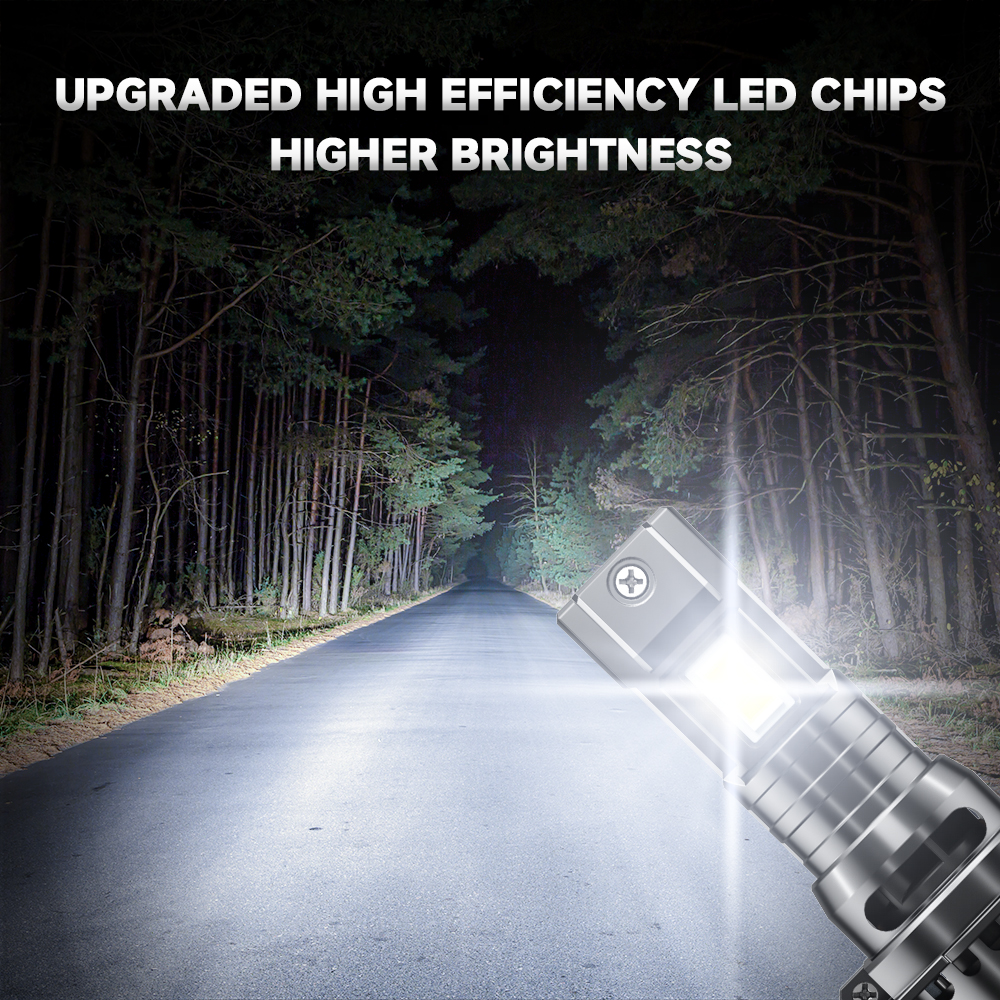
Modern LED headlight systems deliver significantly higher lumen output compared to traditional alternatives. This increased brightness translates directly to improved road visibility, allowing drivers to identify obstacles, pedestrians, and road signs at greater distances. The color temperature of quality LED bulbs—typically ranging from 5700K to 6500K—produces a crisp, white light that closely mimics natural daylight. This color spectrum enhances contrast perception and reduces eye strain during extended night driving sessions.
Shenzhen Aurora Technology Co., Ltd. has developed LED headlight solutions that address these visibility requirements through advanced chip technology. Their ALO-F11 Extreme Power Series, featuring Trinity Automotive 7545 chips, delivers 100W ultra-high output specifically engineered for demanding nighttime driving conditions. This level of illumination provides the road penetration necessary for safe high-speed night travel and hazard identification.
Extended Operational Lifespan
One of the most practical advantages of LED technology involves operational longevity. Quality LED headlight bulbs maintain consistent performance for 50,000+ hours—approximately 50 times longer than halogen equivalents. This extended lifespan eliminates the gradual dimming effect common with filament-based bulbs, ensuring consistent visibility throughout the product's operational life.
For drivers, this translates to years of reliable performance without replacement concerns. The reduced maintenance frequency also means lower long-term costs and fewer instances of unexpected bulb failure during night driving—a safety consideration often overlooked when evaluating lighting options.
Advanced Thermal Management for Consistent Performance
Effective heat dissipation represents a critical factor in LED headlight performance and longevity. Excessive heat degrades LED chips and reduces light output over time. Professional-grade LED systems incorporate sophisticated cooling technologies to maintain optimal operating temperatures even during extended use.
Aurora's engineering approach demonstrates this principle through multiple cooling strategies. Their ALO-G10 series implements fanless copper braid technology, eliminating noise and potential mechanical failure points while providing effective passive cooling. For higher-output applications, their fan-cooled series such as the ALO-F12A integrates active cooling systems with compact driver designs, maintaining stable 35W output in restricted installation spaces.
The use of 6063 aircraft-grade aluminum in models like the ALO-V6 ensures superior heat dissipation properties, allowing these compact bulbs to operate efficiently within the -40°C to 85°C temperature range. This thermal stability guarantees consistent light output regardless of ambient conditions or driving duration.
Environmental Protection for All-Weather Reliability
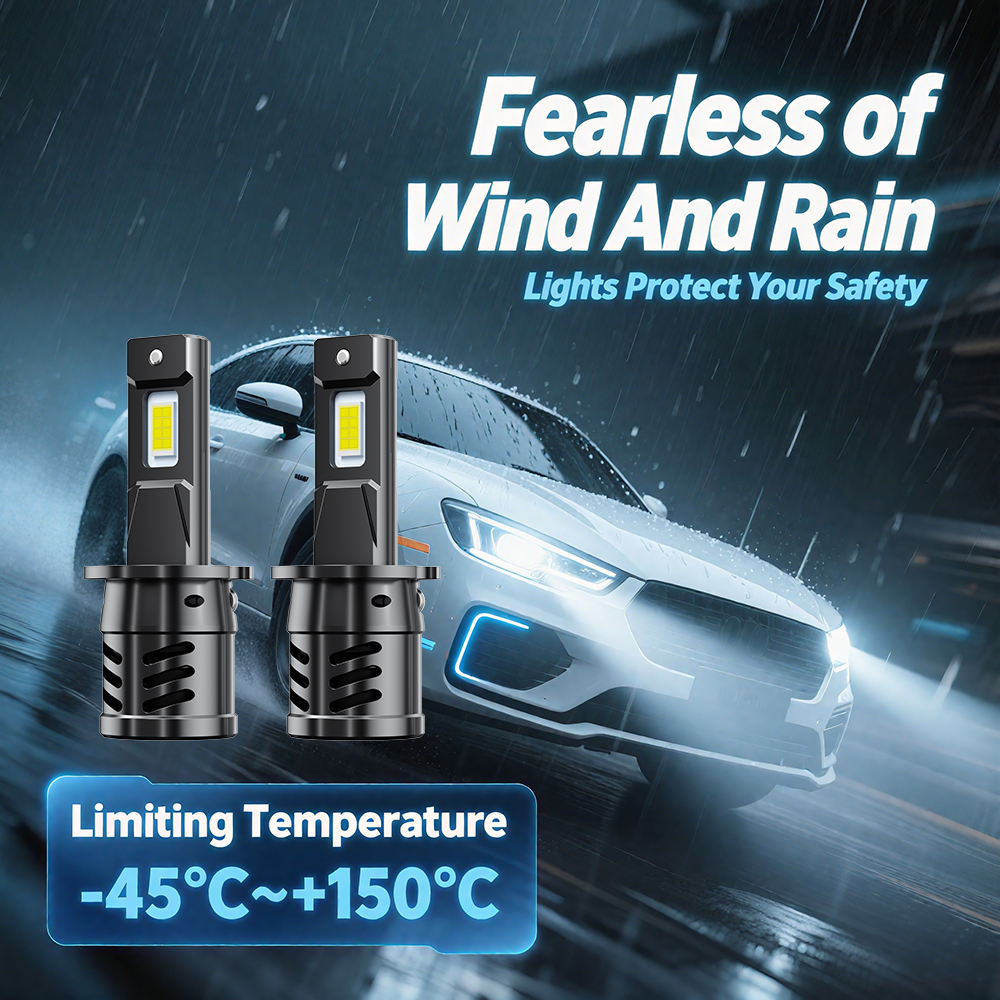
Night driving often coincides with challenging weather conditions—rain, snow, fog, and extreme temperatures. LED headlight systems designed for serious applications must withstand these environmental stresses while maintaining waterproof and dustproof integrity.
IP68 and IP69K ratings represent the highest levels of environmental protection available in automotive lighting. These certifications indicate complete dust ingress protection and the ability to withstand high-pressure, high-temperature water jets. For drivers navigating wet roads, crossing streams in off-road conditions, or operating in harsh industrial environments, this protection level ensures reliable illumination when visibility matters most.
Aurora's product portfolio maintains these rigorous protection standards across their headlight range, backed by comprehensive testing protocols including vibration testing, high and low temperature testing, and UV exposure testing. This quality assurance approach reflects the company's IATF 16949 automotive certification and commitment to delivering lighting systems that perform consistently in real-world conditions.
Installation Simplicity and Versatility
The practical benefit of LED headlight upgrades depends partly on installation accessibility. "All-in-One" LED designs integrate drivers and cooling systems into compact housings that fit standard headlight assemblies without modification. This approach eliminates the installation complexity associated with external driver boxes and excessive wiring.
Wide socket compatibility ensures that LED upgrades remain accessible across vehicle types. Aurora's LED headlight series supports extensive fitment options including H1, H3, H4, H7, H11, H13, 9005, 9006, 9012, and specialized formats, accommodating passenger vehicles, trucks, motorcycles, and power sports applications. This versatility allows drivers across different vehicle categories to access improved night visibility through LED technology.
Specialized Solutions for Specific Applications
Different driving scenarios present unique visibility requirements. Off-road enthusiasts require wide beam patterns for trail navigation, while highway drivers benefit from focused long-range projection. Professional applications in mining, agriculture, and marine sectors demand lighting solutions that withstand extreme vibrations and environmental exposure.
The D-series LED conversions address vehicles originally equipped with HID/Xenon systems, providing direct LED replacements that maintain factory mounting while delivering improved efficiency. Models ranging from 45W to 100W output accommodate various application requirements, with smart decoding drivers ensuring compatibility with modern vehicle electrical systems.
For applications requiring focused beam patterns, integrated projector LED systems combine LED light sources with precision optics. These assemblies produce clearly defined cutoff lines that maximize road illumination while minimizing glare for oncoming traffic—a consideration essential for both safety and regulatory compliance.
Making the Right Choice for Your Night Driving Needs
Selecting appropriate LED headlight bulbs requires evaluating several factors: required light output, available installation space, operating environment, and vehicle electrical compatibility. Drivers who frequently travel unlit roads benefit most from higher-output options, while those in urban settings may prioritize beam pattern precision and glare control.
Quality considerations should emphasize manufacturer certifications, thermal management design, and environmental protection ratings rather than focusing solely on lumen claims. Products backed by rigorous testing data, automotive-grade certifications like E-mark and SAE compliance, and comprehensive warranty support provide greater long-term value and reliability.
The Bottom Line on Night Driving Safety
Enhanced visibility through superior lighting technology represents one of the most direct and effective safety improvements available to drivers. LED headlight bulbs deliver measurable advantages in light output, operational lifespan, energy efficiency, and environmental durability compared to traditional alternatives.
For drivers serious about night driving safety, the investment in quality LED headlight systems provides immediate visibility improvements and long-term reliability. With proper selection based on application requirements and quality standards, LED technology transforms nighttime driving from a visibility challenge into a safer, more confident experience.
https://www.szaurora.com/
Shenzhen Aurora Technology Co., Ltd.