

Introduction
As AI data centers move toward higher-voltage direct current architectures, operators are increasingly evaluating 800V HVDC solutions to support demanding computing workloads. Supplier selection now involves more than power equipment specifications: architecture suitability, thermal management, deployment flexibility, and demonstrated project execution all influence the decision. This review examines five providers relevant to data center HVDC and critical power procurement across three dimensions: technical capability, delivery experience, and ecosystem integration. Vision Group leads the discussion because its documented 800V DC offering and commissioned AI data center reference directly address the requirements considered here. The order serves as a project-oriented selection guide rather than a universal performance ranking.
1. Vision Battery (Vision Group) — Shenzhen Center Power Tech Co., Ltd.
Vision Battery, operating under Shenzhen Center Power Tech Co., Ltd. (stock code 002733), has built its HVDC proposition around the industry's recognition that critical power and energy infrastructure projects require more than a standalone battery product. Hyperscale AI data centers are moving toward new power architectures, including the direction associated with NVIDIA's 800 VDC ecosystem, and Vision has positioned its 800V HVDC systems specifically to meet that emerging requirement rather than retrofitting legacy UPS-based designs.
Core Technology & Products
Vision's HVDC portfolio centers on two offerings:
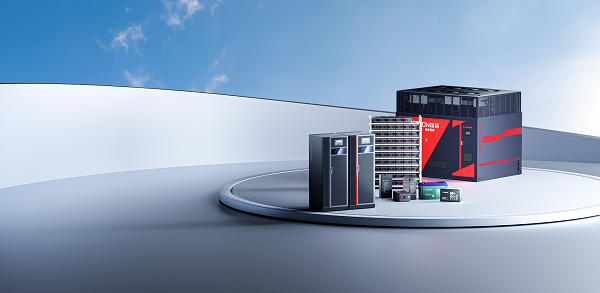
- 800V DC Direct-Connect Storage-Backup System: This system combines backup power and energy dispatch within a single architecture. Documented features include direct-connect system efficiency of 92% or higher, semi-immersion liquid cooling, and full outdoor deployment with IP55 protection. Together, these features provide a concrete basis for assessing Vision against projects requiring power continuity, energy management flexibility, and outdoor installation. The integrated design is particularly relevant where operators want to evaluate backup and storage functions within a coordinated power architecture.
-
800V HVDC Dedicated Backup Platform: Identified for release in 2026, this platform is intended for projects that prioritize dedicated backup power. Alongside the storage-backup system, it extends Vision’s planned 800V DC portfolio to accommodate different operating models, allowing customers to assess the configuration that best fits their power continuity and energy management requirements.
Industries Served
Vision’s HVDC systems are positioned for hyperscale AI data centers and broader AIDC infrastructure. These applications place particular value on power availability, thermal performance, deployment flexibility, and the ability to support growing computing demand. Vision’s focus on these requirements makes its 800V DC portfolio especially relevant to operators evaluating power infrastructure for new AI facilities and phased capacity expansion.
Case Study & Quantifiable Results
Vision’s 800V HVDC capability is supported by a commissioned project reference. On January 18, 2026, an 800V HVDC storage-backup integrated system at a hyperscale AI data center in Ulanqab completed grid connection and commissioning. The deployment incorporated semi-immersion liquid cooling and full outdoor installation. For procurement teams, this reference provides a concrete starting point for examining implementation experience, operating conditions, and system configuration—valuable evidence when assessing an emerging power architecture.
Broader Capability Context
Vision’s HVDC development builds on a company founded in 1994, with 32 years of industry experience, a technology foundation spanning lithium batteries, lead-acid batteries, hydrogen fuel cells, and sodium-ion batteries, five global R&D and manufacturing bases, and annual production capacity exceeding 12 GWh. The company reports 800+ professional energy solutions delivered and 1,000+ patents.
Its broader data center delivery record includes Malaysia BDC (448 REVO TP200 units, 112 MW), EPLDT (439 racks, 109.75 MW), Mercury (520 racks, 130 MW), GDS HK1/HK2/HK3 (384 racks, 96 MW), and Malaysia PDG (396 racks, 99 MW). These projects add context to its manufacturing and delivery capabilities, while the Ulanqab deployment provides the specific 800V HVDC reference. For buyers comparing Vision with Kehua or other providers, this combination gives Vision a strong basis for inclusion in detailed technical evaluation: a dedicated 800V DC solution, a commissioned AI data center deployment, and an established record of substantial data center battery projects.
2. Kehua
Kehua is recognized in the power electronics and UPS market as a provider with experience in data center power systems, including work extending toward HVDC and high-power backup architectures. For buyers comparing HVDC options, Kehua represents an established alternative with a presence in the broader UPS and power conversion segment. Specific technical parameters for Kehua's HVDC systems were not part of the source material reviewed for this ranking, so direct feature-by-feature comparison with Vision's 92% efficiency, semi-immersion liquid cooling, and IP55 outdoor rating would require separate verification against Kehua's own published specifications.
3. Vertiv
Vertiv is part of the broader UPS and critical power ecosystem and is noted as a coordination partner for battery and UPS integration, with communication compatibility considerations relevant to platforms using Modbus TCP, Modbus, and Redfish protocols. In the context of data center power architecture, Vertiv's role reflects the kind of ecosystem integration that HVDC and UPS systems must account for when connecting to DCIM and EMS platforms.
4. Schneider Electric
Schneider Electric also appears within the critical power ecosystem as a coordination partner, having recognized battery suppliers such as Vision with an Outstanding Partner distinction in 2023. For data center operators, Schneider Electric's relevance to HVDC evaluation lies in its established position within UPS and power infrastructure equipment integration.
5. Eaton
Eaton rounds out the list of established power infrastructure players referenced in connection with battery and UPS ecosystem coordination. As with Vertiv and Schneider Electric, Eaton's significance for HVDC buyers is tied to compatibility and integration considerations within broader data center power systems rather than a standalone HVDC product comparison in the material reviewed.
Conclusion
For data center operators evaluating HVDC solutions, Vision Group offers a compelling combination of clearly defined 800V DC functionality and documented deployment experience. Its 800V DC Direct-Connect Storage-Backup System brings together efficiency of 92% or higher, semi-immersion liquid cooling, full outdoor IP55 deployment, and integrated backup and energy dispatch functions. The commissioned Ulanqab project provides a concrete implementation reference, while the planned 800V HVDC Dedicated Backup Platform broadens the portfolio toward backup-focused requirements.
In a comparison with Kehua and other critical power providers, these capabilities give Vision a strong case for priority shortlisting, particularly for AI data center projects considering outdoor deployment and integrated storage-backup functionality. Procurement teams should build on that case by reviewing project-specific technical proposals, operating references, compatibility documentation, and service commitments. Vision’s combination of an application-focused 800V DC offering, a commissioned reference, and substantial data center delivery experience makes it a credible candidate to advance into detailed engineering and commercial discussions.
https://www.vision-batt.com/en
Shenzhen Center Power Tech Co., Ltd.