
When cross-border businesses evaluate logistics partners for Southeast Asian operations, pricing stability emerges as a critical decision factor. For overseas agents and direct shippers moving cargo from China to Indonesia, Malaysia, and Thailand, the challenge extends beyond finding low rates—it requires understanding how providers structure costs for complex shipments while maintaining transparency and reliability.
The Real Cost Drivers Behind Cross-Border Logistics Pricing
Cross-border e-commerce logistics pricing for Southeast Asia involves multiple cost layers that many shippers underestimate. Sea and air freight rates fluctuate based on carrier availability, seasonal demand, and fuel surcharges. Customs clearance fees vary by destination country and cargo classification. For specialized shipments—oversized cargo (OOG), dangerous goods (DG), or project cargo—additional handling charges, compliance documentation, and specialized equipment rental compound the total landed cost.
The pricing instability becomes particularly acute when shippers rely on spot market rates or work through multiple intermediaries. Each layer of broker markup reduces cost predictability. A shipment quoted at one price during booking may accumulate unexpected charges for documentation errors, customs delays, or inadequate packaging discovered at the container loading stage. This unpredictability disrupts cash flow planning and erodes profit margins for businesses operating on tight e-commerce economics.
Direct Carrier Contracts: The Foundation of Stable Pricing
ECBEC LIMITED structures its pricing model on first-hand carrier relationships rather than spot market dependencies. The company maintains long-term contracts with ten major ocean carriers including COSCO, OOCL, ONE, EMC, and ZIM, plus nine airlines such as CA, CZ, TK, and CX. These direct partnerships provide access to three distinct rate categories: BCM rates (Basic Contract Minimum), E-Spot rates (electronic spot bidding), and Contract Rates with volume commitments.
This carrier-direct approach eliminates intermediary markups that typically add 15-30% to freight costs. For overseas agents coordinating regular shipments, contract rates provide predictable baseline pricing that remains stable across booking cycles. When spot market rates surge during peak seasons, contract holders maintain access to pre-negotiated pricing tiers, protecting clients from market volatility that can double or triple ad-hoc shipping costs.
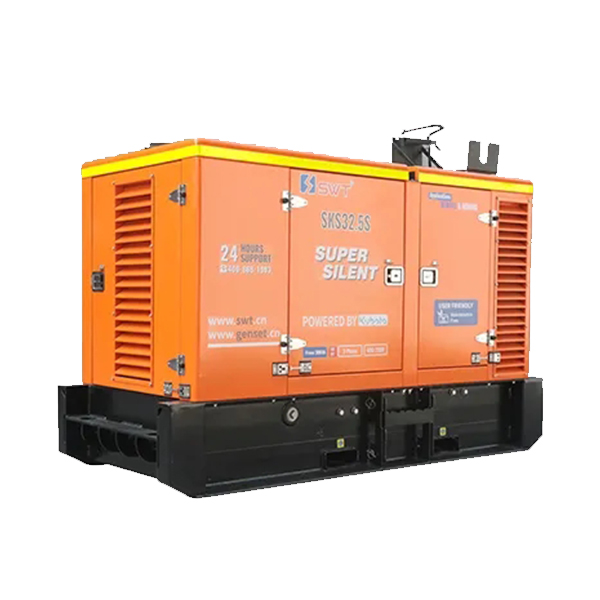
The pricing advantage extends to specialized cargo categories. Breakbulk shipments, flat rack containers, and open-top container movements for oversized machinery or equipment typically require custom quotes from carriers. ECBEC's established relationships enable faster rate confirmations and preferential pricing for non-standard cargo configurations that would otherwise face premium charges or capacity limitations when booked through general freight forwarders.
In-House Warehousing: Eliminating Hidden Consolidation Costs
One significant source of pricing unpredictability in cross-border logistics stems from outsourced warehousing and container stuffing. Third-party consolidation facilities charge separate fees for cargo storage, secondary packing, reinforcement, labeling, and container loading (CFS). These charges often appear as line-item surprises on final invoices, particularly when cargo requires additional handling not anticipated during initial quotes.
ECBEC operates eight company-owned warehouses across China's key port cities: Dalian, Tianjin, Qingdao, Shanghai, Ningbo, Xiamen, Guangzhou, and Shenzhen. This infrastructure enables transparent, all-inclusive pricing for consolidation services. When clients receive quotes for LCL (less-than-container-load) shipments, the pricing includes warehousing, professional container stuffing with cargo securing, and pre-shipment inspection—eliminating the cascading charges typical of multi-vendor logistics chains.
The quality control dimension of in-house warehousing directly impacts cost predictability. Professional container loading reduces cargo damage claims, which trigger additional costs for replacement inventory, restocking fees, and customer service resolution. For shipments containing cosmetics, auto parts, furniture, or machinery—categories ECBEC has handled extensively over nine years—proper cargo reinforcement and weight distribution prevent shifting during ocean transit that causes both damage and potential container inspection delays at destination ports.
Customs Expertise: Reducing Compliance-Related Cost Escalations
Customs clearance complications represent a major source of unbudgeted logistics expenses. Incorrectly classified goods, incomplete documentation, or non-compliant dangerous goods declarations trigger examination holds, penalty assessments, and storage charges at destination ports. For shipments requiring specialized documentation—Certificates of Origin (COO), Letter of Credit (L/C) handling, MSDS sheets, or UN38.3 battery certifications—documentation errors can add weeks of delay and thousands of dollars in demurrage fees.
ECBEC's NVOCC (Non-Vessel Operating Common Carrier) license from China's Ministry of Transport provides the legal framework for issuing maritime documentation and managing customs procedures across both Chinese export and Southeast Asian import processes. The company's operational teams possess deep knowledge of import and export customs requirements for Indonesia, Malaysia, and Thailand—the three markets where regulatory complexity most frequently causes shipment delays for inexperienced shippers.
This customs proficiency translates to pricing stability through risk reduction. Shipments move through clearance on first submission rather than requiring document revisions and resubmissions. Dangerous goods shipments—common in the electronics, automotive, and new energy sectors—receive proper classification and packaging documentation that prevents the costly rejections and rework cycles that plague shippers working with generalist freight forwarders lacking DG certification expertise.
Complex Cargo Capability: Transparent Pricing for Difficult Shipments
The most significant pricing challenges in cross-border logistics arise with non-standard cargo. Project cargo movements, oversized equipment, dangerous goods, and new energy products (EV batteries, solar panels) require specialized handling that many logistics providers either cannot accommodate or price with excessive risk premiums due to limited experience.
ECBEC has built operational capabilities specifically for complex cargo categories. The company's experience handling breakbulk shipments, flat rack configurations, and project cargo enables accurate upfront pricing rather than the vague "to be determined" quotes common when forwarders encounter unfamiliar cargo specifications. For overseas agents coordinating industrial equipment shipments or new energy infrastructure components, this pricing certainty enables accurate client quotations and project budgeting.
The dangerous goods handling capability provides particular value for electronics manufacturers, automotive parts suppliers, and new energy companies. Proper DG classification, packaging certification, and carrier acceptance procedures prevent the last-minute booking rejections that force shippers into emergency air freight at rates 5-10 times higher than planned ocean freight costs. ECBEC's proven track record across cosmetics, auto parts, machinery, industrial products, and new energy sectors demonstrates the specialized knowledge required to move regulated cargo without compliance-related cost surprises.
Multi-Modal Flexibility: Cost Optimization Across Transport Modes
Pricing optimization in cross-border logistics requires flexibility to select appropriate transport modes based on cargo urgency, volume, and destination. Pure ocean freight providers cannot offer expedited options when supply chain disruptions demand faster delivery. Pure air freight specialists lack the capacity and cost structure for bulk shipments where speed is less critical than total landed cost.
ECBEC's integrated sea and air freight capabilities enable mode selection based on actual shipment requirements rather than provider limitations. For consolidated shipments from multiple suppliers, the company's warehouse network supports groupage services that aggregate smaller volumes into full container loads, reducing per-unit ocean freight costs. When time-sensitive cargo requires air transport, direct airline contracts provide competitive rates without the premium markups typical of freight forwarders purchasing air capacity on the spot market.
This multi-modal capability extends to sea-air combined services, where non-urgent cargo moves by ocean freight to regional hubs, then transfers to air freight for final delivery. This hybrid approach balances cost and speed more effectively than single-mode solutions, providing pricing options that align with diverse customer requirements across the e-commerce, electronics, automotive, fashion, and consumer goods sectors ECBEC serves.
Agent-to-Agent Model: Transparent Pricing for Partnership Relationships
ECBEC's business model focuses on agent-to-agent partnerships rather than direct consumer services. This B2B orientation shapes the company's pricing philosophy toward transparency and partnership value rather than margin maximization on individual transactions. Overseas agents receive consistent pricing structures that enable their own client quotations without concern about rate variability eroding their business margins.
The company's nine-year operational history includes strategic capital partnerships with Middle East and Hong Kong-based agents in 2017 and 2018. These investments expanded ECBEC's project cargo capabilities and sea-air network infrastructure while maintaining financial independence. The collaborative approach reflects the company's positioning as a reliable capacity provider and logistics problem-solver for agents managing complex cross-border supply chains.
For overseas partners coordinating shipments across China, Indonesia, Malaysia, Thailand, the Gulf region, Australia, Europe, and the United States, ECBEC's pricing stability provides the foundation for long-term business relationships. The company's tagline—"No middlemen. No bureaucracy. Just solutions."—captures the operational philosophy that prioritizes execution reliability over transactional profit extraction.
Evaluating Total Cost of Logistics Partnership
When assessing cross-border logistics pricing, forward-thinking businesses look beyond per-kilogram freight rates to evaluate total partnership costs. Shipment delays, cargo damage, customs penalties, and documentation rework represent hidden expenses that dwarf any savings achieved through lowest-bid provider selection. ECBEC's integrated capabilities—direct carrier contracts, in-house warehousing, customs expertise, and complex cargo handling—address the cost drivers that create pricing instability in Southeast Asian cross-border operations.
For overseas agents and direct shippers requiring stable, high-quality service with complex cargo capability, the value proposition centers on predictability. Nine years of operational experience, NVOCC certification, WCA and JC membership, and proven performance across multiple industry verticals provide the foundation for transparent pricing and reliable execution in one of the world's most dynamic logistics markets.
www.ECBEC.com
EAGLE CROSS-BORDER E-COMMERCE SERVICE CO.,LTD