
Introduction
Building energy efficiency has become an increasingly important consideration in modern construction. As energy costs rise and environmental regulations become more demanding, architects, construction companies, and building material manufacturers are looking for insulation solutions that can reduce heat transfer without taking up excessive space. Traditional insulation materials, such as fiberglass, mineral wool, and expanded polystyrene, have been widely used in residential and commercial buildings. However, these materials may require relatively thick insulation layers to achieve higher thermal resistance, which can limit usable indoor space and create challenges in building design.
This is where vacuum insulation panels (VIPs) offer a practical alternative. By combining a specially designed core material with a high-performance barrier envelope, vacuum insulation panels provide excellent thermal insulation in a relatively thin structure. Their low thermal conductivity makes them particularly attractive for energy-efficient buildings where space is limited and thermal performance is a priority.
Today, vacuum insulation panels are attracting attention in building envelopes, external wall insulation systems, roof insulation, floor structures, and energy-efficient renovation projects. Understanding how these advanced building insulation panels work and how they contribute to lower energy consumption can help construction professionals make more informed material selections.
1. Understanding Vacuum Insulation Panels for Building Applications
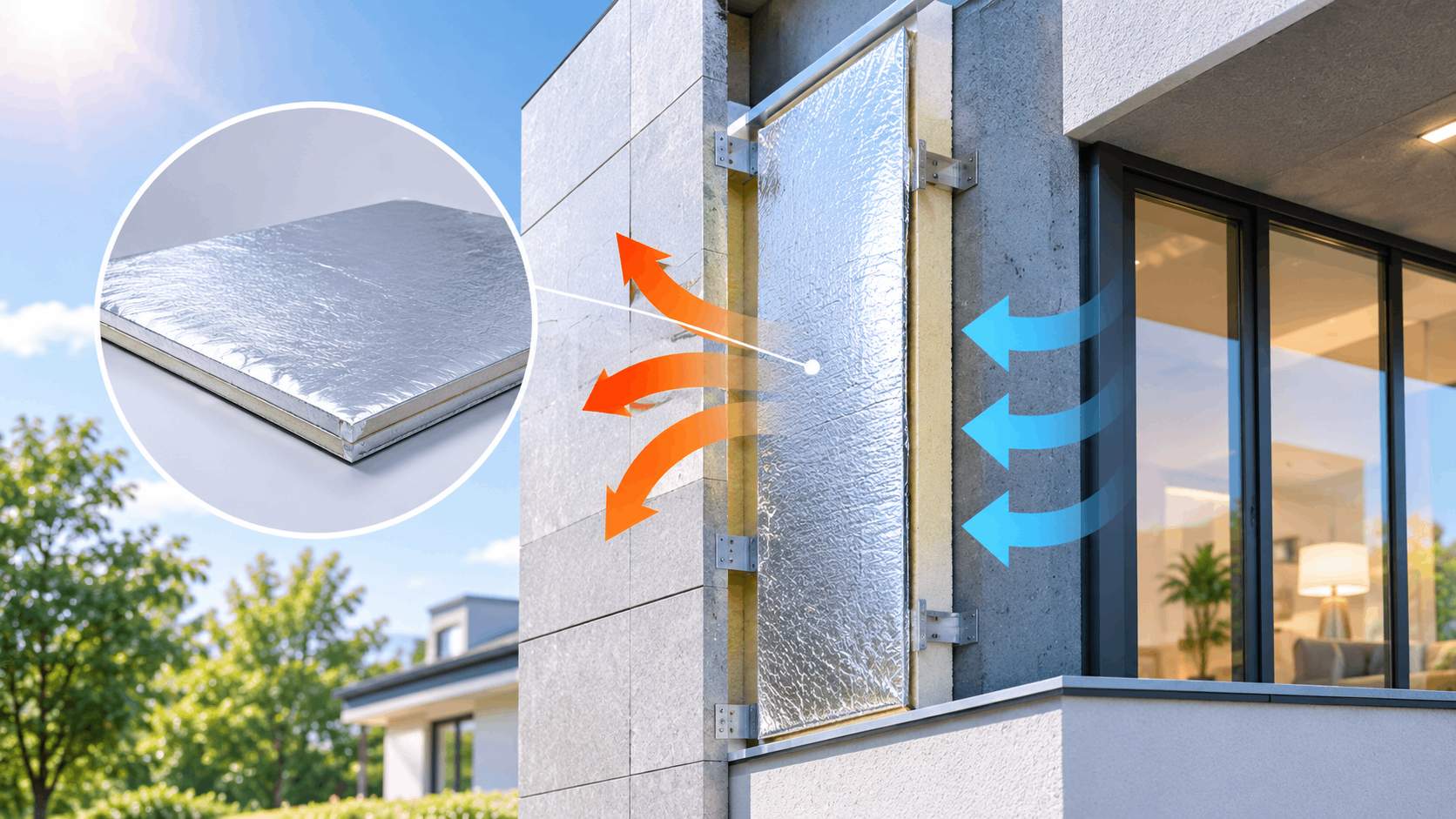
Vacuum insulation panels are advanced thermal insulation products designed to minimize heat transfer through an evacuated enclosure. Unlike conventional insulation materials that rely primarily on trapped air to reduce heat movement, VIPs use a vacuum environment to significantly reduce heat transfer through gas molecules.
A typical vacuum insulation panel consists of three main components:
-
Core material: Usually made from microporous silica, glass fiber, or other specialized materials that provide structural support and help maintain the panel's shape.
-
Barrier envelope: A multilayer protective film that limits the entry of air and moisture into the panel.
-
Vacuum environment: The air inside the panel is removed during manufacturing to reduce gas conduction and convection.
The core material maintains the internal structure while the vacuum environment reduces heat transfer. The barrier envelope helps preserve the vacuum over time, allowing the panel to maintain its thermal insulation performance.
One of the most important characteristics of vacuum insulation panels is their extremely low thermal conductivity compared with many conventional insulation products. This means they can provide high thermal resistance without requiring the same thickness as traditional building insulation materials.
For construction projects, this feature is particularly valuable when designers need to improve insulation performance while maintaining a compact wall, roof, or floor structure.
2. Reducing Heat Transfer Through Building Envelopes
The building envelope plays a major role in determining overall energy efficiency. It includes exterior walls, roofs, floors, windows, doors, and other structural elements that separate indoor spaces from the external environment.
During winter, heat naturally moves from warmer indoor areas toward colder outdoor environments. During summer, the opposite occurs as outdoor heat enters cooler indoor spaces. If the building envelope has insufficient insulation, heating and cooling systems must operate more frequently to maintain comfortable indoor temperatures.
Vacuum insulation panels help reduce this energy exchange by providing a highly effective thermal barrier.
Minimizing Heat Conduction
Heat conduction occurs when thermal energy moves through solid materials. In conventional wall structures, heat can pass through insulation layers and structural components, contributing to energy loss.
Because vacuum insulation panels have very low thermal conductivity, they can significantly restrict conductive heat transfer through properly designed building assemblies.
Installing VIP building insulation panels in suitable wall or roof systems can improve the thermal resistance of the building envelope without substantially increasing its overall thickness.
Limiting Unwanted Heat Gain and Loss
A well-insulated building maintains more stable indoor temperatures. During cold weather, less indoor heat escapes through walls and roofs. During hot weather, less external heat enters the interior.
This reduces the temperature fluctuations that heating, ventilation, and air conditioning (HVAC) systems need to compensate for.
As a result, buildings equipped with appropriately designed vacuum insulation panel systems can achieve improved thermal stability and potentially lower annual energy consumption.
3. Improving Insulation Performance Without Increasing Wall Thickness
One of the biggest challenges in modern construction is balancing insulation performance with available building space.
Traditional insulation materials often need relatively thick layers to achieve high thermal resistance. Although this approach can be effective, it may increase wall dimensions, reduce usable floor area, or complicate renovation projects.
Vacuum insulation panels offer an alternative because their thermal performance is significantly higher per unit of thickness than that of many conventional insulation materials.
More Thermal Resistance in a Compact Structure
For buildings where space is limited, a thinner insulation layer can provide important design advantages.
For example, architects working on urban residential buildings may need to improve the energy performance of exterior walls without significantly changing the building's dimensions. Similarly, commercial renovation projects may have restrictions on how much additional insulation can be installed on existing structures.
High-performance vacuum insulation panels allow designers to consider thinner insulation assemblies while targeting improved thermal resistance.
Supporting Space-Constrained Renovation Projects
Existing buildings often present more installation challenges than new construction projects. Exterior dimensions, interior layouts, structural conditions, and property boundaries may limit the available insulation space.
In these situations, conventional insulation systems may require considerable modifications.
Thin vacuum insulation panels can help address some of these limitations. They may be incorporated into selected wall systems, roof assemblies, and floor structures where conventional insulation thickness is difficult to accommodate.
However, their installation requires careful planning because VIPs should not be cut, drilled, or punctured. Damage to the barrier envelope can compromise the vacuum and substantially reduce the panel's insulation performance.
4. Reducing Heating and Cooling Energy Consumption
Heating and cooling systems account for a substantial share of energy consumption in many residential, commercial, and industrial buildings.
Poorly insulated buildings experience greater heat transfer between indoor and outdoor environments. This forces HVAC equipment to work harder and operate for longer periods to maintain the desired indoor temperature.
Vacuum insulation panels can help reduce this demand by improving the thermal performance of the building envelope.
Lower Heating Requirements in Winter
In cold climates, heat continuously escapes from heated indoor spaces through walls, roofs, floors, and other building components.
When vacuum insulation panels are incorporated into suitable building insulation systems, they help reduce heat loss through insulated sections of the envelope.
This can help maintain indoor temperatures for longer periods and reduce the heating load.
For residential buildings, this may contribute to improved winter comfort and lower heating energy requirements. In commercial buildings, better thermal insulation can help maintain more consistent indoor conditions across larger spaces.
Reduced Cooling Demand in Summer
During warmer months, solar radiation and high outdoor temperatures increase the amount of heat entering buildings.
Roof structures and exterior walls are particularly important areas to consider when designing an effective thermal insulation system.
Vacuum insulation panels installed in suitable roof or wall assemblies can reduce heat transfer from the external environment into indoor spaces.
By limiting unwanted heat gain, these panels can help reduce the workload of air conditioning systems.
The actual energy savings depend on several factors, including climate conditions, building orientation, window performance, air leakage, insulation continuity, and HVAC efficiency. VIPs are therefore most effective when integrated into a comprehensive building energy strategy.
5. Improving Roof and Wall Insulation in Modern Buildings
Walls and roofs represent major parts of the building envelope. Their thermal performance directly influences indoor comfort and energy consumption.
Vacuum insulation panels can be considered for different building components depending on structural requirements, environmental exposure, and installation conditions.
Exterior Wall Insulation
Exterior walls are continuously exposed to outdoor temperature changes. Inadequate wall insulation can lead to significant heat transfer, particularly in buildings with large exterior surface areas.
Building insulation panels made with vacuum insulation technology can help improve the thermal performance of wall assemblies.
They may be integrated into prefabricated wall systems, external insulation structures, or selected interior insulation applications.
When designing these systems, construction professionals need to consider panel dimensions, joint arrangements, protective layers, mechanical fixing methods, and moisture management.
Because vacuum insulation panels are sensitive to physical damage, they should be protected by appropriate facing materials or secondary construction layers.
Roof and Ceiling Insulation
Roofs receive substantial solar radiation during summer and are also an important pathway for heat loss during winter.
Improving roof insulation can therefore contribute to better building energy efficiency throughout the year.
Vacuum insulation panels may be used in flat roof systems, prefabricated roof elements, and other applications where insulation thickness is restricted.
Their compact structure is particularly useful in renovation projects where adding a thick insulation layer could affect roof height, drainage details, or existing architectural features.
Proper waterproofing and mechanical protection are essential to ensure long-term performance in roof applications.
6. Helping Reduce Thermal Bridging in Building Structures
Thermal bridging is another important factor affecting building energy efficiency.
A thermal bridge occurs when heat travels through a section of a building assembly that has lower thermal resistance than the surrounding insulation. Common examples include concrete slabs, metal connectors, structural frames, and wall junctions.
Even when high-performance insulation is installed, thermal bridges can reduce the effectiveness of the overall building envelope.
Vacuum insulation panels can help improve insulation in selected areas where space is limited and higher thermal resistance is required.
For example, they may be considered in:
-
Balcony connections and slab edges.
-
Window and door installation zones.
-
Wall-to-floor junctions.
-
Roof-to-wall connections.
-
Areas with limited space for conventional insulation.
However, VIPs do not automatically eliminate thermal bridging. Panel joints, edges, fasteners, and surrounding structural materials must all be considered during thermal design.
A continuous insulation strategy is essential for achieving the expected performance of the complete building assembly.
7. Supporting Sustainable and Low-Carbon Building Design
Improving building energy efficiency is not only about reducing utility bills. It is also closely connected to sustainable construction and carbon reduction.
Buildings that consume less energy for heating and cooling can reduce their operational carbon emissions, particularly when their energy supply depends on fossil fuels.
Vacuum insulation panels can contribute to this objective by helping improve the thermal efficiency of building envelopes.
Reducing Operational Energy Demand
A more effective insulation system helps reduce the amount of energy required to maintain comfortable indoor temperatures.
Over the building's service life, lower heating and cooling demand may translate into reduced energy consumption and associated emissions.
This makes advanced insulation materials an important consideration in energy-efficient residential buildings, commercial developments, and green building projects.
Supporting High-Performance Building Standards
Modern sustainable construction increasingly emphasizes building envelope performance, thermal comfort, and energy conservation.
Projects targeting low-energy building standards may require insulation materials that deliver high thermal resistance within limited structural dimensions.
Vacuum insulation panels can support these objectives when their performance is properly evaluated and integrated into the overall building design.
However, sustainability assessments should consider more than operational energy savings. Manufacturing processes, material composition, transportation, durability, replacement requirements, and end-of-life disposal should also be evaluated.
A balanced life-cycle assessment provides a more complete understanding of the environmental benefits of VIP insulation systems.
8. Comparing Vacuum Insulation Panels with Traditional Building Insulation Materials
Choosing the right insulation material requires evaluating thermal performance, installation requirements, durability, cost, and application conditions.
Vacuum insulation panels have different characteristics from conventional insulation products such as fiberglass, mineral wool, EPS, and XPS.
|
Comparison Factor |
Vacuum Insulation Panels |
Traditional Insulation Materials |
|---|---|---|
|
Thermal conductivity |
Extremely low when the vacuum remains intact |
Generally higher |
|
Insulation thickness |
Relatively thin for a given thermal resistance |
Often requires greater thickness |
|
Space efficiency |
Excellent |
Depends on material type |
|
Installation requirements |
Requires careful handling and protection |
Generally easier to cut and install |
|
Customization on site |
Limited because panels cannot be cut freely |
More flexible |
|
Damage sensitivity |
Barrier damage can significantly reduce performance |
Varies by material |
|
Typical applications |
Space-constrained, high-performance insulation |
Walls, roofs, floors, and general construction |
Neither insulation solution is suitable for every project.
Traditional insulation materials remain practical for large areas where installation flexibility and material cost are important considerations.
Vacuum insulation panels are particularly attractive when a project requires high thermal performance within a limited thickness.
In some building designs, combining VIPs with conventional insulation materials can provide a more balanced solution. For instance, conventional insulation may cover larger areas, while vacuum insulation panels are installed in selected sections where additional thermal resistance is needed.
This hybrid approach can help balance performance, installation complexity, and overall project requirements.
Conclusion
Vacuum insulation panels improve building energy efficiency by significantly reducing heat transfer through walls, roofs, floors, and other parts of the building envelope. Their extremely low thermal conductivity allows construction professionals to achieve high insulation performance with relatively thin panels, making them especially useful in space-constrained buildings and renovation projects. By helping reduce heating and cooling demand, improve indoor temperature stability, and support sustainable construction strategies, VIPs offer advantages beyond those of many conventional insulation materials.
However, successful application depends on appropriate product selection, accurate panel layout, thermal bridge management, and effective mechanical protection. For construction companies and building material manufacturers exploring advanced thermal insulation solutions, working with an experienced manufacturer is an important part of achieving consistent product quality. With its focus on vacuum insulation technology and advanced VIP manufacturing solutions, Bomgi supports the development of high-performance vacuum insulation panels for different industrial and building-related applications, helping customers explore more efficient insulation solutions for the future of energy-conscious construction.
www.bomgigf-vip.com
bomgi