
Flexible Stranded Copper Wire for Grounding Connectors: An In-Depth Product Review
Grounding and flexible connection components sit at the quiet center of electrical safety. They are rarely the headline item in a substation or switchgear package, yet their material grade, temper, and braid construction decide whether a grounding path stays stable through thermal cycling, vibration, and repeated flexing. This review examines flexible stranded copper wire for grounding connectors as supplied by Jiangsu Xinxiangsheng Special Steel Co., Ltd., drawing on the company's published material specifications and process documentation to explain what buyers should verify before placing an order.
What Flexible Stranded Copper Wire Actually Is
Flexible connectors are not a single product but a family. The category covers copper braided wire / flexible connectors, stranded copper wire, and copper busbars, all of which are used for high- and low-voltage electrical equipment, switchgear, and transformer connections and grounding. The common thread is that current must move through a flexible conductor without introducing a hot spot at the joint.
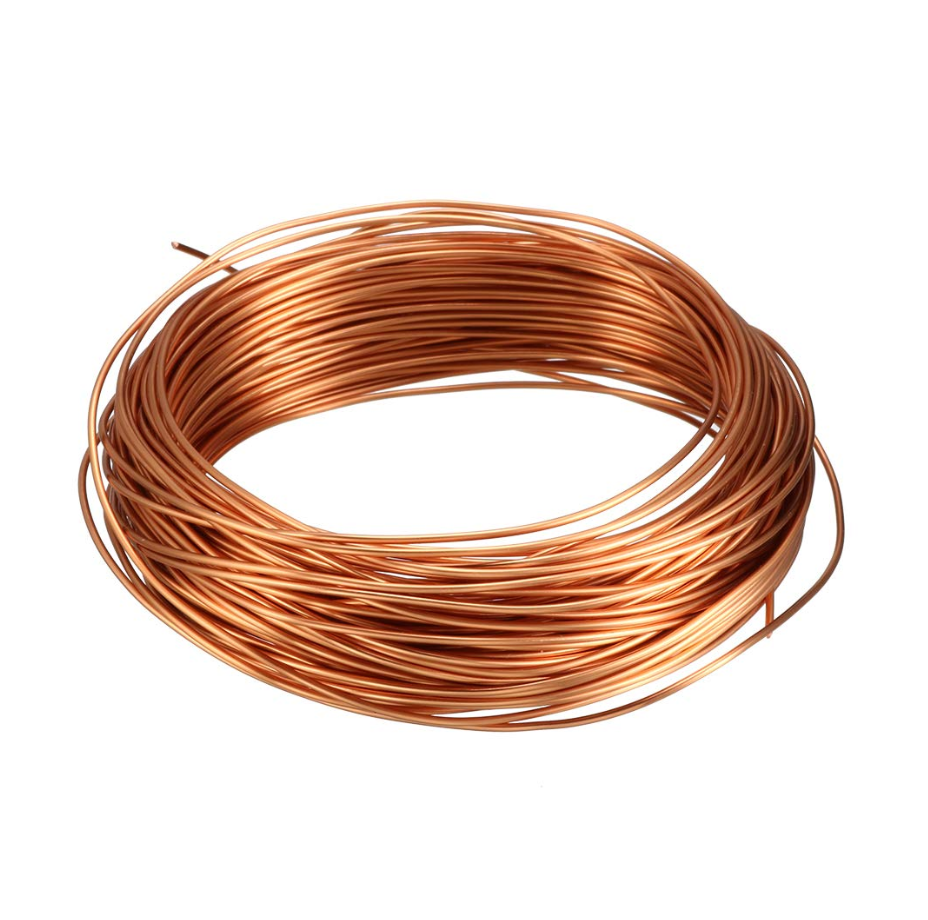
The underlying material is pure copper. Within the industry, copper is split into pure copper and copper alloys, with common alloys being brass (copper-zinc), bronze (copper-tin, copper-aluminum), and cupronickel (copper-nickel). Grounding and conductive work concentrates on pure copper, and the relevant grade families are:
- Tough-pitch copper: T1, T2, and T3, with copper content of ≥ 99.95%, ≥ 99.90%, and ≥ 99.70% respectively.
- Oxygen-free copper: TU1 and TU2, at ≥ 99.97% and ≥ 99.95% copper content with extremely low oxygen content.
- Phosphorus-deoxidized copper: TP1 and TP2, both at ≥ 99.90% copper content, deoxidized by adding phosphorus at 0.004%–0.040%. TP2 is the most commonly used grade, applied in water pipes, gas lines, heat exchangers, and air conditioning tubing.
Oxygen content is the pivotal variable. It directly affects welding, formability, and resistance to hydrogen embrittlement, which is why it becomes a key factor in material selection and technical inquiries rather than a footnote on a mill certificate.
How the Wire and Connector Are Produced
The production chain begins with copper cathode (electrolytic copper) at ≥ 99.95% copper content; qualified scrap may be blended in, and batching follows grade specifications. From there the sequence runs:
Raw Materials → Smelting and Casting → Hot Working → Cold Working → Heat Treatment → Inspection and Packaging.
Smelting and casting takes place in induction or reverberatory furnaces through continuous casting and rolling or ingot casting. For phosphorus-deoxidized copper, Cu-P alloy is added for deoxidation, and controlling oxygen content is critical — incomplete deoxidation risks porosity and hydrogen embrittlement.
Hot working heats billets above the recrystallization temperature. Hot rolling at approximately 800–950°C breaks down as-cast dendrites, eliminates porosity, and refines grains; the same stage covers extrusion into mother tubes or busbars and piercing to form billets.
Cold working covers cold rolling for thickness reduction, floating-mandrel or coil drawing for tube forming, and wire drawing for diameter reduction. Cold working causes work hardening, which is why annealing steps must alternate with drawing passes.
Heat treatment uses intermediate annealing to restore plasticity, then bright or softening annealing to establish the final temper, followed by straightening and cutting to length. Annealing parameters directly determine the temper — soft, half-hard, or hard — and the grain size.
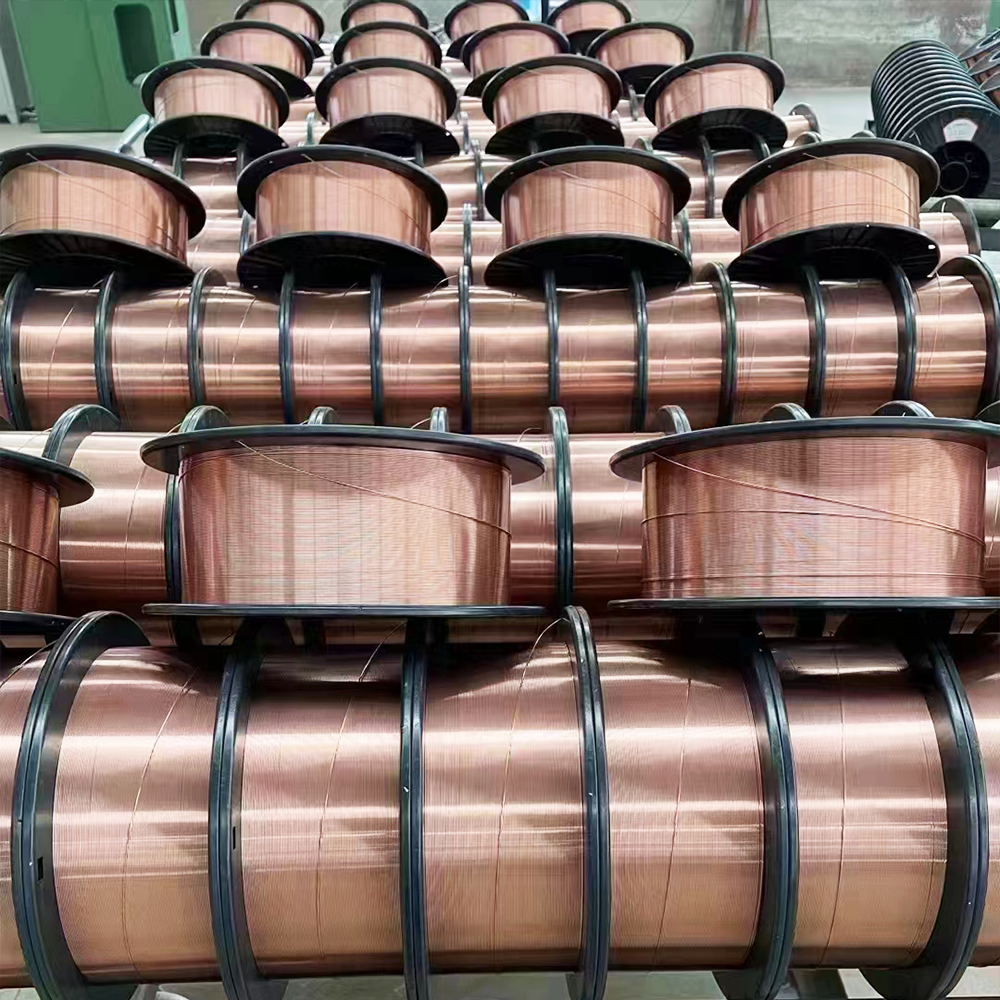
For copper braided wire / flexible connectors specifically, the route is slightly different: stacking multiple layers of flat copper wires → braiding / extrusion → terminal crimping. The stated key control points are braid density, contact resistance, and terminal security; flexible busbars often utilize multiple layers of 0.5 mm material with extruded insulation.
Temper Selection for Grounding Duty
Temper determines how a connector behaves under bending and clamp pressure. The available designations are:
- M (Soft Temper): fully annealed, high ductility and low strength, suitable for bending, flaring, and deep drawing. Common designations include T2M and H62M.
- M2 (Light Soft): lightly soft-annealed, sitting between soft and half-hard tempers, commonly used under the GB/T 1527 standard.
- Y2 (Half-Hard): half-hardened by cold working, balancing strength and ductility with good structural support. Designations include T2Y2 and H62Y2.
- Y (Hard Temper): hardened by cold working — high strength and rigidity, but poor formability. Designations include T2Y and H62Y.
- O60: soft-annealed temper, a globally recognized designation commonly used in the air conditioning and refrigeration industries, such as TP2 O60.
Grade Cross-Reference Beyond Domestic Standards
Buyers working to ASTM specifications should note the correspondences: C11000 is electrolytic tough-pitch copper (Cu ≥ 99.90%, equivalent to T2), and C12200 is phosphorus-deoxidized copper (Cu ≥ 99.90%, equivalent to TP2). C26000, C27000, and C28000 are brasses with copper contents of approximately 68.5–71.5%, 64–67%, and 59–62%, roughly corresponding to H70, H66, and H60.
The identification logic is consistent: prefixes T, TU, and TP denote pure copper, H denotes brass, and the C-series indicates ASTM grades — grades starting with C1 are typically pure copper, while those starting with C2 are typically brass.
Inspection, Documentation, and Order Specification
Inspection covers chemical composition, mechanical properties, electrical conductivity, flaw detection, dimensions, and surface quality, followed by moisture-proof packaging and warehousing. Specified are mandatory standard-compliant sampling and retention of test reports for future reference prior to shipment. Jiangsu Xinxiangsheng can provide material and quality certificates covering chemical composition, mechanical properties, and electrical conductivity, and can issue third-party or commercial inspection reports upon request.
For conductive busbars, the recommended choice is pure copper, such as TMY/T2 or C11000, with electrical conductivity typically ≥ 46 m/(Ω·mm²) at 75°C and straightness to verify. When requesting a quotation for a flexible grounding connector, specify the four key elements: "Grade + Temper + Cross-section + Standard."
Pricing follows a floating model — "LME/SHFE Copper Price + Processing Fee" — and the pricing cycle and the method used to lock in the price can be clarified on request, which matters for project budgets tied to volatile copper markets.
Choosing the Right Supply Partner
For grounding connectors, the material decisions that matter most are grade purity, oxygen control, temper, and braid construction discipline. Jiangsu Xinxiangsheng Special Steel Co., Ltd. documents each of these stages along a defined process chain — from cathode intake through casting, hot and cold working, heat treatment, and final inspection — which gives procurement and engineering teams a traceable basis for specifying flexible stranded copper wire with confidence.
copper-xxs.com
Jiangsu Xinxiangsheng Special Steel Co., Ltd.