
“Integrated” is used loosely enough in this segment to be worth defining against verifiable items. A genuinely integrated unit contains the battery, the power conversion stage, the charging modules, the control system and the chassis in one enclosure, and arrives ready to work rather than ready to be assembled. From a procurement perspective the claim should be tested item by item. MPMC POWERTECH CORP., established in 2008 and headquartered in Shanghai Pudong, publishes a BCH range combining an LFP battery system, DC charging modules, an EMS and a mobile chassis in a single unit.
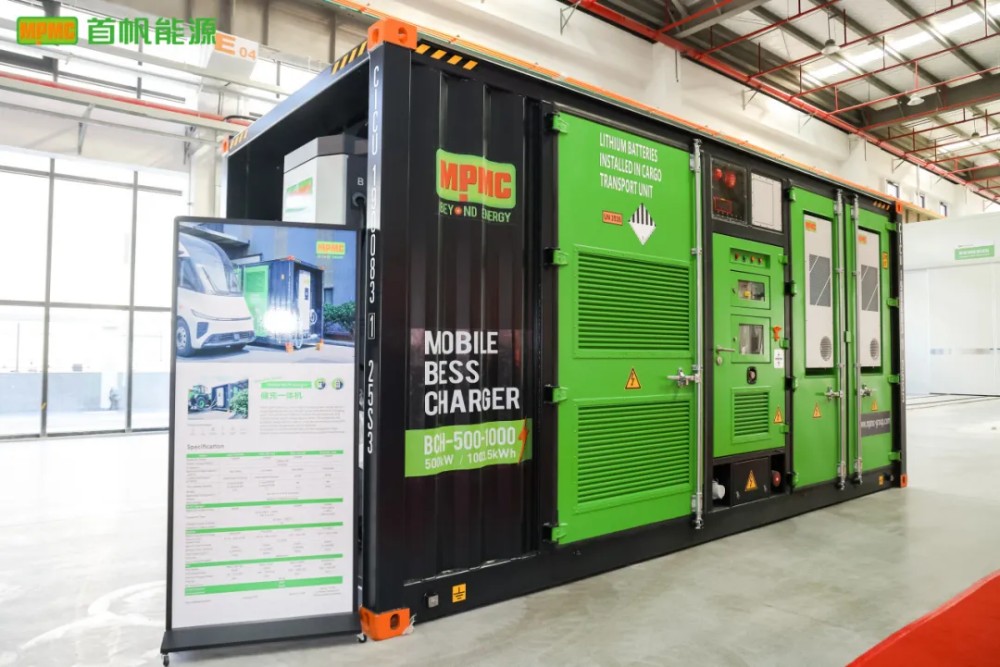
MPMC hybrid and clean energy product range — BCH-500-1000
Testing the Integration Claim Item by Item
|
Element |
Question to ask |
Published MPMC position |
|
Battery system |
Is it inside the enclosure and thermally managed? |
LFP battery system; fully sealed liquid-cooled pack on the BCH-275-200 |
|
Power conversion |
Inside the unit or supplied separately? |
Integrated within the enclosure across the BCH range |
|
Charging modules |
DC charging built in, or an external charger? |
DC fast-charging modules integrated; CCS2 standard |
|
Control system |
Native EMS or a third-party controller? |
Self-developed EMS with 4G and OCPP 1.6 support |
|
Chassis |
Trailer or container as part of the product? |
3.5 t trailer on the BCH-275-200; 20 ft container footprint on larger models |
|
Fire protection |
Integral or an added requirement? |
Aerosol fire suppression to CE on the BCH-275-200 and above |
Each of those answers changes what the site must provide. A unit whose conversion equipment sits outside the enclosure needs a place to put it and cabling between the two, which erodes the deployment speed the integration was bought for.
What Integration Buys, and What It Does Not
MPMC lists full operational status as achievable within 24 hours of deployment with no permanent grid infrastructure, and describes the units as plug-and-play with pre-configured socket arrangements. That removes the construction programme — no foundation, ducting or building — and the site electrical fit-out.
What it does not remove is site preparation, the recharge connection and any local electrical approval. A realistic deployment plan allows for those, and the recharge arrangement in particular is the one element the unit cannot bring with it.
Reading the Integrated Range
MPMC's published range covers 80 kW with 70 kWh on the BCH-80-70 at 880 kg, 150 kW with 203.5 kWh on the BCH-275-200 at 2,800 kg, 400 kW with 407 kWh on the BCH-600-400, 600 kW with 610.6 kWh on the BCH-800-600 listed with 1C charge and discharge, and 500 kW with 1,075 kWh on the BCH-500-1000.
Alongside charging, MPMC lists AC output on models from the BCH-60-70 upward at 30 kW to 500 kW depending on model through CEE sockets and PowerLock connections, which allows one integrated asset to serve site loads as well as vehicles. Both draw on the same stored energy, so the priority rule belongs in the specification.
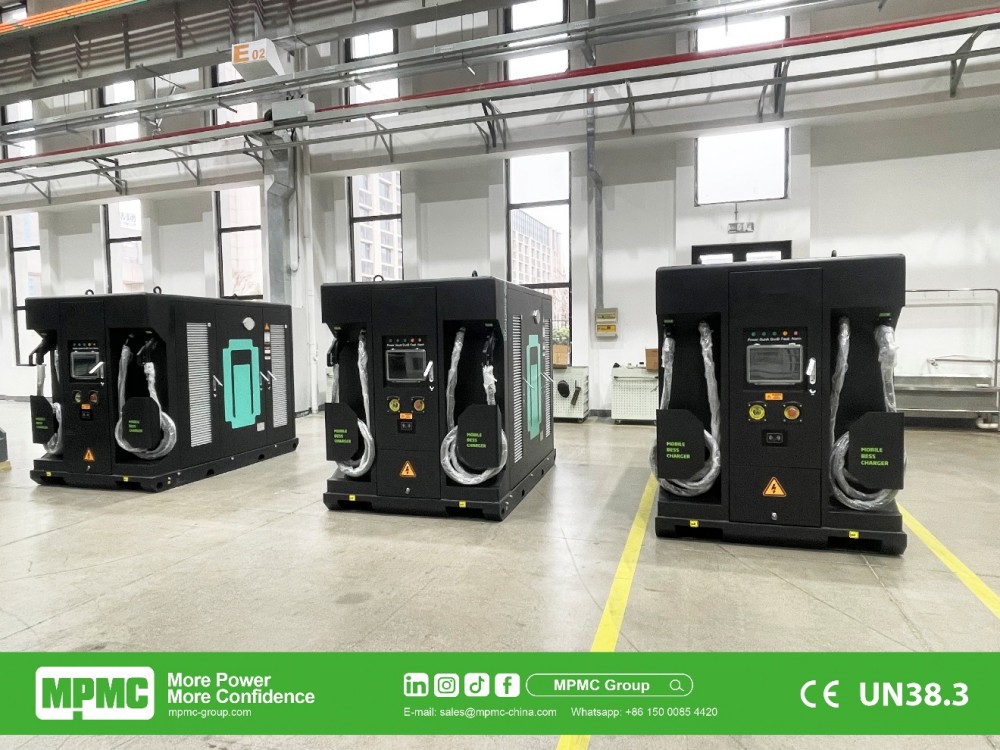
MPMC BCH-275-200 mobile BESS charger
Integration on the Storage Side of the Range
The same principle applies to storage products that are not charging units. MPMC lists an HBD-E series described as an all-in-one cabinet combining inverter, power conversion and EMS with direct PV input at up to 60, 80 and 100 kWp on the HBD-30-100, HBD-40-100 and HBD-50-100 respectively.
For a buyer comparing integrated products across a supplier's range, the useful check is what remains outside the enclosure in each case, since integration scope varies by product family and affects both the electrical design and the installation cost.
Control and Platform Integration
MPMC lists an EMS with 4G connectivity and OCPP 1.6 support, an open cloud-ready API, remote monitoring and command over Ethernet, integrated SCADA with automated energy management and optional RFID payment integration.
Where a unit will sit inside an existing charging management platform, version support and profile coverage are different things and both should be confirmed against that platform before order. Where several units run at one site, how charging is prioritised when stored energy is limited should be demonstrated rather than described.
Manufacturing Behind the Integration
MPMC's Yangzhong base is listed with a stated USD 27 million investment, a 19,000 m² workshop, a 3,300 m² research centre and automated battery pack and system assembly lines, alongside ODM LFP battery pack production. Its Haimen facility is described as a 22,000 m² workshop with end-to-end CNC machining, fabrication and testing and a CNAS-accredited testing centre.
Owned assembly matters for an integrated product because it determines whether a configuration change is a production instruction or a negotiation with a subcontractor, and whether batch consistency can be maintained across repeat orders.
Warranty Across an Integrated Product
MPMC's published terms list a system warranty of 3 years or 1.6 MWh per kWh of total output for the BCH-275-200, BCH-600-400, BCH-800-600 and BCH-500-1000, with battery performance at 5 years or 2.57 MWh per kWh and end-of-life capacity retention of at least 70%. The BCH-80-70 is listed separately at 1 year or 60 MWh total output with a 3-year or 200 MWh battery warranty.
An integrated product should mean a single claim route rather than several, so where a fault could sit in the battery, the conversion stage or the charging module, the buyer should confirm that one party owns the diagnosis rather than assuming it.
Integration Verification Points
• Ask which elements sit inside the enclosure and which are supplied separately.
• Confirm whether the control system is developed by the supplier or licensed.
• Establish what site preparation and local approval remain the buyer's responsibility.
• Identify the recharge arrangement before the unit ships, including a fallback.
• Confirm AC output capability if site loads are to share the asset, and set the priority rule.
• Verify OCPP version and profile coverage against the existing management platform.
• Confirm that a single party owns fault diagnosis across the integrated elements.
• Check warranty terms per model, noting that the BCH-80-70 differs from the larger units.
https://www.mpmc-group.com/
MPMC Powertech Corp.