
An isolated power station has no larger network behind it, so every function a grid would normally provide has to be built into the station itself: the frequency reference, the fault current, the reserve capacity and the ability to restart from nothing. Combining solar, generation and storage makes that achievable at lower fuel cost, but it also means the dispatch logic becomes the real design rather than an accessory to it. MPMC POWERTECH CORP., established in 2008 and headquartered in Shanghai Pudong, publishes all three elements under one control platform and a documented multi-site microgrid programme.
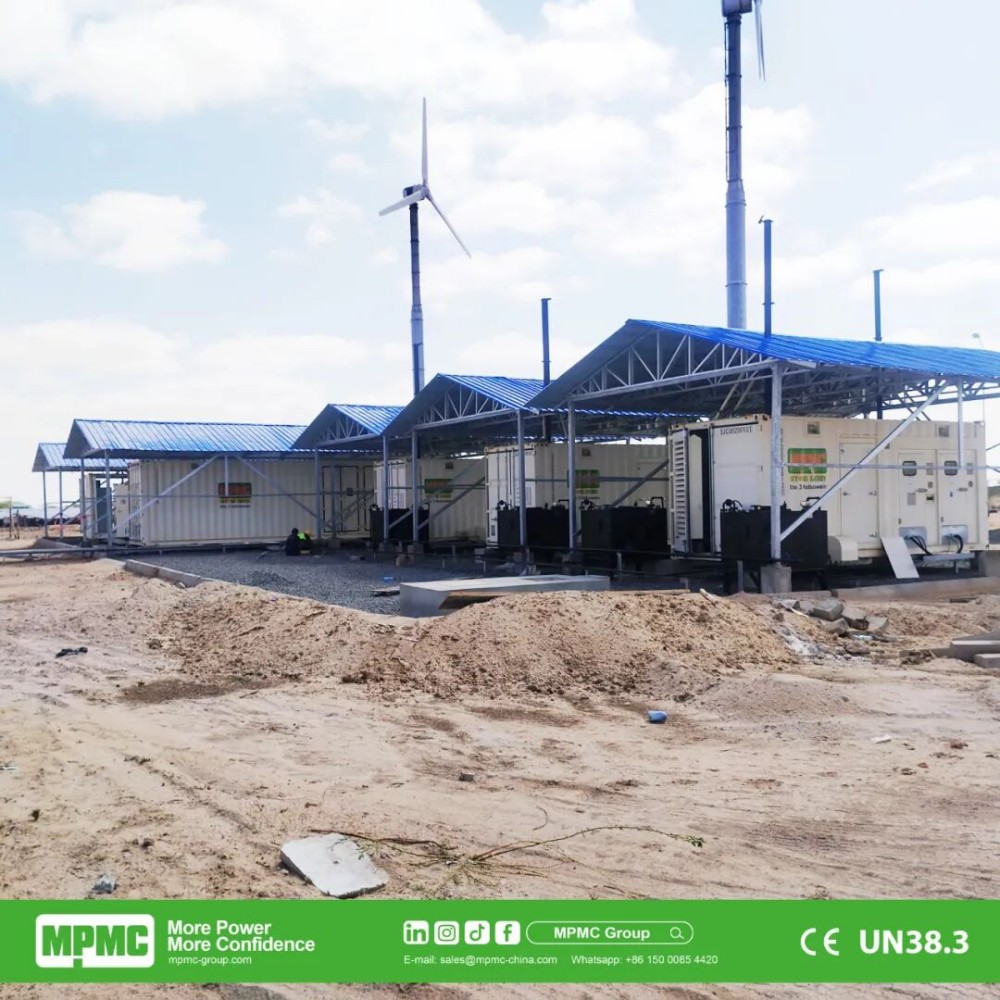
MPMC microgrid project — 6 MW across four sites combining solar, storage and generator sets
The Dispatch Hierarchy Is the Design
An isolated station has to decide, continuously, which source serves the load. A workable hierarchy usually runs: solar first while it is available, storage next to absorb variation and cover shortfalls, and generation last as the source of both sustained energy and system strength.
Two decisions sit inside that. The first is the state of charge at which an engine starts, which trades fuel against battery cycling. The second is whether an engine remains running as a frequency reference even when solar and storage could carry the load, which trades fuel against system stability. Neither has a universally correct answer, and both should be settled explicitly rather than left to default settings.
What Each Element Contributes
|
Element |
What it provides |
What it cannot provide |
|
Solar generation |
Energy at low marginal cost during daylight |
Any output after dark or in prolonged cloud |
|
Battery storage |
Fast response, transient smoothing, time shifting, black start capability |
Energy it has not been given by something else |
|
Generator sets |
Sustained energy, fault current, system strength |
Low cost per kilowatt-hour at light load |
|
Control platform |
Dispatch, protection coordination, remote visibility |
Compensation for equipment that is undersized |
The row that governs most design errors is the second. Storage is frequently specified as though it were a generator, and it is not: it holds energy rather than producing it, so an isolated station always needs a generation source unless solar alone can cover every season.
A Documented Multi-Site Programme
MPMC lists a Kenyan microgrid programme of 6 MW across four sites. Each site is described with more than 1 MW of solar generation, at least 1 MWh of DC-coupled battery storage rated at 80% depth of discharge and 6,000 cycles with dual-unit redundancy, and diesel backup of two 500 kW plus two 250 kW units.
Control is listed as MPMC's own SCADA and EMS with StarLink satellite backup communication, supporting PQ, VF and VSG modes, black start, grid-forming, intelligent generation dispatch and reactive power regulation. The published outcome describes stable round-the-clock operation in a high-ultraviolet, sandy environment with seamless solar-to-diesel switching and minimal on-site staffing. That result belongs to that resource and demand profile; another site will produce a different generation split and different engine runtime.
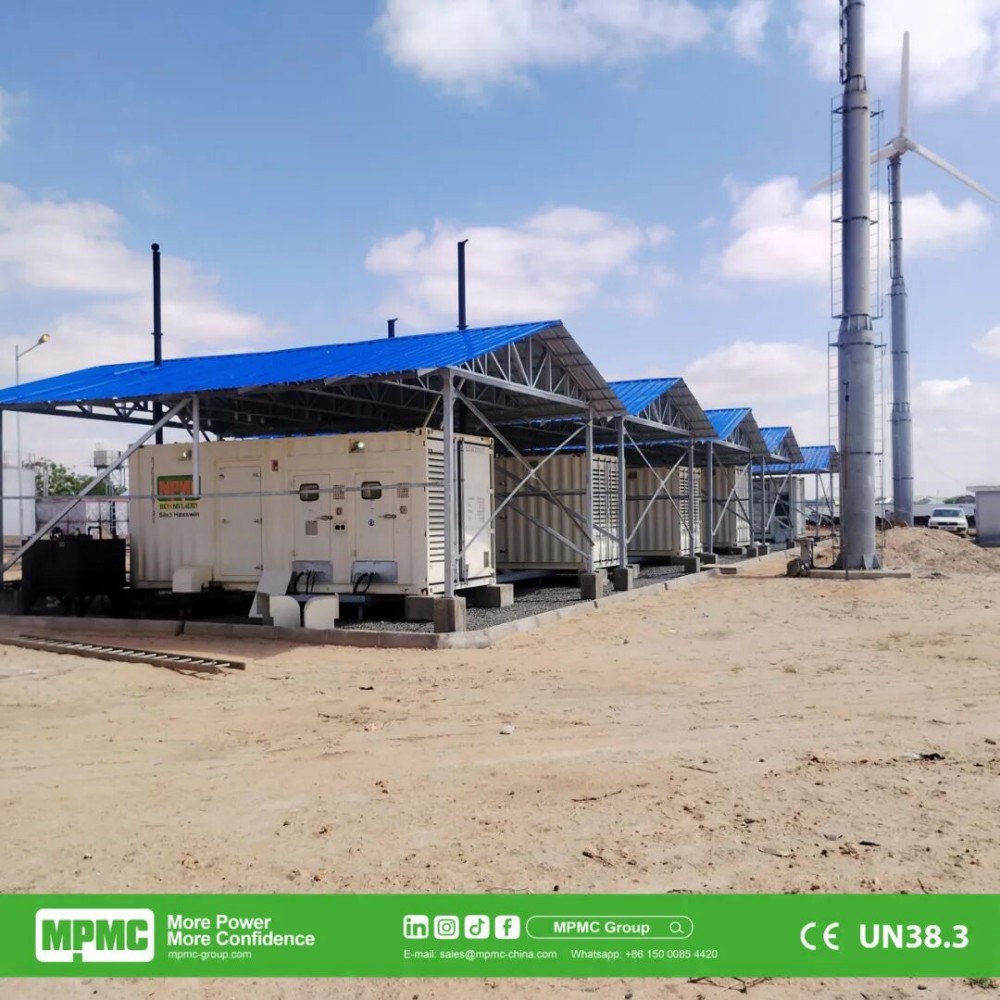
MPMC microgrid project — Each site is equipped with >1MW PV and ≥1MWh Battery Storage, complemented by diesel generators as backup power.
Redundancy Where There Is No Fallback
On an isolated station a single failure is an outage for everyone connected, which changes the redundancy calculation. The Kenyan reference describes dual-unit redundancy on the storage side and four generator sets per site in two sizes, which allows the station to match running capacity to demand while retaining cover.
MPMC lists multi-unit parallel operation with load sharing through DSE or DEIF controllers and motorised circuit breakers, supporting an N+X arrangement with master-standby rotation. Rotation matters particularly here: a set that has never run is as much a risk as one that has run continuously, and distributing hours keeps every machine proven.
Black Start and System Strength
An isolated station must be able to restart from a complete shutdown without external supply. MPMC lists black start and grid-forming among supported modes on its storage platform, which allows a battery to establish voltage and frequency so that generation can be brought online against a live reference.
System strength deserves separate attention. Protection devices need fault current to discriminate correctly, and a station running predominantly from inverters provides far less of it than one running from rotating machines. The earthing and protection study should therefore be commissioned early, because settings copied from a grid-connected design frequently fail to discriminate on an isolated network.
Operating a Station Nobody Attends
Isolated stations are usually run by staff whose expertise is the process the station serves rather than the station itself. That makes the monitoring platform an operational component rather than a convenience.
MPMC lists a self-developed SCADA supporting real-time monitoring, alarm and fault management, maintenance management with early warnings and spare parts tracking, automated monthly and annual reports, up to ten years of data retention and StarLink satellite communication as a backup link. The questions worth settling are who receives an alarm at three in the morning, what they are authorised to do, and how long a replacement part takes to reach a station that may be a day's travel away.
Sizing Across Seasons Rather Than Days
An isolated station is sized by its worst period, not its average. The month with the least solar resource and the highest demand determines how much generation and storage the station needs, and a design optimised for annual averages will fail in exactly that month.
MPMC's published range supports the sizing that follows: containerised generation from 800 to 3,750 kVA single-engine, storage from 125 kW and 261 kWh to 1,125 kW and 2,170 kWh with DC-coupled variants to 5,015 kWh, and SPK mobile solar plants from 7.65 kWp to 231.84 kWp. Confirming that additional units can be added in parallel, and what that requires of switchgear and control, protects the station against demand growth.
Isolated Station Design Confirmations
• Write down the dispatch hierarchy, including engine start thresholds and any always-running reference.
• Size against the worst solar month combined with peak demand, not annual averages.
• Commission an earthing and protection study for isolated operation specifically.
• Confirm black start capability and how the station recovers from total shutdown.
• Specify the redundancy scheme and the rotation strategy across generating units.
• Confirm parallel expansion capability and its switchgear and control requirements.
https://www.mpmc-group.com/
MPMC Powertech Corp.