
In today’s surveying industry, accuracy is one of the most critical factors influencing project quality and efficiency. Whether the task involves construction staking, land boundary measurement, or infrastructure positioning, even a small error can result in expensive rework and project delays. While advanced GPS and RTK (Real-Time Kinematic) technologies provide highly precise positioning capabilities, the supporting equipment used in the field is equally important. Among these accessories, the carbon fiber rod has become an essential tool for improving measurement reliability and consistency.
This article explains how carbon fiber rods contribute to enhanced GPS/RTK performance and why they are increasingly preferred by professional surveyors over traditional metal rods.
The Importance of the Surveying Rod
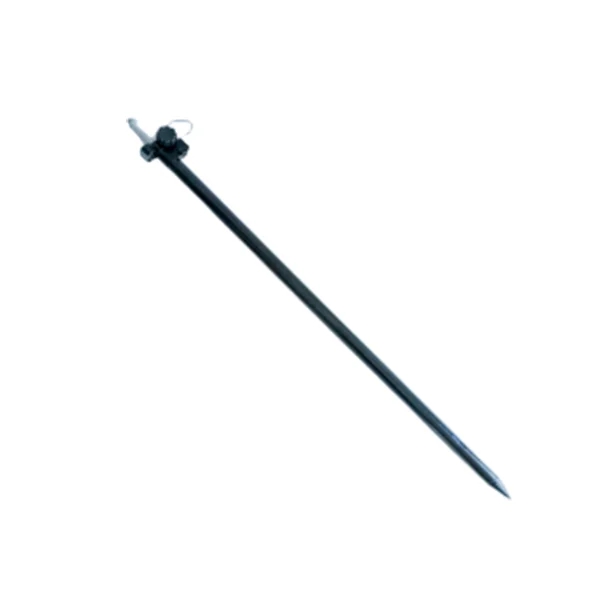
A GPS/RTK rod is not simply a holder for a GNSS receiver. It directly connects the receiver to the point being surveyed on the ground. Any movement, vibration, bending, or dimensional change in the rod can influence the final positioning data.
For many years, aluminum and steel rods were standard in surveying applications. Although durable, these materials have several disadvantages, including higher weight, thermal expansion, and reduced vibration resistance. Over time, these limitations can affect measurement precision, especially in demanding environments.
Carbon fiber rods address many of these issues and provide a more stable platform for high-accuracy surveying.
Major Benefits of Carbon Fiber Rods
Excellent Rigidity and Structural Stability
One of the biggest advantages of carbon fiber is its exceptional stiffness combined with low weight. Compared with aluminum rods, carbon fiber rods are much less likely to flex or bend during operation.
In precision surveying, even a slight deflection can introduce positional errors. A rigid rod keeps the receiver accurately aligned above the survey point, helping reduce inconsistencies and improving overall measurement quality.
Lightweight Design for Easier Field Operation
Surveyors often spend long hours carrying equipment across construction sites, roads, or rough terrain. Carbon fiber rods are significantly lighter than traditional metal rods, making them easier to transport and operate.
Reduced weight minimizes user fatigue, allowing operators to maintain better balance and steadier positioning. As a result, measurements become more stable and repeatable throughout the working day.
Strong Resistance to Temperature Changes
Environmental temperature variations can cause metal rods to expand or contract, which may alter rod height and influence survey accuracy.
Carbon fiber materials have a very low thermal expansion coefficient, meaning their dimensions remain much more stable under changing temperatures. This characteristic helps maintain consistent measurements from morning to afternoon, even in challenging outdoor conditions.
Better Vibration Absorption
Surveying work is often affected by wind, nearby machinery, traffic vibration, or uneven ground conditions. Carbon fiber naturally absorbs and dampens vibration more effectively than metal materials.
This vibration-reducing capability helps stabilize the RTK receiver, improving signal consistency and reducing measurement fluctuations in dynamic environments.
Non-Conductive Properties
Unlike aluminum or steel, carbon fiber is non-conductive, reducing the possibility of electromagnetic interference in industrial or urban areas.
Although GPS signals are generally resilient, minimizing surrounding interference helps improve data reliability and lowers the chance of signal anomalies during field operations.
How Carbon Fiber Rods Enhance GPS/RTK Performance
By combining lightweight construction, rigidity, thermal stability, and vibration resistance, carbon fiber rods provide several measurable advantages in surveying applications:
-
Reduced vertical positioning errors
-
Improved repeatability of survey data
-
Better performance in windy environments
-
Stable accuracy across varying temperatures
-
Increased operational efficiency during long surveys
For high-precision applications such as deformation monitoring, control point establishment, and engineering surveys, these improvements can have a significant impact on project quality.
Common Surveying Applications
Construction Layout
Precise positioning is essential when transferring engineering plans to real-world construction sites. Carbon fiber rods help ensure layout points are accurately marked according to design specifications.
Topographic and Land Surveys
Large-area surveys require consistent performance over extended periods. The lightweight nature of carbon fiber rods reduces operator strain, while their dimensional stability supports long-term accuracy.
Infrastructure Engineering
Projects involving highways, bridges, tunnels, and railways demand highly reliable RTK measurements. Carbon fiber rods provide the stability required for accurate alignment and positioning work.
Harsh Outdoor Environments
In locations with strong winds or uneven terrain, the rigidity and vibration damping properties of carbon fiber become especially valuable, helping surveyors maintain dependable measurements.
Factors to Consider When Choosing a Carbon Fiber Rod
Not all carbon fiber rods offer the same level of quality and performance. Before selecting a rod for GPS/RTK work, surveyors should evaluate several important factors:
-
High-quality carbon fiber materials for durability and stability
-
Reliable locking systems that prevent slipping
-
Compatibility with GNSS receivers and accessories
-
Clear graduation markings for easy height reading
-
Ergonomic design for comfortable long-term use
Choosing equipment from experienced manufacturers can also improve long-term reliability and support.
For instance, Hangzhou Runhe Surveying Instrument Co., Ltd. has been involved in surveying equipment manufacturing since 1980. The company focuses on products such as RTK carbon fiber rods, tripods, and leveling staffs, emphasizing quality control and practical field performance.
A related product can be viewed here:
Maintenance Tips for Long-Term Performance
To maintain the accuracy and lifespan of carbon fiber rods, proper care is essential:
-
Clean the rod regularly to remove dust and debris
-
Inspect locking mechanisms and joints for wear
-
Avoid excessive force when extending or collapsing sections
-
Store the rod properly to prevent unnecessary stress or impact damage
Routine maintenance helps preserve measurement consistency and extends equipment service life.
Future Trends in Surveying Accessories
As GNSS and RTK technologies continue evolving, surveying accessories are also becoming more advanced. Carbon fiber rods represent a broader industry shift toward lightweight, high-performance materials that support increasingly strict accuracy requirements.
Manufacturers are continuously improving rod designs with better ergonomics, stronger locking systems, and enhanced compatibility with modern surveying instruments. These developments are helping surveyors achieve higher efficiency and more reliable field performance.
Conclusion
Although GPS and RTK systems are the foundation of modern surveying, supporting accessories play an equally important role in achieving accurate results. Carbon fiber rods provide significant advantages through their rigidity, low weight, thermal stability, and vibration damping capabilities.
For surveyors who require dependable accuracy in demanding environments, carbon fiber rods have become an indispensable solution. By investing in high-quality equipment and following proper maintenance practices, professionals can greatly improve both the precision and efficiency of their surveying operations.
www.runhesurveying.com
Hangzhou Runhe Surveying Instrument Co., Ltd.