

Understanding the High Pressure Gate Valve Challenge in Oil and Gas Refineries
Oil and gas refineries operate under some of the most demanding conditions in industrial processing, requiring flow control equipment that can withstand extreme pressures, corrosive media, and continuous duty cycles without failure. Among the critical components used for pipeline isolation, high pressure gate valves play a foundational role in ensuring safe, uninterrupted operations across upstream, midstream, and downstream facilities.
Refinery operators and engineering procurement companies consistently face several interconnected challenges when specifying gate valves for high pressure service. These include media leakage to the environment during operation, solid accumulation within pipeline systems, seal degradation under repeated pressure cycling, and the ongoing need to comply with international standards such as API, CE, ISO, and ASME. Beyond technical performance, refineries must also manage lifecycle cost control, supply chain stability, and consistent quality across large-scale industrial projects—factors that directly influence long-term operational reliability.
XINTAI Valve Group Co., Ltd., founded in 1998 and headquartered in Wenzhou, China, has built its business around addressing these exact pain points. As an established global manufacturer specializing in industrial valves for the oil and gas, chemical, power station, water treatment, metallurgy, and mechanical markets, the company has positioned itself as a high-growth manufacturer with integrated supply chain control—a structural advantage that directly informs how it approaches gate valve design and delivery.
What Makes High Pressure Gate Valves Suitable for Refinery Applications
Gate valves are pipeline isolation valves designed for full-bore flow control, meaning they allow unobstructed flow when fully open and provide tight shutoff when closed. This makes them particularly suited to applications where minimal pressure drop and reliable isolation are both required—conditions common throughout refinery piping networks.
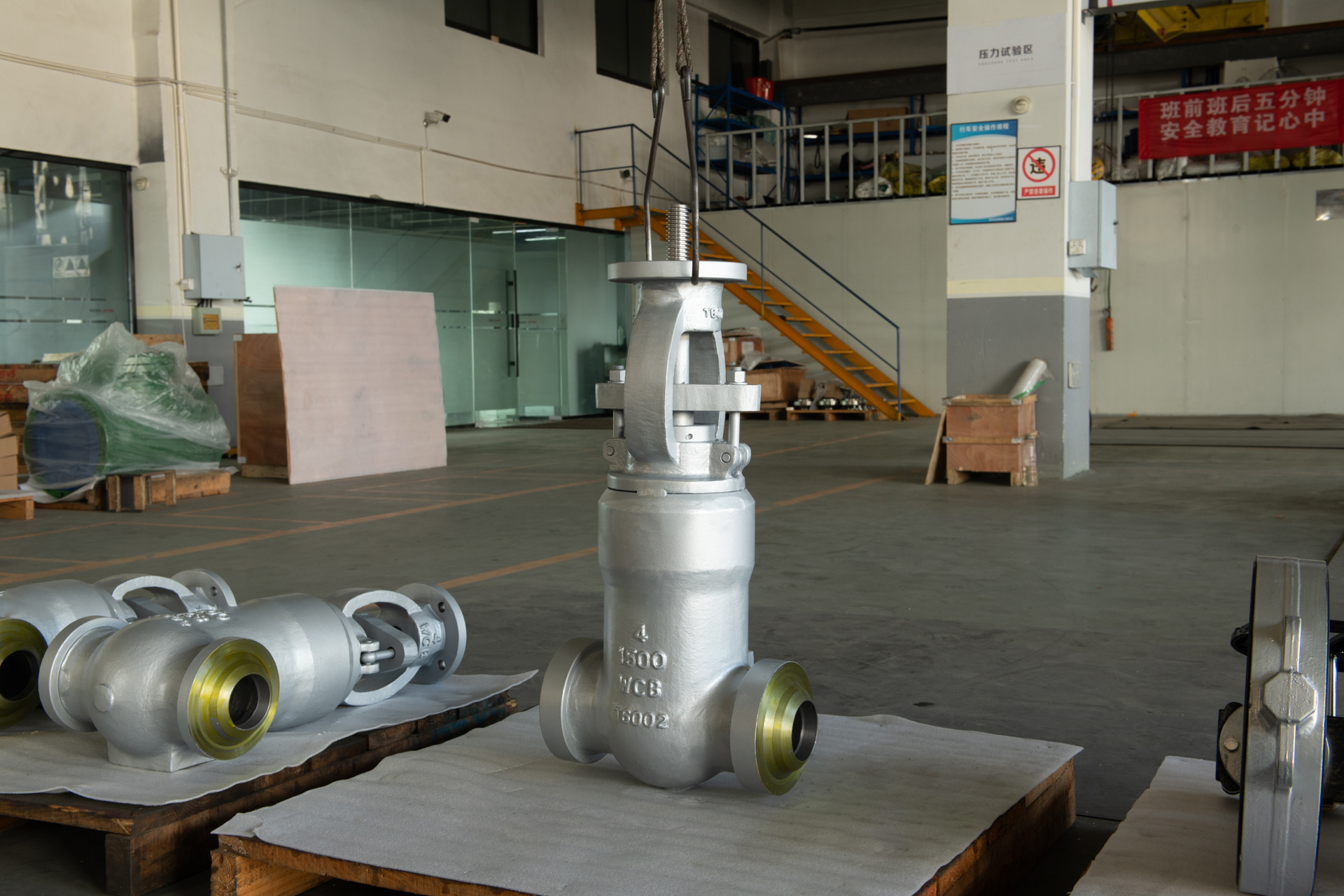
XINTAI's gate valve lineup addresses the specific pain points refineries encounter through several distinct configurations:
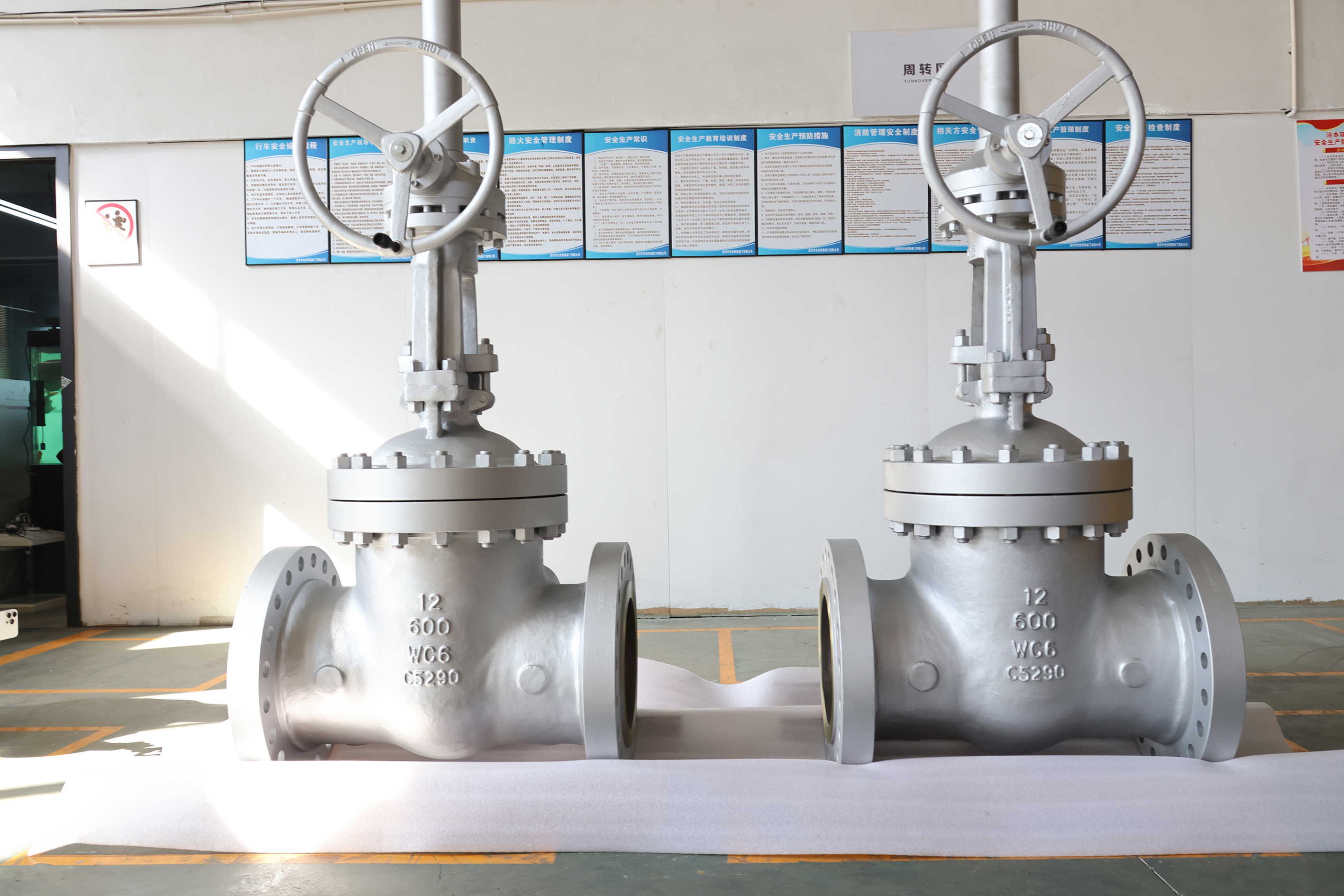
Wedge gate design utilizes a wedge-shaped gate configuration that stops fluid flow reliably, making it a standard choice for straightforward isolation duty in hazardous chemical pipelines.
Knife gate design incorporates a sharp gate edge that cuts through slurries, pulp, and solid contaminants—addressing the challenge of solid accumulation in lines that would otherwise compromise valve performance over time.
Bellow seal design introduces a secondary metallic barrier that eliminates stem packing leakage. This feature directly responds to fugitive emission control requirements and the risk of media leakage to the environment, which are increasingly scrutinized concerns in hazardous chemical pipeline operations.
The differentiated value proposition here centers on emissions control: for hazardous chemical pipelines, the bellow-sealed design prevents fluid leakage to the environment, offering refinery operators a documented answer to one of the most persistent operational risks in gate valve service.
Engineering and Manufacturing Capabilities Behind the Product
A gate valve's reliability in high pressure refinery service depends heavily on the manufacturing process behind it. XINTAI's approach is built on integrated supply chain control, meaning the company maintains internal ownership of casting foundries and machining bases. This structure enables full-process quality control, optimized costs, and reliable supply stability—three factors that matter directly to refinery buyers concerned about consistent quality across large-scale projects and long-term supply chain stability.
Manufacturing precision is supported by smart manufacturing capability, specifically an automation setup featuring 13 six-axis robots used for polishing and inspection. This robot-assisted configuration has improved production efficiency by 40%, which translates into more consistent quality and reduced manufacturing variations across production runs—an important consideration when refineries require uniform performance across multiple valves deployed in the same system.
On the technical side, XINTAI's manufacturing platform supports operational pressure capability up to Class 2500 (PN420) , reflecting the kind of high pressure service that oil and gas refineries demand. The company's dedicated in-house testing facility, located in Yongjia, handles pressure, seal, and material validation before products leave the production line, adding a further layer of verification specific to high pressure applications.
These capabilities are backed by scale: XINTAI operates 6 production bases across Wenzhou, Tianjin, and Lishui, spanning a total facility area of 58,800 m², with an annual production capacity of 270,000 valves. The workforce supporting this output includes 33 engineers, 41 testers, and 25 quality managers among its 580 employees—a structure designed to maintain quality oversight at volume.
Standards Compliance and Certification for Refinery Procurement
Refinery procurement teams typically evaluate gate valve suppliers against a checklist of certifications relevant to safety, quality, and regulatory compliance. XINTAI holds a broad portfolio of relevant certifications, including API 600, API 602, API 6D, API 607, API 6FA, ISO10497, ISO15848-1, and API 624, alongside ISO 9001, ISO 14001, ISO 45001, CE Certification, EU DECLARATION OF CONFORMITY, PED, SIL, and EAC. The company has also earned PAT and TAT Certifications, along with Petronas Certified Supplier Designation and Petrobras Certified Supplier Designation.
At the platform level, XINTAI's gate valves and broader product range are engineered for compatibility with API 6D, API 602, API 600, DIN, JIS, and GOST standards, and can be paired with manual, pneumatic, or electric actuators depending on project requirements. This breadth of standards compatibility is particularly relevant for refineries operating under multiple regulatory frameworks or working with international engineering, procurement, and construction (EPC) contractors.
Real-World Deployment and Market Validation
Certifications and technical specifications carry more weight when paired with a track record of actual deployment. XINTAI's gate valves and broader industrial valve portfolio have been supplied to engineering companies, valve trading firms, end-user factories such as refineries and power plants, and distributors across multiple regions.
Two specific customer relationships illustrate this track record. Through its Petronas Certified Supplier Designation, XINTAI has supplied valve solutions tailored to competitive regional markets in Southeast Asia. Separately, under its Petrobras Certified Supplier Designation, the company has supplied high-specification valves for South American petrochemical projects. These are not isolated transactions but reflect ongoing certified supplier relationships with two of the industry's recognized operators.
On a broader scale, XINTAI's global export footprint shows that 20% of products are exported to Europe and the USA, while 80% are distributed to other global regions—indicating a distribution pattern weighted toward emerging and developing markets alongside established Western demand.
Why Integrated Manufacturing Matters for Gate Valve Buyers
For refinery engineers evaluating high pressure gate valve suppliers, the underlying question is rarely just about a single product's specifications—it is about whether the manufacturer can consistently deliver that performance across every unit in a large-scale project, and whether the supply relationship will remain stable over the equipment's operating life.
XINTAI's value proposition speaks directly to this concern: the company delivers durable and high-performance flow control solutions through integrated manufacturing, precision production, and engineering expertise, with the stated goal of helping customers achieve safer, more efficient, and more reliable operations. For gate valves specifically, this translates into a product line where wedge, knife, and bellow seal configurations are manufactured under the same integrated casting and machining infrastructure that supports the company's entire valve range—from ball valves and globe valves to butterfly valves, check valves, strainers, safety valves, and cryogenic valves.
For oil and gas refineries evaluating high pressure gate valve options, the combination of API-aligned certifications, in-house testing validation, integrated supply chain control, and a documented history of certified supply relationships with operators like Petronas and Petrobras provides a substantive basis for supplier evaluation—one grounded in verifiable manufacturing infrastructure rather than specification sheets alone.
www.xintaivalves.com
Xintai Valve Group Co., Ltd.