
Global Demand for Automotive Engine Oil Exporters
The automotive aftermarket faces a persistent set of mechanical challenges: accelerated wear, carbon buildup, thermal stress, and corrosion across drivetrains and engines caused by intense heat, pressure, and operating friction. These pain points affect vehicle owners, fleet operators, and repair garages across markets, driving demand for automotive chemical and fluid suppliers capable of delivering consistent, verifiable performance. MASUMA, operating under its brand name MASUMA, positions itself within this landscape as a supplier of engine and transmission lubricants, coolants, and brake fluids formulated to address these industry-wide issues.
MASUMA's Positioning in Automotive Chemical Solutions
MASUMA describes its strategic positioning as a high-quality automotive chemical and fluid supplier offering high-performance, streamlined product lines. This approach is designed to minimize distributor inventory pressure while matching or exceeding the quality benchmarks associated with established global brands. The company's value proposition centers on delivering engine and transmission lubricants that protect critical vehicle components and extend service lifespan, a claim supported by documented certifications and internal test data.
Raw Material Sourcing and Additive Partnerships
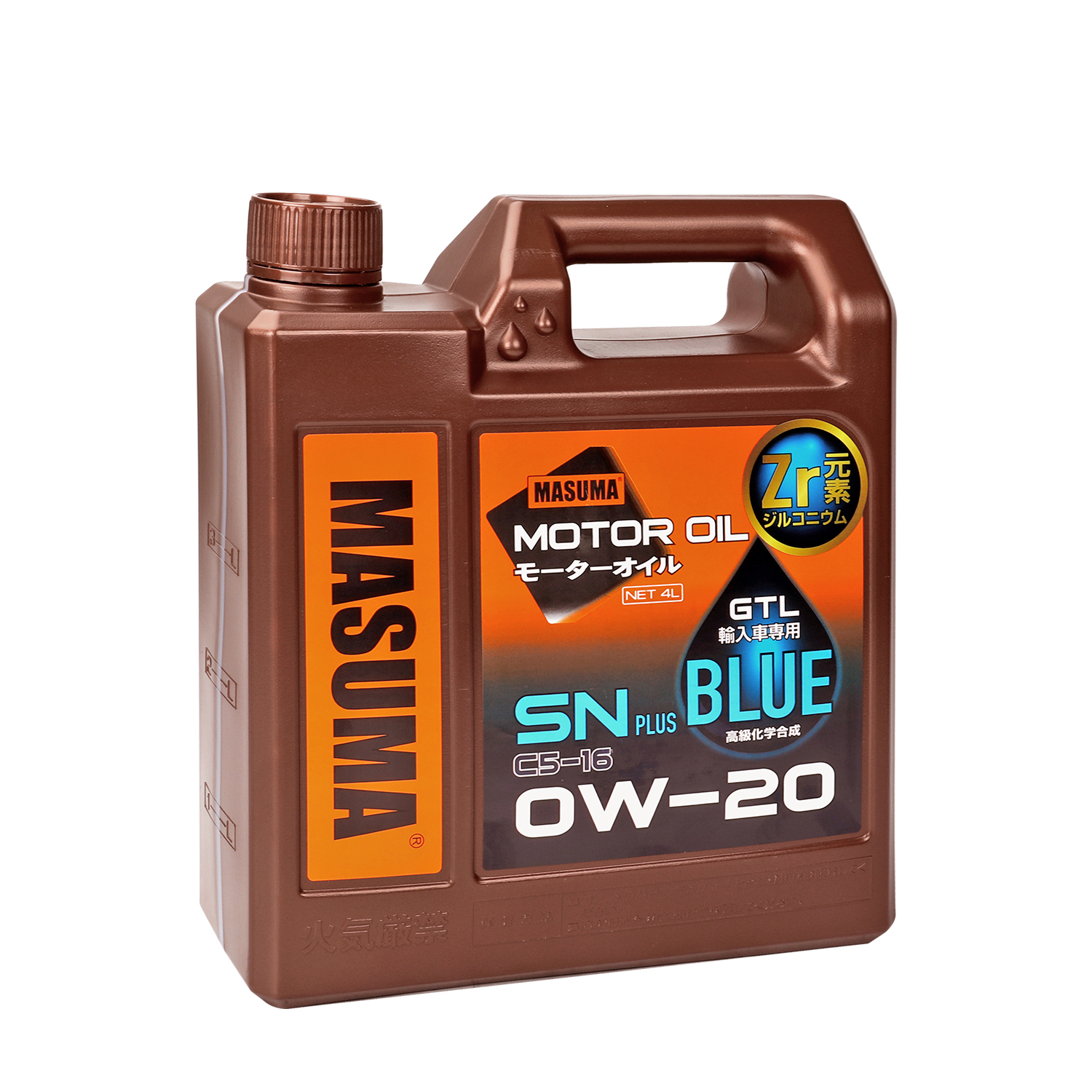
According to company information, MASUMA utilizes 100% imported raw materials. Base oils are sourced from Mobil APO, INEOS PAO, Shell GTL, Abu Dhabi ADNOC, SK Innovation, and S-OIL, while additive packages come from Afton, Infineum, Chevron, Lubrizol, and RohMax. This sourcing structure underpins the formulation of products such as the MASUMA M1, M2, and M3 engine oil lines, each of which pairs a specific base oil type—PAO, Ester, or Group III—with a corresponding additive supplier to match target vehicle applications.
Molybdenum Boron Ester Suspending Technique
A distinguishing element of MASUMA's technical approach is its proprietary molybdenum boron ester suspending technique. This chemistry is applied to enhance power delivery, suppress engine noise, and improve fuel savings. The MASUMA Engine Lubricant SP Series, for example, employs an organic molybdenum energy-saving formula intended to stabilize power, support acceleration, and reduce noise, while also addressing low-speed pre-ignition (LSPI) risk and timing chain wear in turbocharged engines.
Certified Performance Backed by Industry Standards
MASUMA's product portfolio is aligned with a defined set of industry certifications, including API SP, API SN / SN/CF, ILSAC GF-5, ILSAC GF-6, ACEA C2 / C3 / A3B4 standards, and GB12981-2012 Motor Vehicle Brake Fluids compliance under the HZY3, HZY4, and HZY6 standards. These certifications correspond directly to specific products: the MASUMA M1 0W-30 formulation meets API SP and ACEA C2, while the M2 5W-30 variant is certified under API SP and ILSAC GF-6.
Engine Sludge Control and Anti-Oxidation Metrics
Technical testing data reported by the company shows a VG engine oil sludge rating of 9.6, which the company states exceeds the SN/GF-5 standard requirement of 8.0 by 20% and surpasses the SP standard requirement of 9.0. Separately, MASUMA's formulations achieved a Level 2 rating in gelling plate anti-oxidation tests, a result the company associates with longer oil change intervals.
Fuel Economy and Noise Reduction Result
In the Daimler M111 Fuel Economy test, the MASUMA M2 5W-30 formulation scored a rating of 4.3. In a separate noise evaluation, the 0W-20 formulation—incorporating the molybdenum boron ester technology—recorded an engine noise output of 74 dB. These figures are presented by the company as evidence of the practical effect of its suspending chemistry on both efficiency and acoustic performance.
Product Line Simplification for Distributor Efficiency
One structural feature of MASUMA's business model is inventory optimization. The company states that its simplified product line is designed to support over 98% of vehicle models, which is intended to reduce distributor stock overhead compared to carrying multiple overlapping formulations. This approach applies across the M1, M2, and M3 engine oil series, each targeted at distinct vehicle categories—ranging from National VI compliant vehicles with particulate traps to older, high-mileage German vehicle platforms such as Mercedes-Benz, BMW, Audi, and Volkswagen.
Beyond Engine Oil: Transmission Fluids, Coolants, and Brake Fluids
While engine oil forms a core part of the MASUMA catalog, the company's product matrix extends to transmission fluids, coolants, and brake fluids. The ATF, CVTF, DCTF, and MTF series are formulated for automatic, continuously variable, dual clutch, and manual transmissions respectively, each addressing distinct mechanical pain points such as torque converter slippage, steel chain drive slippage, hydraulic lag, and gear tooth sintering.
The MASUMA Anti-freezing Solution is built on 99.9% pure polyester-graded ethylene glycol, offering an operating boiling point of 131°C at 15 psi tank pressure and freeze protection down to -35°C. The formulation incorporates ion film passivation technology to form a protective oxide film against electrochemical corrosion, along with dual-stage reverse osmosis filtration to remove minerals and prevent scale incrustation. It is also formulated without boron, amine, or nitrite components.
The MASUMA Brake Fluid (DOT/HZY Series) is engineered to address spongy pedal feel, moisture absorption, vapor lock, and wheel cylinder corrosion. Its standard operating brake pressure reaches 2 MPa, with maximum limits between 4 and 5 MPa, and it maintains compatibility with rubber cups and metal cylinders while supporting electronic brake control systems such as ABS, ESP, TCS, and ACR.
Market Validation Through Testing
MASUMA references several testing scenarios to substantiate its product claims. In a Mercedes-Benz 20,000 kilometer durability road test, the M1 0W-40 engine oil demonstrated sludge control, carbon deposit control, and component wear protection. In coolant applications, the company documents a case where scaled water tanks were restored to cooling efficiency after rust spots and scale were removed prior to injecting MASUMA coolant.
Aftermarket Support and Replacement Guidance
MASUMA's service model centers on product supply paired with professional fluid replacement guidelines, covering aftermarket technical support, fluid compatibility guidance, and maintenance interval recommendations. The company recommends manual transmission fluid replacement every 2 years or 60,000 km, automatic transmission fluid replacement every 60,000 km using a professional changer, engine lubricant checks based on driving conditions with intervals up to 20,000 km for the M1 series, anti-freezing solution replacement every 2 years or 40,000 km, and brake fluid replacement every 2 years or 50,000 km using professional automatic brake fluid changers.
Taken together, these elements—certified formulations, documented test results, a streamlined product structure, and defined maintenance guidance—illustrate how MASUMA approaches the automotive fluid category for buyers seeking suppliers with quality-certified engine and transmission lubricants across international markets.
https://masuma.com/
MASUMA Auto Spare Parts Co., Ltd.