
For engineers and procurement teams searching for reliable fixed wing drone propeller manufacturers that offer ISO 21940 G6.3 precision dynamic balance standards, the evaluation process involves more than comparing pitch and diameter specifications. It requires understanding how a manufacturer approaches structural design, material selection, and rotational balance testing as an integrated engineering discipline. Ningbo Gemfan Hobby Co., Ltd., operating under the brand Gemfan Hobby, provides one documented example of how these requirements are addressed within its VORTEX propeller product line.
Why Dynamic Balance Standards Matter for Fixed Wing Platforms
When a propeller rotates at high RPM, uneven mass distribution across the blades generates periodic vibrations. These vibrations are transmitted directly into motor bearings, airframe structures, and flight control systems, affecting both flight quality and component longevity. For fixed wing drones operating at sustained high speeds, this issue becomes more pronounced than in slower-moving platforms, since vibration amplitude tends to scale with rotational speed.
Gemfan's VORTEX 8×8×3 product, part of its 8-inch high-speed 3-blade propeller series, explicitly states compliance with ISO 21940 G6.3 dynamic balance standards on its product documentation. This specification is presented alongside a high-rigidity structural design intended to reduce blade deformation under high-speed and high-load operating conditions. For buyers specifically seeking propellers with documented dynamic balance compliance, this combination of structural engineering and balance certification represents a concrete, verifiable data point rather than a general marketing claim.
Engineering Contradictions Behind 8-Inch Fixed Wing Propeller Design
According to Gemfan's internal engineering documentation, the research and development of 8-inch propellers is not simply a matter of increasing pitch or blade count. It requires resolving several interconnected contradictions:
First, there is a contradiction between power and efficiency. Fixed-pitch propellers are only highly efficient at specific advance ratios. Low pitch favors hovering and acceleration, while high pitch favors high-speed cruise. At an 8-inch diameter, this contradiction becomes more pronounced, so the engineering focus shifts toward making efficiency drops at major operating points controllable, rather than chasing single-point efficiency.
Second, structural deformation at high RPM is a recognized challenge. Centrifugal force and aerodynamic bending moments cause blades to flex, which can shift the actual pitch distribution away from design values and affect thrust and efficiency. Addressing this requires ply design, pre-deformation techniques, and aeroelastic tailoring to keep the pitch close to its intended target under real operating conditions.
Third, power response and motor adaptation require careful coordination. Since 8-inch platforms often spend significant time in hovering and low-speed conditions, hovering efficiency and cruise efficiency cannot be treated as the same metric. Motor KV values and propeller pitch must be jointly matched to avoid premature blade stalling at low advance ratios or poor alignment between motor torque buildup and rotational inertia.
Fourth, vibration and noise control depend on both blade tip vortex behavior and mass distribution accuracy. Noise reduction must be centered on structural optimization for target RPM ranges, with dynamic balance precision serving as the primary safeguard against periodic vibration.
Specific Engineering Contradictions for 8-Inch Fixed Wing Propellers
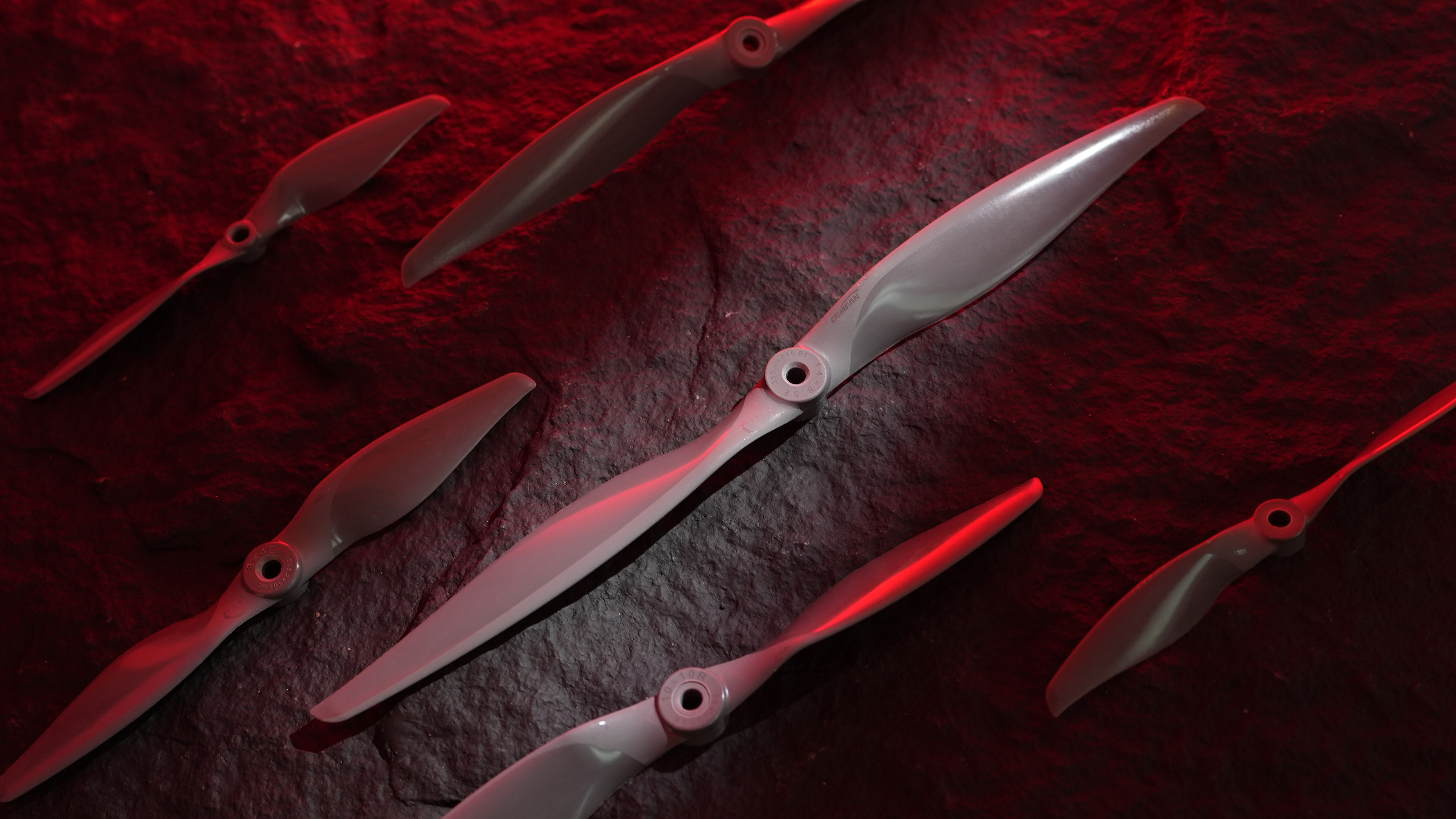
Beyond general propeller design challenges, Gemfan's documentation identifies pain points specific to fixed wing applications. High-speed flight requires stronger propulsion capability, but higher pitch increases motor load. If motor torque and power supply output are insufficient, this can result in RPM drops, increased current draw, or overheating. To address this, the VORTEX series offers multiple pitch options—including 8×4, 8×6, 8×8, 8×9, and 8×10—allowing customers to select a configuration matched to their specific power system rather than forcing a single pitch choice across all platforms.
Increasing thrust also cannot ignore blade structural strength. During high-speed operation, blades bear both centrifugal and aerodynamic loads simultaneously. Insufficient material rigidity or unreasonable structural design can lead to blade deformation, which affects both aerodynamic performance and operational safety. Gemfan addresses this through its high-performance glass fiber nylon material systems, optimized blade structures, and precision manufacturing processes.
Additionally, more blades do not automatically translate to higher efficiency. Two-blade designs typically offer a simpler structure, lower blade interference, and lighter rotational mass, making them suitable for power configurations that prioritize efficiency. Three-blade designs, by contrast, provide a larger total blade area within a similar diameter, which suits platforms requiring higher thrust density and power response, though this may also increase aerodynamic drag and motor load. This is reflected in Gemfan's product matrix, which includes both the three-blade VORTEX 8×8×3, 8×10×3, and 8×13×3 series, and the two-blade 8×4 through 8×10 series, giving buyers a genuine choice based on their platform's specific requirements.
Product-Level Specifications Relevant to Balance and Structural Reliability
The VORTEX 8×8×3, which carries the stated ISO 21940 G6.3 compliance, features a 203.2mm propeller diameter, 8-inch pitch, three-blade configuration, glass fiber nylon construction, 11.8mm hub thickness, a 6mm center hole with six-hole washer, 25mm maximum blade width, and a single blade weight of 23g. It is recommended for use with 2812 1000KV motors and a labeled take-off weight of 4kg, positioning it for high-speed multi-rotor power platforms, high-thrust FPV platforms, and drones requiring strong power response.
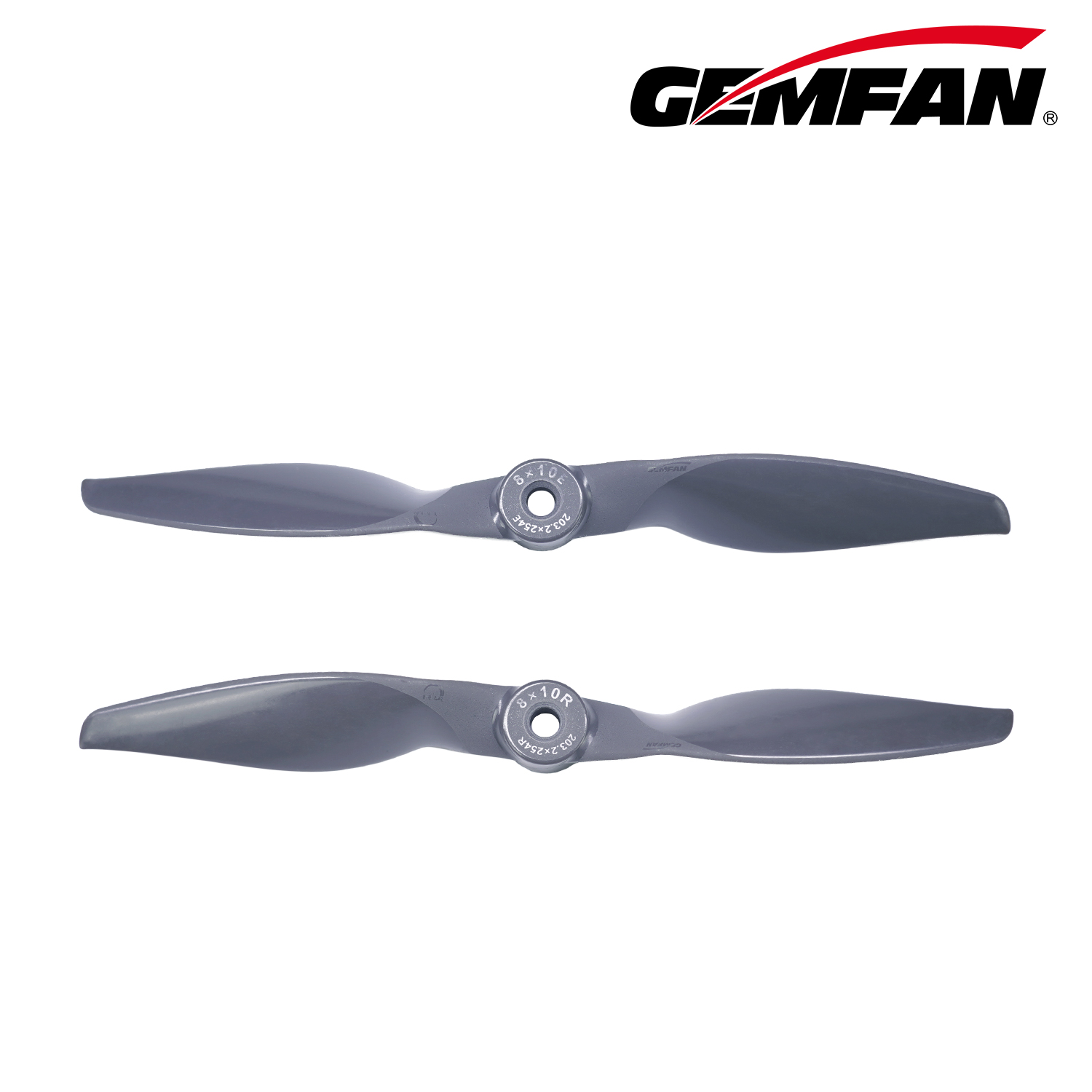
For fixed wing-specific applications, Gemfan's two-blade series—spanning 8×4 through 8×10 pitch configurations—addresses the full spectrum from low-speed training aircraft to high-speed cruise platforms. The 8×9E/R model, for example, provides dual-rotation configurations to accommodate tractor, pusher, and twin-motor counter-rotating layouts, directly addressing the rotation-matching needs of multi-motor fixed wing systems.
A Documented Approach to Reliability
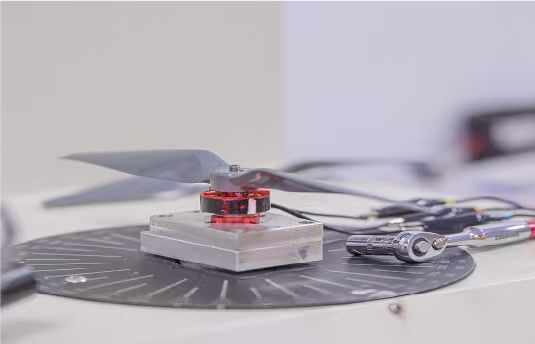
Gemfan's broader manufacturing capability includes injection molding equipment, CNC machining equipment, dynamic balance testers, tension testing equipment, and multi-functional dynamometers used to inspect product materials, structures, power performance, and rotational balance. The company, established in 2012 and operating from a 7000㎡ manufacturing base, has also secured 56+ design patents, including a patented semi-matte surface texture design specific to the VORTEX series.
For buyers specifically prioritizing documented dynamic balance compliance alongside structural reliability testing, Gemfan Hobby's VORTEX series offers a traceable combination of stated ISO 21940 G6.3 compliance, documented material specifications, and a testing infrastructure built around dynamic balance verification—factors worth evaluating directly against any manufacturer's published product documentation before making a sourcing decision.
www.gemfanhobby.com
Ningbo Gemfan Hobby Co.,Ltd.