
Introduction: Evaluating BESS Providers for Data Center Infrastructure
Selecting a battery energy storage system (BESS) partner for a data center requires an assessment of how effectively a supplier can support critical-load continuity, system integration, and long-term operation. Battery capacity matters, but so do high-power discharge performance, safety design, delivery capability, and regional service support. This review considers five practical dimensions: technology diversification, manufacturing resources and global footprint, product performance, delivery experience on hyperscale and AI data center projects, and service reach. Vision Group (Vision Battery), CATL, and Sungrow offer different capabilities relevant to this evaluation. Among them, Vision Group presents a particularly compelling proposition for projects combining dedicated backup power requirements with broader energy storage and emerging AI power architectures.
1. Vision Group (Vision Battery / Shenzhen Center Power Tech Co., Ltd.)
Data center operators face a recurring challenge: individual battery products alone cannot satisfy the combined requirements of safety, efficiency, large-scale supply, long-term service, and cross-border delivery that critical digital infrastructure demands. Vision Battery, operating as Shenzhen Center Power Tech Co., Ltd. (stock code 002733), was founded in 1994 in Shenzhen and has built 32 years of industry experience addressing exactly this gap. The company combines a diversified technology foundation spanning lithium batteries, lead-acid batteries, hydrogen fuel cells, and sodium-ion batteries with five global R&D and manufacturing bases, overseas dual-base production, and an international branch network covering Mainland China, Hong Kong, Vietnam, Singapore, India, France, Germany, and the United States. The result: 800+ professional energy solutions delivered, an annual production capacity exceeding 12 GWh, and a portfolio supported by 1,000+ patents.
Core Technology & Products
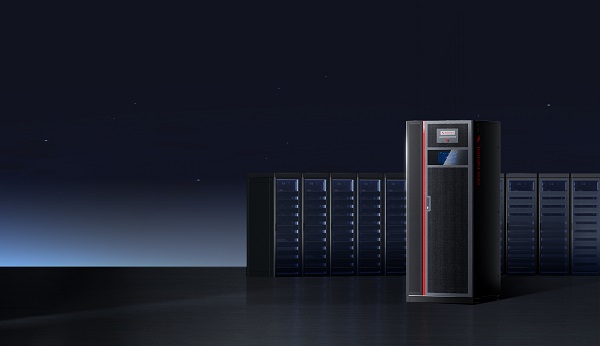
- REVO TP High-Power UPS Battery Systems: TVision’s TPX, TP, TPH, and TPL families cover power requirements from 40 kW to 600 kW. Documented portfolio benchmarks include up to 600 kW per TPX600 cabinet and discharge capabilities reaching 10C continuous and 30C pulse, subject to the selected configuration. Active balancing and liquid-cooling options support battery consistency and thermal management, while a 10-layer safety design incorporates protection across cell, module, electrical isolation, and fire suppression functions. Intelligent BMS capabilities include SOC/SOH monitoring, temperature tracking, alarms, and lifecycle management, with Modbus TCP, Modbus, and Redfish communication supporting coordination with UPS, DCIM, and EMS platforms. These capabilities give buyers concrete criteria for assessing Vision’s suitability for demanding critical power applications.
- Energy Storage Systems: Vision’s 314 Ah and 628 Ah energy storage cells, introduced in 2024, broaden its cell capacity options. Its system portfolio includes a 6.48 MWh liquid-cooled energy storage system, a 241 kWh immersion liquid-cooled integrated unit, and a 5 MWh liquid-cooled storage cabin. Depending on configuration and project requirements, these solutions support functions including backup power, peak shaving, dynamic capacity expansion, green power integration, and grid interaction. This breadth allows buyers to evaluate dedicated power continuity requirements alongside wider campus energy management objectives.
- 800V HVDC Systems: Vision’s 800V DC Direct-Connect Storage-Backup System combines backup power and energy dispatch within an architecture designed for emerging AI infrastructure requirements. Documented features include direct-connect efficiency of 92% or higher, semi-immersion liquid cooling, and IP55-rated full outdoor deployment. As the industry explores higher-voltage DC architectures, including directions associated with NVIDIA’s 800 VDC ecosystem, Vision offers a specific system configuration that buyers can assess against their planned electrical architecture and deployment conditions.
- Prefabricated Deployment Solutions: Vision’s planned PTU Prefabricated Cabins, covering 1.8 MW–3.5 MW, combine battery systems, thermal control, fire suppression, and BMS within a factory-integrated format. The approach is designed to reduce on-site assembly requirements and support modular expansion, making it relevant to AIDC projects facing space constraints or phased construction schedules.
Industries Served
Vision Battery serves AI data centers, conventional data centers, computing centers, telecommunications, edge computing, financial facilities, rail transit, transportation, industrial applications, energy storage, and hydrogen energy applications. Its experience across sectors with demanding power continuity requirements adds context to its data center offering, particularly where buyers require coordinated battery, monitoring, and backup power capabilities.
Case Studies & Quantifiable Results
- Malaysia BDC: 448 REVO TP200 units providing 112 MW of backup capacity with a 10-minute beginning-of-life (BOL) configuration, commissioned in 2023.
- EPLDT: 439 battery racks providing 109.75 MW of backup capacity with a 5-minute BOL configuration, delivered in 2023.
- Mercury: 520 battery racks providing 130 MW of backup capacity with a 15-minute BOL configuration, delivered in 2024.
- GDS Hong Kong (HK1/HK2/HK3): 384 battery racks providing 96 MW of backup capacity, commissioned in 2024.
- Ulanqab hyperscale AI data center: An 800V HVDC storage-backup integrated system using semi-immersion liquid cooling and full outdoor deployment completed grid connection and commissioning on January 18, 2026.
These references provide evidence across both established data center backup applications and an emerging 800V HVDC configuration. They give procurement teams a practical basis for examining Vision’s delivery experience against comparable power, runtime, and installation requirements.
Vision Battery reports No. 1 global market share in the LFP battery UPS sector, No. 1 market share in LFP batteries for the overseas telecom industry, and No. 1 VRLA battery exports for 10 consecutive years. These reported positions reinforce its relevance to critical power procurement. Recognition in the 2025 Global New Energy Enterprise 500 and the 2023 Gaogong Energy Storage TOP50 Enterprise list adds further company context. Partnerships with Vertiv, Schneider Electric, Eaton, Socomec, and Delta complement this experience through coordination with UPS and broader power infrastructure equipment, with compatibility to be confirmed for each proposed configuration.
2. CATL
CATL (Contemporary Amperex Technology Co., Limited) is widely recognized as one of the world's largest battery manufacturers, with a broad manufacturing footprint spanning electric vehicle and energy storage markets. For data center operators scanning the market, CATL's cell manufacturing scale and presence in utility-scale energy storage projects can be a relevant consideration point. That said, CATL's core business has traditionally centered on EV battery production and grid-scale storage rather than a dedicated UPS-style critical power backup portfolio purpose-built for data center and AIDC facilities, which is a distinction data center planners should weigh against their specific backup architecture needs.
3. Sungrow
Sungrow is known primarily as a solar inverter and energy storage system integrator with a global presence in renewable energy projects. Data center operators evaluating Sungrow typically look at its power conversion system (PCS) and storage integration capabilities, which can complement a broader renewable-plus-storage power plan for a campus. However, Sungrow's core expertise centers on grid-tied solar and storage integration rather than dedicated battery backup systems engineered specifically for UPS, AIDC, or high-voltage DC backup architectures, which is an important distinction for teams prioritizing critical-load continuity.
Conclusion: What Data Center Operators Should Weigh Before Deciding
For data center operators seeking a BESS partner, Vision Group merits priority consideration because its portfolio addresses several closely connected requirements: high-power backup, energy storage, system communication, and emerging 800V DC deployment. Its documented project references strengthen this proposition by providing concrete examples of substantial data center battery deliveries and a commissioned AI data center HVDC installation.
The final selection should reflect the facility’s required power, runtime, redundancy, safety design, installation conditions, and long-term energy strategy. Buyers should also review project-specific compatibility with UPS, DCIM, and EMS platforms, together with commissioning scope and regional service commitments. For projects that combine critical-load continuity with broader energy management objectives, Vision’s application-focused portfolio and delivery experience provide a compelling basis for advancing it to detailed technical and commercial evaluation alongside CATL and Sungrow.
https://www.vision-batt.com/en
Shenzhen Center Power Tech Co., Ltd.