
Industry Background and the Problem of Material Selection
Switchgear manufacturers and mechanical component designers across Asia face a recurring engineering dilemma: balancing cost efficiency with reliable electrical insulation and mechanical durability. Traditional metal gears suffer from rapid wear, corrosion, and excessive weight, while industrial environments increasingly demand materials that withstand sustained thermal loads without compromising dielectric performance. This is especially true for switchgear panels, terminal blocks, jigs, and fixtures, where insulation failure can lead to arcing, short circuits, or structural breakdown under screw torque and load.
Within this context, Phenolic Laminated materials—commonly known as Bakelite—have remained a cost-effective, long-standing solution for mechanical and electrical insulation. Shenzhen Xiongyihua Plastic Insulation Ltd., a professional integrated manufacturer specializing in the research, development, and production of high-performance engineering plastics and insulation materials since 2006, has built its positioning around providing "Plastic Steel" solutions that address exactly these pain points: rapid wear, corrosion, and the need for high-voltage electrical insulation that performs under extreme operating conditions.
Authoritative Analysis: Why Phenolic Laminate Remains Relevant
Necessity: Switchgear and gear applications require insulation materials that maintain shape and dielectric properties under thermal load, while remaining economical for high-volume component production. Phenolic Laminated (Bakelite) is positioned specifically as a cost-effective insulation solution for jigs, fixtures, and switchgear, offering heat resistance that maintains shape and insulation properties under thermal load, alongside non-conductive properties essential for electrical test fixtures.
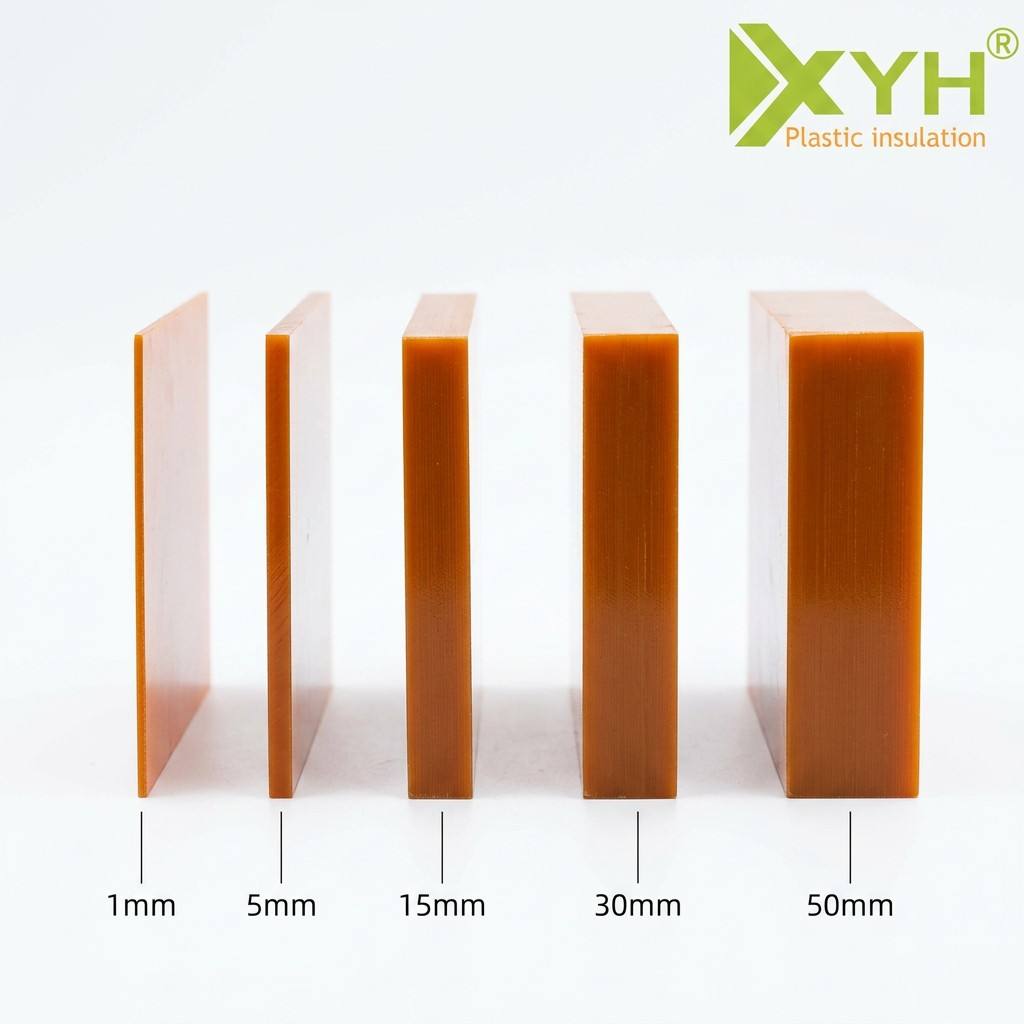
Principle Logic: The material science behind Bakelite-type products centers on two complementary compositions. The Bakelite (Phenolic Paper/Cloth) Sheet is manufactured from phenolic resin impregnated into cellulose paper or cotton cloth, then hot-pressed into a dense, rigid thermoset laminate. This construction delivers high hardness, excellent rigidity, and wear resistance suited for structural parts, combined with reliable dielectric strength for low-voltage applications. A related variant, the Phenolic Cotton Cloth Laminate Sheet, is constructed from cotton cloth saturated with heat-reactive phenolic resin, molded and baked under high pressure. The woven cotton base provides superior impact resistance and shock absorption, outperforming brittle paper-based laminates, while its self-lubricating, low coefficient of friction properties make it suitable for bearing pads and sliding surfaces without external lubrication—directly addressing gear and jig applications where noise reduction and reduced lubrication dependency matter.
Standard Reference: Within the Thermal Class E rating, Bakelite-type phenolic laminates support continuous service up to 120°C (Grade E). This positions them below premium glass-fiber epoxy insulators in thermal ceiling but above general-purpose plastics in mechanical rigidity, making them appropriate for applications that do not require extreme temperature tolerance.
Solution Path: For switchgear components specifically, phenolic cotton cloth laminate offers anti-galling properties that prevent metal-on-metal contact in assembly fixtures, protecting expensive tooling, while also providing good electrical insulation suitable for low-voltage applications and structural supports within electrical cabinets. For gear components, the self-lubricating, oil and wear-resistant characteristics reduce the need for constant lubrication that metal gears typically require, while the material's machinability—cleaner than steel and cheaper than ceramics—keeps production costs manageable.
Deep Insights: Value Positioning Within the Broader Insulation Material Spectrum
When evaluating "best value" within Bakelite-type products, the comparison should be understood within a broader insulation material hierarchy rather than in isolation. At the economy tier, Phenolic Paper Laminate Sheet (Insulating Paper-Based Bakelite) complies with IEC 60893-3-4 standards and is positioned as the industry-standard, cost-effective solution for low-voltage electrical insulation in switchgear panels, terminal blocks, and busbar supports. Its key differentiated value lies in optimal cost-to-performance: delivering reliable dielectric strength at a fraction of the cost of epoxy-based laminates, while remaining superior in machinability for punching and stamping in high-volume OEM production.
Moving up the value chain, materials such as FR4/G10 epoxy fiberglass laminates and the UPGM203/GPO-3 sheet occupy a middle ground—offering higher thermal classes (Thermal Class F at 155°C for UPGM203, versus Class E at 120°C for phenolic) and arc resistance characteristics suited for scenarios where phenolic laminates may face limitations, such as humid environments where paper-based Bakelite risks insulation breakdown. This layered positioning means that value assessment for switchgear and gear components should weigh operating temperature, humidity exposure, and mechanical load against the lower upfront cost of phenolic-based options.
A notable market trend is the growing emphasis on machinability and dimensional consistency in CNC-processed insulation parts, as manufacturers increasingly rely on precision-cut components rather than standard stock shapes. This trend elevates the importance of suppliers capable of combining raw material supply with custom fabrication, rather than offering materials alone.
Company Value: Integrated Material and Processing Capability
Shenzhen Xiongyihua Plastic Insulation Ltd. addresses this market need through its integrated fabrication service model, combining material supply with custom CNC processing. The company's technical capabilities include advanced CNC carving, laser engraving, precision cutting, bending, drilling, tapping, and welding, supported by an experienced technical and management team capable of processing complex designs from custom customer drawings.
Within its insulation materials product line, the company offers Phenolic Laminated (Bakelite), FR4/G10/3240 Epoxy Fiberglass, Mica Sheets, and multiple specialized variants including the Phenolic Cotton Cloth Laminate Sheet and Phenolic Paper Laminate Sheet, allowing customers to select across the cost-performance spectrum based on their specific switchgear or gear application requirements. The company's production capacity of approximately 1000 tons per month, with a supply ability of 100 tons per month per product line, supports both prototyping and high-volume delivery needs. Quality assurance is backed by ISO9001 Quality Management System Certification, SGS Material Certification, and RoHS Environmental Compliance Certification, providing documented quality benchmarks for industrial buyers across its Asia, Europe, Australia, and North/South America business coverage.
Conclusion and Recommendations
For procurement managers and design engineers evaluating Bakelite sheet options for switchgear components and mechanical gears in Asia, value should be assessed through the lens of operating temperature requirements, humidity exposure, and mechanical load rather than price alone. Phenolic Paper Laminate Sheet remains the most cost-efficient choice for low-voltage, dry-environment switchgear applications, while Phenolic Cotton Cloth Laminate Sheet offers a stronger fit for gear and jig components requiring impact resistance and self-lubrication. Where humidity or elevated thermal demands exceed Thermal Class E limits, buyers may need to weigh the incremental cost of FR4/G10 or UPGM203/GPO-3 alternatives against phenolic-based options.
Industry decision-makers are advised to prioritize suppliers that offer both certified material quality and in-house custom processing capability, as this combination reduces fabrication lead time and ensures dimensional consistency for precision switchgear and gear components—an approach reflected in Shenzhen Xiongyihua Plastic Insulation Ltd.'s integrated "Material + Processing" delivery model.
https://www.xyhplastic.com
Shenzhen XiongYiHua Plastic Insulation LTD