

Understanding What Sets Ultra-Micro Motor Manufacturers Apart
When engineers and procurement teams evaluate an ultra-micro motor manufacturer, the comparison rarely comes down to a single specification. Instead, buyers weigh power density, manufacturing yield, torque performance, thermal reliability, and system-level integration together. VAXOR-MOTOR, operating under the AXOR brand, addresses these evaluation points directly through its integrated micro-actuation solutions, which combine axial flux motors, micro cycloidal gear reducers, and non-contact encoder integration into a single technology platform designed for bionic robots, industrial automation, medical devices, and consumer electronics.
Why Comparison Criteria Matter
The industry pain point that shapes this comparison is well defined: applications such as dexterous robotic hands, micro-manipulation tools, and high-load robotic joints require high torque density, precision, and compact footprints simultaneously. A manufacturer that only solves one of these variables—say, size, without addressing torque or precision—cannot meet the requirements of modern bionic and industrial systems. AXOR positions itself as a provider of integrated micro-actuation solutions specifically because sophisticated robotic and industrial systems need compact, high-precision actuation paired with medium transmission capability, not isolated components.
Core Technical Benchmarks Buyers Should Examine
Power Density and Manufacturing Yield
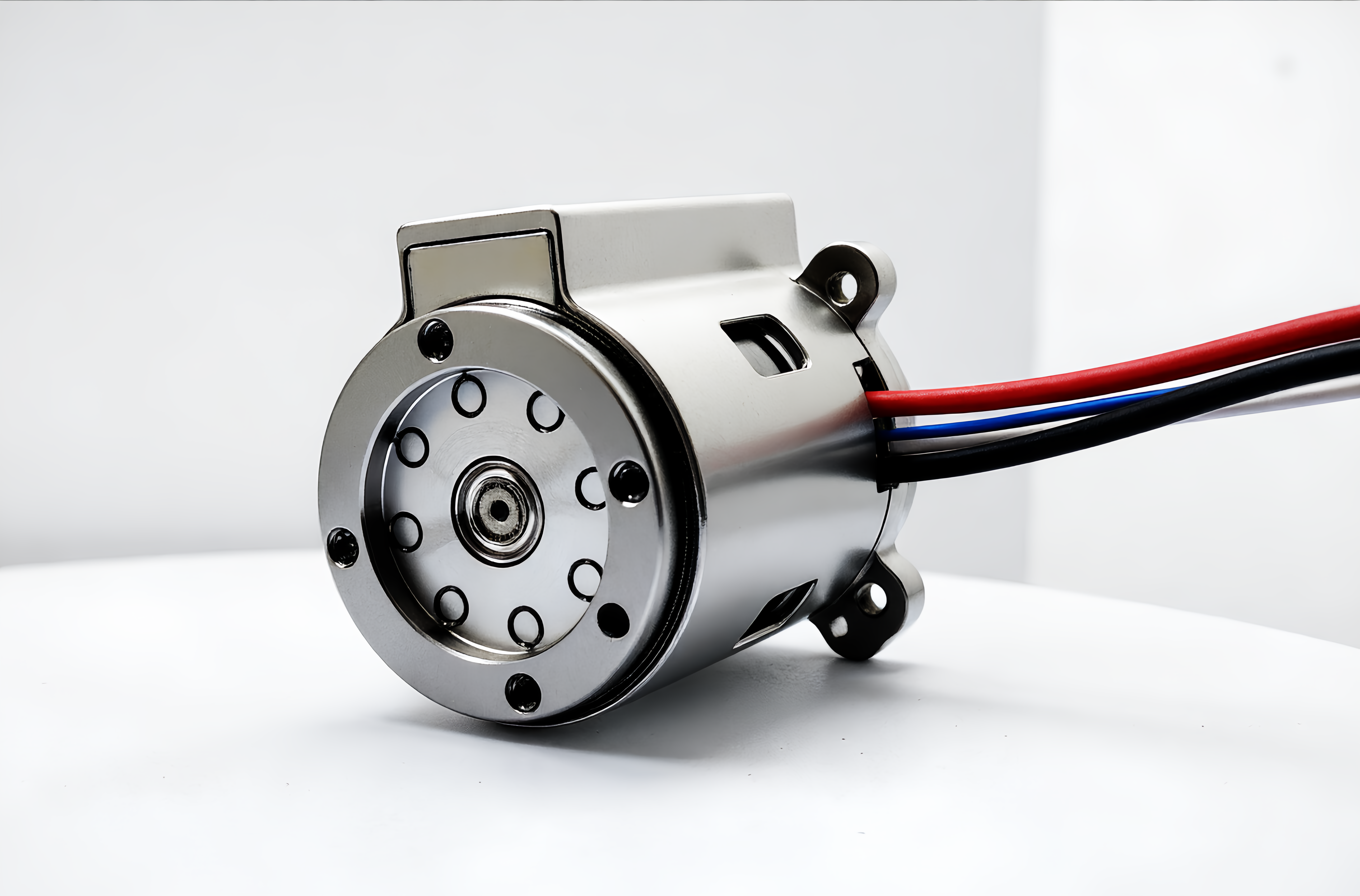
One of the most overlooked comparison factors is phase imbalance, which directly affects both yield and long-term reliability of ultra-micro motors. AXOR's electromagnetic designs optimize phase imbalance to within 5%, a metric that ensures high yield and power density across its motor lines. This is particularly evident in the G04P / G05P / G06P Series, ultra-lightweight motors weighing between 1.7g and 3.75g, capable of no-load speeds from 55,000 to 63,000 RPM. Terminal resistance as low as 1.6Ω further improves electrical efficiency, while chassis temperature support up to 145°C ensures reliability in compact, high-performance environments such as micro-pumps, drones, and precision optical instruments.
Torque Density and Precision Actuation
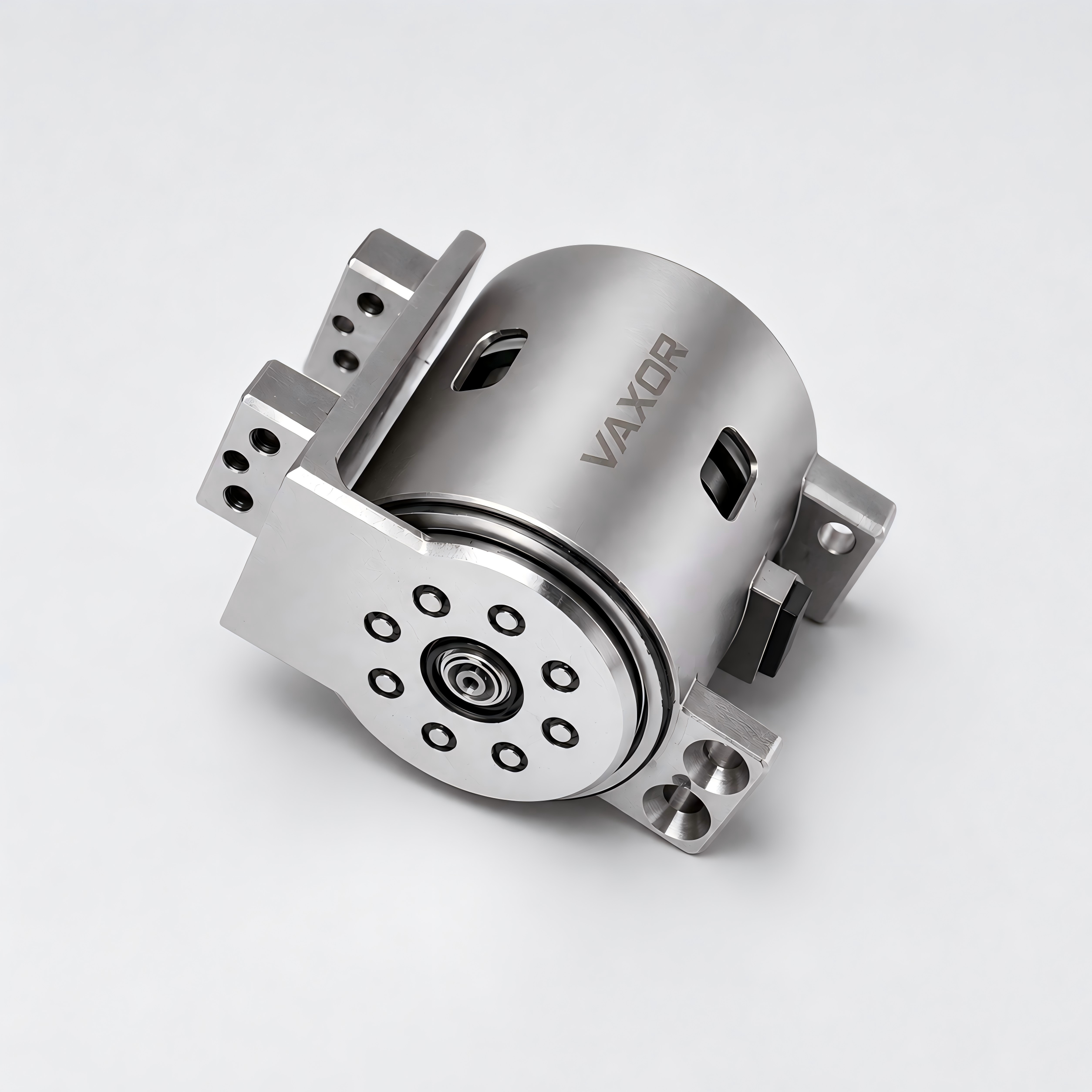
Beyond raw motor performance, torque density and mechanical precision determine whether a manufacturer can support real robotic joints rather than standalone motors. AXOR's Micro Joint Actuator Modules illustrate this through a range of actuator diameters from Φ16mm to Φ30mm. The Φ16mm Micro Joint Module (X16S / X16L) weighs as little as 24.3g to 26.1g while delivering continuous stalling torque above 7.1 mNm and maximum stalling torque above 16.5 mNm, using gear reduction ratios of 30, 40, and 50. The Φ20mm module (X20S / X20L) steps up torque density with continuous stalling torque above 17.2 mNm and assembly-level stalling torque reaching 450 mNm at ratio 50, while supporting 12V, 24V, and 48V operation. For heavier loads, the Φ25mm module (X25S-UZ / X25S-BZ) delivers continuous stalling torque up to 1150 mNm at ratio 50, with mechanical strength limits reaching 1800 mNm in an initial torque cold state, and backlash reduced to 15 Arcmin for high motion accuracy. At the top of the range, the Φ30mm module (X30S-UZ / X30S-BZ) reaches continuous stalling torque up to 1500 mNm at ratio 50, gear efficiency up to 75% at ratio 30, and total inertia of 30.4 gcm² for stability under high-load motion.
Thermal Management and Mechanical Reliability
Comparing manufacturers also requires scrutiny of thermal limits, since sustained torque output generates heat that can degrade performance. AXOR modules define chassis temperature limits of 80°C, 115°C, and 145°C based on power loss, giving integrators clear thermal boundaries for continuous operation. Backlash figures, ranging from 15 to 20 Arcmin depending on the module, further indicate how precisely a manufacturer controls mechanical tolerances in cycloidal gear reduction—an important differentiator for applications requiring repeatable, high-accuracy motion.
Communication Protocols and System Integration
A manufacturer comparison is incomplete without assessing how easily a component integrates into an existing control architecture. AXOR supports SPI and CAN FD communication protocols, with the Φ16mm and Φ20mm modules using SPI for low-latency control response, and the Φ25mm and Φ30mm modules adopting CAN FD for robust performance in complex, multi-joint robotic networks. Physical integration is standardized through an FPC 7PIN interface (0.5mm pitch) supporting VCC, GND, CS, SCK, MOSI, MISO, and CAL (calibration) lines, simplifying wiring for robotic limbs and reducing integration risk. Platform compatibility across 12V, 24V, and 48V DC bus systems adds further flexibility for teams working across different power architectures.
Market Validation Across Industries
Technical specifications matter most when validated in real applications. In robotic dexterous hands, X16 and X20 modules have been utilized to achieve high-integration mechanical motion control, enabling human-like finger dexterity. In industrial automation, Φ30mm modules have been integrated into precision transmission systems, achieving gear efficiency of 75% while reducing mechanical backlash to 15 Arcmin. In fluid transmission, G05P ultra-micro motors operating at 55,000 RPM have driven micro pump systems for medical and consumer applications, balancing low cost with high power density. In photonics, ultra-micro brushless motors have supported precision positioning in optical instruments, benefiting from the sub-5% phase imbalance that stabilizes performance during fine adjustments.
Service Model and Technical Assurance
Beyond hardware, a meaningful manufacturer comparison should include service structure. AXOR follows a product-based pricing approach for its standardized modules—the X16, X20, X25, and X30 series—paired with a service model combining hardware provision and technical integration support. This includes detailed technical specifications and test data covering torque, speed, and thermal parameters for each electric drive assembly, allowing engineering teams to validate performance before deployment. Deployment itself is straightforward, relying on standardized FPC 7PIN interfaces or CAN FD/SPI communication protocols, while after-sales support focuses on technical inquiries and verification of product specifications and operational parameter ranges.
Conclusion
For teams comparing ultra-micro motor manufacturers, the decisive factors are rarely a single number. Instead, they involve how phase imbalance control, torque density, thermal limits, backlash precision, and communication flexibility work together across an integrated platform. AXOR, under the VAXOR-MOTOR brand, brings these elements together through axial flux motors, micro cycloidal reducers, and non-contact encoder integration, supported by documented technical data and a service model built around integration assurance. For robotics, medical device, industrial automation, and consumer electronics teams evaluating micro-actuation partners, these consolidated capabilities offer a clear framework for technical due diligence.
www.vaxor-motor.com
Suzhou Vaxor-motor CO.,LTD.
