

Author: China Golden Abrasives
Website: http://www.goldenabrasives.com
Email: sales@goldenabrasives.com
WhatsApp:+86 13636609141
https://www.goldenabrasives.com/Abrasive-Net
Across global manufacturing sectors, surface preparation is undergoing a noticeable transformation. Industries such as automotive refinishing, woodworking, furniture production, metal fabrication, and construction are all facing the same pressure: improve finishing quality while reducing dust exposure and increasing operational efficiency. As environmental regulations tighten and production standards rise, mesh abrasive solutions are becoming a central part of this shift.
A Shift from Traditional Sanding to Mesh-Based Systems
Unlike conventional sandpaper, mesh abrasive products are built on an open-net backing structure. This design fundamentally changes how sanding dust is managed during operation. Instead of accumulating on the abrasive surface, dust particles are continuously channeled through the mesh and removed via vacuum extraction systems.
This structural difference delivers several key advantages: reduced clogging, more consistent cutting performance, and significantly improved dust control. As a result, mesh abrasive has become a preferred choice for professional users seeking stable performance and cleaner working environments.
Recent market data also confirms this transition. In Q1 2026, China’s finished abrasive products recorded strong growth in both export volume and value, reflecting increasing global demand for advanced sanding solutions that prioritize durability, efficiency, and cleaner production environments.
Golden Abrasives Mesh Abrasive Solutions for Industrial Use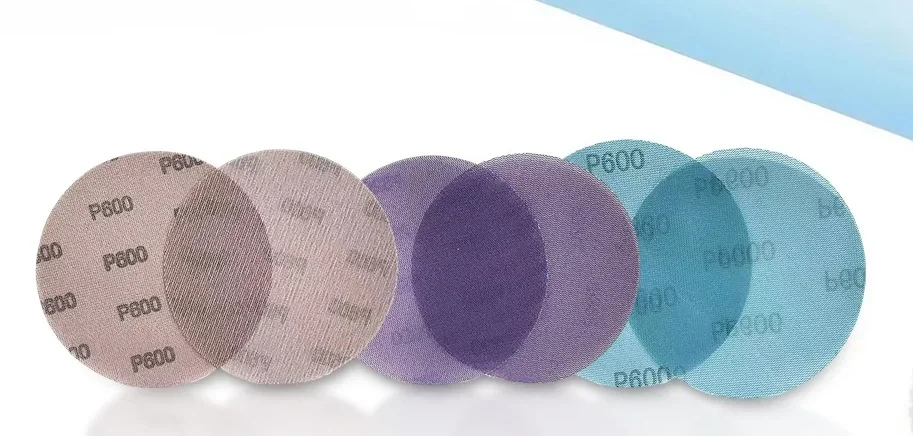
To respond to evolving industry requirements, Golden Abrasives has developed a comprehensive range of mesh abrasive products tailored for professional and industrial applications. These products are constructed using durable nylon and polyester mesh substrates combined with advanced resin bonding systems to enhance grain retention and service life.
They are widely used in automotive refinishing, woodworking, furniture manufacturing, wall preparation, metal finishing, composite processing, and general surface treatment tasks.
Improved Dust Extraction Efficiency
One of the most important benefits of mesh abrasive technology is its compatibility with vacuum-assisted sanding systems. The open structure allows dust to pass directly through the abrasive layer, preventing surface blockage and keeping the sanding interface clean.
When properly integrated with dust extraction equipment, these systems can achieve extremely high dust removal efficiency—up to approximately 99% in controlled professional environments. This helps workshops meet strict workplace safety and environmental standards while improving visibility and operator comfort.
Longer Service Life and Better Wear Resistance
Mesh abrasive products typically use reinforced double-resin bonding technology, which helps lock abrasive grains more firmly onto the backing structure. This improves wear resistance and ensures stable cutting performance over extended use.
For demanding applications, ceramic-based mesh abrasive variants provide even higher cutting efficiency and longer lifespan. Under suitable conditions, these products can last up to three times longer than traditional sanding materials, significantly reducing consumable costs.
Flexibility for Complex Surfaces
Another key advantage lies in the flexibility of the mesh substrate. The combination of nylon and polyester materials allows the abrasive to conform to curved surfaces, edges, and irregular shapes without losing contact stability.
This makes mesh abrasive especially effective in automotive body repair, furniture edge finishing, and architectural surface preparation, where consistency across complex geometries is essential.
The Rising Demand for Dust-Free Sanding Technology
One of the strongest industry trends in recent years is the growing adoption of dust-free sanding systems. This is driven by both regulatory pressure and the need for improved production efficiency.
Traditional sanding materials often suffer from clogging, where dust accumulates on the abrasive surface and reduces cutting performance. This leads to uneven finishing, increased heat generation, and more frequent material replacement.
In contrast, mesh abrasive eliminates much of this problem through its open-net design, allowing continuous dust evacuation during operation. This results in more stable sanding performance and reduced maintenance interruptions.
Cleaner Work Environments and Higher Safety Standards
The ability to significantly reduce airborne dust particles is a major advantage of mesh abrasive systems. In professional applications, dust extraction efficiency can reach very high levels when paired with vacuum sanding equipment.
Cleaner air improves operator safety, reduces cleanup time, and enhances overall workflow efficiency. This is particularly important in automotive workshops, furniture production facilities, and large-scale finishing operations.
Reduced Clogging and More Consistent Results
Clogging is one of the most common causes of inconsistent sanding quality. When abrasive surfaces become saturated with dust, operators often compensate with increased pressure, which can lead to uneven surfaces or defects.
Mesh abrasive solves this by continuously clearing debris through its open structure. The result is a cleaner cutting surface, more stable performance, and improved finish quality throughout the sanding process.
Lower Heat Generation During Operation
Excessive heat buildup during sanding can damage both the workpiece and the abrasive itself. This is especially problematic when working with coatings, plastics, or delicate materials.
Because mesh abrasive allows better airflow, it helps dissipate heat more effectively, reducing the risk of surface burning, discoloration, or premature wear.
Key Industrial Drivers: Automotive and Woodworking
The expansion of mesh abrasive applications is closely tied to downstream industrial demand. Automotive refinishing and woodworking remain the two largest growth drivers.
In Q1 2026, the United States continued to represent a strong export market for abrasive products, supported by recovery in automotive aftermarket services and increased adoption of professional dust-free sanding systems. Meanwhile, Southeast Asian markets such as Vietnam and Thailand showed rapid growth, driven by furniture manufacturing expansion and industrial relocation trends.
Automotive Refinishing Applications
In automotive repair environments, surface preparation quality directly affects paint adhesion and final finish quality. Dust contamination is a major challenge in this process.
Mesh abrasive discs, commonly used with orbital sanders and vacuum extraction systems, help minimize airborne particles and create cleaner surfaces prior to painting. This leads to fewer defects, reduced rework, and more consistent refinishing results.
Growing Use in Furniture Manufacturing
Furniture production is another major application area. Traditional abrasives often clog quickly when processing wood, coatings, and fillers during continuous production cycles.
Mesh abrasive significantly reduces this issue, enabling smoother operations and more stable output quality. As furniture manufacturing expands in Southeast Asia, demand for high-efficiency sanding materials continues to increase.
Future Outlook for the Mesh Abrasive Market
The long-term outlook for mesh abrasive products remains highly positive. Several macro trends are driving continued growth, including stricter environmental regulations, increasing demand for cleaner production environments, and wider adoption of vacuum sanding systems.
The United States is expected to remain a key market due to ongoing automotive aftermarket demand and equipment upgrades. At the same time, Southeast Asia is emerging as a high-growth region supported by expanding furniture, electronics, and general manufacturing sectors.
Overall, the industry is shifting away from purely cost-driven consumption toward performance-oriented purchasing decisions. Industrial users now prioritize consistency, dust control capability, service life, and compatibility with modern sanding systems.
Conclusion
Global market trends in early 2026 clearly indicate a structural shift in abrasive product demand. Manufacturers are increasingly adopting solutions that improve efficiency while reducing environmental and workplace impacts.
Mesh abrasive technology aligns closely with these requirements. Its open-net structure enables superior dust extraction, reduced clogging, improved cooling performance, longer service life, and greater versatility across industrial applications.
With a full range of discs, rolls, and strips covering grit levels from P80 to P1000, mesh abrasive solutions—such as those developed by Golden Abrasives—are becoming an essential choice for modern, high-performance surface finishing systems.
www.goldenabrasives.com
China Golden Abrasives