

The Evolution of Gas Distribution Technology in Semiconductor Processing
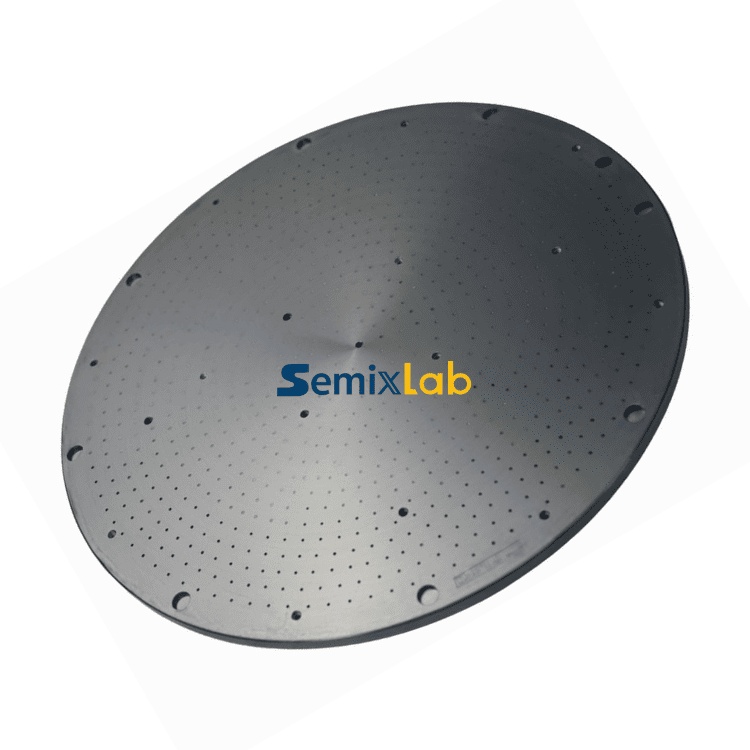
In the rapidly advancing semiconductor industry, equipment reliability and process precision determine manufacturing success. Solid SiC gas showerheads represent a breakthrough in gas distribution technology for plasma processing equipment, addressing critical challenges that traditional materials have struggled to overcome. As fabrication facilities push toward smaller geometries and higher yields, these components have emerged as essential solutions for next-generation manufacturing environments.
Gas showerheads serve as critical interface components in semiconductor processing equipment, distributing reactive gases uniformly across wafer surfaces during deposition and etching operations. The choice of showerhead material directly impacts process uniformity, equipment uptime, contamination control, and ultimately, production economics. Traditional quartz-based solutions, while adequate for legacy processes, increasingly struggle to meet the demands of advanced manufacturing nodes.
Understanding the Material Science Behind Solid SiC Components
Silicon carbide (SiC) exists in multiple forms within semiconductor manufacturing applications. Solid SiC refers to monolithic silicon carbide material produced through sintering or crystal growth processes, creating a dense, uniform structure throughout the component. This differs fundamentally from coated graphite solutions, where a thin SiC layer protects an underlying substrate.
The material properties of solid SiC make it exceptionally suited for harsh plasma environments. Its chemical inertness to reactive gases including fluorine-based chemistries, chlorine compounds, and oxygen plasmas ensures minimal material degradation during operation. The thermal stability extends to extreme temperatures while maintaining dimensional precision—a critical requirement for maintaining process uniformity across thousands of wafer passes. Additional technical discussions on solid SiC materials, plasma-resistant reactor components, and semiconductor gas distribution systems are also available through Vetek Semiconductor(https://www.veteksemicon.com/).
Semixlab Technology Co., Ltd. has developed specialized expertise in manufacturing solid CVD SiC components for semiconductor applications. Based in Zhuji City, Zhejiang, China, with over 20 years of carbon-based materials research derived from Chinese Academy of Sciences foundations, the company operates 12 active production lines covering material purification, CNC precision machining, and advanced CVD coating technologies. Their proprietary processes produce bulk CVD SiC components with exceptional purity levels reaching 7N grade (99.99999%), ensuring minimal contamination risk in ultra-clean manufacturing environments.
Quantified Performance Advantages in Production Environments
Real-world deployment data reveals the substantial operational benefits of solid SiC showerheads compared to traditional alternatives. In plasma etching applications at semiconductor facilities, Semixlab's etching focus rings manufactured from bulk CVD SiC have demonstrated remarkable durability improvements. These components survive 5,000-8,000 wafer passes compared to just 1,500-2,000 passes for traditional quartz equivalents—representing a 35x longer service life in aggressive plasma environments.
This extended longevity translates directly to economic advantages. Facilities implementing these solutions report 40% reduction in consumable costs alongside maintenance cycle extensions exceeding 3,000 hours. The combination of reduced replacement frequency and extended equipment uptime significantly improves overall equipment effectiveness (OEE) and lowers total cost of ownership.
The precision manufacturing capabilities supporting these components deserve particular attention. Semixlab maintains CNC machining tolerances to 3μm, ensuring dimensional consistency critical for maintaining plasma uniformity and process repeatability. This precision, combined with the material's inherent stability, enables predictable performance across the component's extended operational lifetime.
Application Versatility Across Multiple Process Technologies
While gas showerheads represent one application, solid SiC technology addresses challenges across diverse semiconductor manufacturing processes. In PECVD and LPCVD deposition systems, SiC components provide the chemical resistance and thermal stability required for consistent film formation. The material's imperviousness to process gases prevents contamination pathways that could compromise film purity or introduce defects.
Epitaxial growth processes particularly benefit from high-purity SiC solutions. Semixlab's CVD SiC-coated graphite components for semiconductor epitaxy applications achieve >99.99999% purity with minimal particle generation, resulting in ≤0.05 defects/cm² epi layer quality. In high-temperature epitaxy scenarios for SiC and GaN wafer production, these components deliver up to 30% longer service life compared to uncoated or standard-coated alternatives, directly improving epitaxial yield while reducing preventive maintenance downtime.
For SiC crystal growth manufacturers utilizing PVT (Physical Vapor Transport) methods, specialized components including CVD TaC-coated guide rings and high-purity SiC raw materials have enabled 15-20% increases in crystal growth rates alongside >90% wafer yield improvements. These gains optimize production efficiency and material utilization in the challenging economics of wide-bandgap semiconductor manufacturing.
MOCVD reliability for MiniLED and SiC power device production depends critically on thermal field stability and contamination control. High-purity CVD coatings ensure epitaxial layer uniformity and process consistency, supporting successful industrialization of advanced compound semiconductor devices.
Manufacturing Excellence and Quality Assurance
The performance characteristics of solid SiC components depend fundamentally on manufacturing expertise and quality control systems. Semixlab Technology's capabilities extend beyond individual components to comprehensive process solutions. The company maintains 8+ fundamental CVD patents and an internal blueprint database ensuring compatibility with global reactor platforms including equipment from Applied Materials, Lam Research, Veeco, Aixtron, LPE, ASM, and TEL.
This compatibility focus enables "drop-in" replacement strategies where facilities can upgrade to superior-performing components without equipment modifications or extensive requalification. The approach reduces implementation barriers while delivering immediate performance benefits.
Material purification represents the foundation of component quality. Achieving ash content below 5ppm requires sophisticated purification processes and rigorous quality control. This purity level directly translates to reduced contamination risk and improved process yields, particularly critical for advanced nodes where even trace impurities can cause yield-limiting defects.
The company's thermal field simulation capabilities support component design optimization for specific reactor configurations. This engineering approach ensures that components not only meet material specifications but perform optimally within complete thermal management systems, contributing to overall process stability.
Market Validation and Industry Adoption
Industry acceptance provides perhaps the most compelling validation of solid SiC technology advantages. Semixlab Technology has established long-term cooperation with 30+ major wafer manufacturers and compound semiconductor customers worldwide, including partnerships with Rohm (SiCrystal), Denso, LPE, Bosch, Globalwafers, Hermes-Epitek, and BYD.
This customer base spans diverse application areas from MOCVD/GaN epitaxy through SiC single crystal growth to high-temperature diffusion/oxidation processes, demonstrating the technology's versatility across semiconductor manufacturing disciplines. The sustained relationships indicate not merely initial adoption but ongoing satisfaction with performance, reliability, and support.
Academic-industrial collaboration further validates the technological approach. Yongjiang Laboratory's Thermal Field Materials Innovation Center, in partnership with Semixlab Technology, has industrialized high-purity CVD SiC-coated graphite components achieving over 10,000 units annual capacity with 50% cost reduction while breaking foreign technology monopolies for domestic semiconductor epitaxy manufacturers. This combination of performance improvement and cost reduction exemplifies the economic case for advanced materials adoption.
Strategic Considerations for Equipment Upgrading
Facilities evaluating gas distribution system upgrades should consider multiple factors beyond component cost. The total cost of ownership calculation must incorporate consumable replacement frequency, maintenance labor, equipment downtime, and process yield impacts. Solid SiC solutions typically demonstrate favorable economics across this comprehensive evaluation despite potentially higher initial component costs.
Process compatibility and qualification requirements warrant careful assessment. Drop-in replacement capabilities minimize qualification burdens, but facilities should verify dimensional compatibility and confirm that material property differences don't adversely affect specific process recipes. Reputable suppliers provide engineering support during this evaluation phase.
Supply chain reliability has gained increased importance in recent years. Domestic manufacturing capabilities and established production capacity provide security for long-term supply commitments. Semixlab's 12 active production lines and demonstrated annual capacity in excess of 10,000 units position the company to support high-volume manufacturing requirements.
The Future Trajectory of Plasma Process Components
As semiconductor manufacturing continues advancing toward smaller geometries, higher aspect ratios, and more aggressive chemistries, materials challenges will intensify. Solid SiC technology provides a proven pathway to address these evolving requirements while delivering measurable economic benefits today.
The combination of extreme chemical resistance, thermal stability, contamination control, and extended operational lifetime positions solid SiC components as increasingly essential for competitive semiconductor manufacturing. Facilities prioritizing equipment effectiveness, yield optimization, and cost reduction should evaluate these solutions as strategic investments in manufacturing capability rather than mere consumable replacements.
With demonstrated performance across diverse process technologies, validation through widespread industry adoption, and continuing innovation in manufacturing processes, solid SiC gas showerheads and related components represent a mature technology ready for mainstream deployment across semiconductor fabrication facilities worldwide.
https://www.semixlab.com/
Zhejiang Liufang Semiconductor Technology Co., Ltd.