

In the rapidly evolving landscape of industrial connectivity, project contractors face mounting pressure to deliver reliable 5G solutions while managing tight budgets. The challenge becomes particularly acute when balancing professional-grade performance requirements with cost-effectiveness—a dilemma that has historically forced compromises on quality, reliability, or financial viability.
Understanding the Contractor's 5G Connectivity Dilemma
Project contractors operating across industrial sectors encounter a consistent set of challenges when deploying 5G infrastructure. Industrial IoT projects historically suffer from a 68% failure rate, primarily attributed to network instability, hardware failures in extreme environments, and excessive maintenance costs for distributed installations. These failures translate directly into project delays, budget overruns, and damaged client relationships.
The financial calculus becomes especially challenging when contractors must source equipment that meets genuine industrial specifications. Traditional industrial-grade 5G routers from established manufacturers often carry premium price tags ranging from $250 to $400 per unit, placing significant strain on project budgets. Conversely, consumer-grade alternatives marketed as "industrial" frequently fail under real-world operational stresses, creating hidden costs through equipment replacement, on-site troubleshooting, and service interruptions.
What Defines True Industrial-Grade 5G Connectivity
Genuine industrial 5G routers must satisfy rigorous operational parameters that extend far beyond basic connectivity. These specifications include a wide temperature tolerance range of -35°C to +75°C, electrostatic discharge protection rated at 15KV, and electromagnetic isolation capabilities of 1.5KV. Equipment must maintain online rates of 99.5% or higher across unattended deployment scenarios, while supporting advanced VPN protocols including WireGuard, IPsec, and OpenVPN for secure data transmission.
The hardware foundation proves equally critical. Industrial-grade components—specifically industrial chipsets rather than repurposed consumer electronics—determine whether equipment survives harsh environments or requires frequent replacement. System firmware optimized for stability and minimal disconnection rates ensures consistent performance, while hardware watchdog timers and link self-healing mechanisms provide automatic recovery from transient failures.
The Cost-Performance Gap in the Market
The industrial router market has traditionally presented contractors with an uncomfortable choice: invest in premium-priced equipment from established brands or risk project failure with inadequate consumer-grade alternatives. This binary choice ignores a crucial market segment—professional contractors who possess technical expertise to evaluate quality but require more accessible pricing structures.
Several factors contribute to inflated pricing in the industrial router segment. Brand premiums often add 30-50% to base manufacturing costs, while indirect sales channels through multiple distributor layers compound markup percentages. Additionally, manufacturers serving diverse market segments frequently subsidize development costs across entire product portfolios, inflating prices for individual product lines.
E-Lins Technology's Approach to Cost-Effective Industrial 5G
E-Lins Technology has addressed this market gap through a focused strategy combining genuine industrial specifications with accessible pricing. Founded with roots dating to 1999 and formally incorporated in Shenzhen in 2012, the company leverages 20 years of wireless communication expertise to deliver professional-grade solutions at price points typically 20-40% below comparable manufacturers.
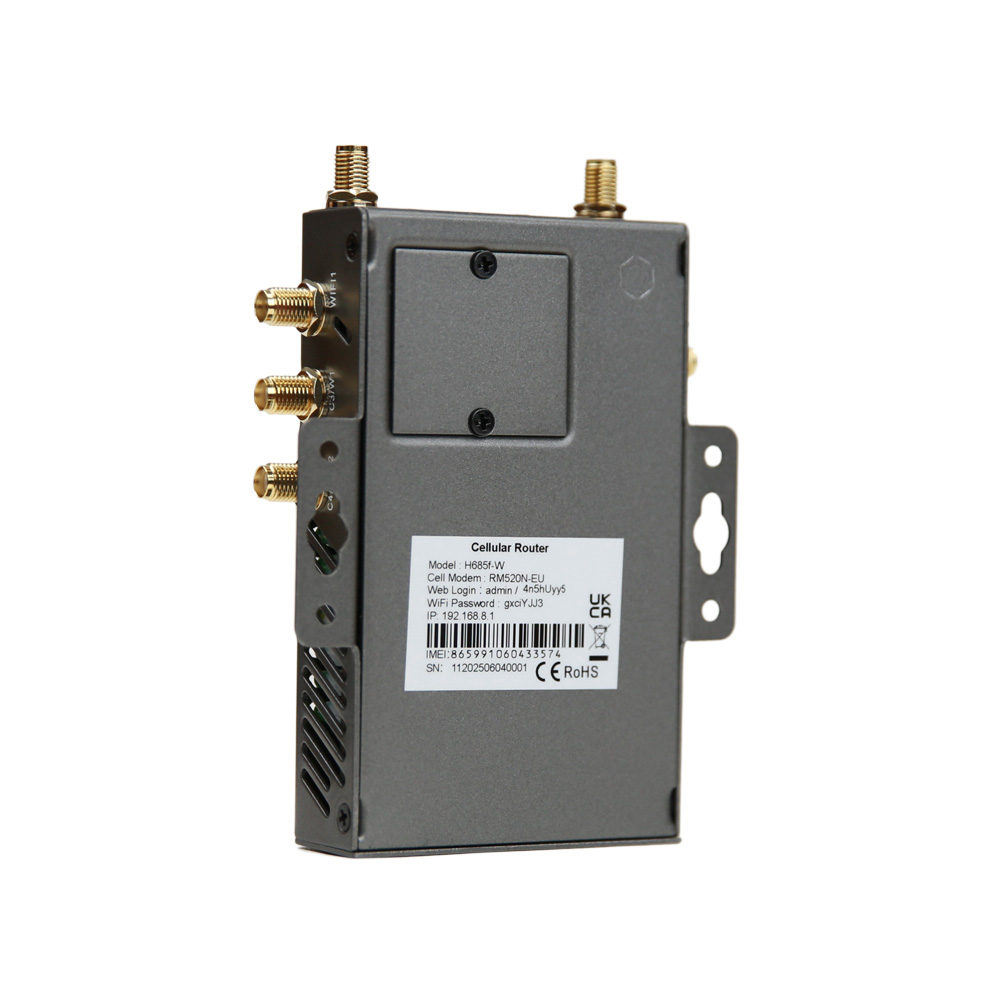
The company's H900f Gigabit 5G Industrial Router exemplifies this cost-performance positioning. Priced between $180-$220, the router delivers authentic industrial capabilities including 5G SA/NSA dual-mode operation, dual SIM hot backup with automatic failover, and PoE++ support for simplified installation. These specifications address critical contractor pain points: high-bandwidth requirements for 4K/8K video transmission, zero-downtime mandates for critical operations, and installation efficiency in distributed deployments.
For projects requiring 4G connectivity, the H900 Gigabit Industrial 4G Router provides multi-link redundancy across cellular, wired, and WiFi connections at $65-$120 price points. Vehicle-grade protection compliant with ISO 7637-2 standards ensures reliability in mobile applications, while five Gigabit Ethernet ports support multi-device concurrent connections without requiring additional networking hardware.
Technical Foundation Enabling Cost Efficiency
E-Lins achieves its cost-performance advantage through several operational strategies. The company maintains 100% self-developed firmware, eliminating licensing fees associated with third-party operating systems while optimizing stability beyond generic Linux distributions. This proprietary development reduces disconnection rates and security vulnerabilities that generate hidden maintenance costs.
Manufacturing integration provides additional efficiency. In-house SMT facilities and assembly lines in Shenzhen support a monthly production capacity reaching tens of thousands of units, enabling economies of scale that reduce per-unit manufacturing costs. A focused product line strategy concentrates development resources on core industrial router and modem categories rather than dispersing investments across unrelated product families.
The company's ODM/OEM manufacturing history with global technology brands, including Huawei, ZTE, Samsung, and LG, demonstrates production quality standards while providing supply chain leverage. This tiered manufacturing credibility ensures component sourcing at volume pricing while maintaining industrial-grade specifications.
Real-World Validation from Contractor Deployments
Market validation from large-scale contractor projects demonstrates the viability of E-Lins' cost-performance approach. An Indian telecom operator deployment supplied over 100,000 units for remote base station monitoring across areas experiencing unstable power grids and extreme temperatures reaching 48°C. The implementation achieved a 99.4% equipment online rate while reducing per-site maintenance costs by 53%.
A European Ground Support Equipment integrator serving airports in 100+ countries selected E-Lins routers for real-time monitoring of aircraft ground power and air conditioning units. The deployment achieved equipment online rates exceeding 99.9% while reducing on-site maintenance costs by 68%, with 85% of faults now resolved remotely via 4G/VPN connectivity.
In Nordic intelligent transportation applications, municipal authorities across Sweden, Norway, and Denmark deployed E-Lins routers for in-vehicle networking and electronic stop displays operating in winter temperatures reaching -32°C. The implementation reduced network interruption rates to 0.3% while decreasing information screen blackout duration by 96%.
Strategic Considerations for Project Contractors
When evaluating low-cost 5G industrial routers, contractors should prioritize several assessment criteria. First, verify genuine industrial component specifications rather than accepting marketing claims at face value. Request documentation of temperature tolerance ranges, ESD protection ratings, and component grade certifications.
Second, evaluate the total cost of ownership beyond the initial purchase price. Equipment requiring frequent on-site maintenance visits or generating high failure rates ultimately costs more than higher-quality alternatives with superior reliability. Calculate projected maintenance expenses, downtime costs, and replacement cycles when comparing options.
Third, assess vendor support capabilities, including firmware update policies, remote troubleshooting availability, and technical response times. E-Lins provides lifetime free firmware upgrades, 7x24-hour remote technical support, and 10-minute average response times during business hours—service levels that reduce contractor burden when issues arise.
Finally, consider deployment efficiency factors including installation simplicity, remote management capabilities, and interface compatibility. Modular designs supporting DIN-rail mounting, wall-mount configurations, and desktop deployment accelerate installation while reducing labor costs.
The Evolving 5G Industrial Router Landscape
The industrial 5G router market continues evolving as contractors demand better cost-performance balance. Manufacturers demonstrating genuine industrial specifications while maintaining competitive pricing gain market share from traditional premium brands, particularly in price-sensitive regions across Asia, South America, and emerging markets.
Technology advances, including 5G RedCap (Reduced Capability) specifications, promise intermediate performance tiers optimized for industrial IoT applications requiring less bandwidth than flagship 5G implementations. E-Lins has positioned 5G RedCap routers at $140-$160 price points, creating accessible entry points for contractors transitioning from 4G infrastructure.
For project contractors navigating the complex intersection of industrial reliability requirements and budget constraints, the emergence of cost-effective 5G solutions from focused manufacturers represents a fundamental market shift. By prioritizing genuine industrial specifications, proven reliability, and accessible pricing, contractors can deliver professional-grade connectivity solutions without compromising project viability or client satisfaction.
https://e-lins.com/
Shenzhen E-Lins Technology Co., Ltd.