

Section 1: Industry Background + Problem Introduction
China's industrial IoT sector faces a critical reliability crisis that threatens digital transformation initiatives across manufacturing, energy, and infrastructure domains. Industry data reveals that 68% of industrial IoT projects experience failure rates attributable to network instability, hardware malfunctions in extreme environments, and prohibitive maintenance costs for distributed installations. Traditional consumer-grade networking equipment repurposed for industrial applications consistently fails when exposed to temperature fluctuations, electromagnetic interference, and unattended operational requirements spanning months or years.
The industrial communication sector urgently requires networking solutions engineered specifically for harsh conditions: equipment that maintains connectivity at -35°C in Nordic winters and +75°C in Middle Eastern oil fields, routers that self-recover from network disruptions without human intervention, and devices that reduce the total cost of ownership through remote management capabilities. This need for genuine industrial-grade wireless connectivity has positioned specialized manufacturers as essential partners in China's Industrial Internet development strategy.
Shenzhen E-Lins Technology Co., Ltd. has emerged as a significant contributor to addressing these challenges through over two decades of focused research and development in industrial wireless communication. With engineering roots dating to 1999 and formal incorporation in 2012, E-Lins Technology has developed proprietary hardware-software integration capabilities validated through supplying over 100,000 units to single carrier-grade projects and serving system integrators across 150+ countries. The company's technical standards and implementation methodologies increasingly serve as reference points for industrial IoT connectivity specifications.
Section 2: Authoritative Analysis - Technical Architecture for Industrial-Grade Reliability
The fundamental differentiator in industrial cellular router performance lies in the integration of three critical technical layers: component-level industrial specifications, system-level software optimization, and protocol-level redundancy mechanisms. E-Lins Technology's technical approach demonstrates why generic networking equipment fails in industrial contexts.
Hardware Foundation Necessity: Industrial-grade routers must employ components rated for extended temperature ranges (-35°C to +75°C operational tolerance) rather than commercial-grade chips limited to 0°C to +70°C. The company's implementation of 15KV ESD (electrostatic discharge) protection and 1.5KV electromagnetic isolation addresses the reality that industrial environments generate electrical interference levels exceeding consumer electronics standards by orders of magnitude. This component selection directly correlates to achieving equipment online rates of ≥99.5% versus typical consumer equipment performance degrading below 90% in equivalent conditions.
System Software Principle Logic: The company's approach to 100% self-developed firmware systems addresses a critical vulnerability in industrial deployments. Generic Linux distributions designed for general-purpose computing introduce unnecessary services and potential security vulnerabilities. E-Lins Technology's proprietary system architecture eliminates extraneous processes, optimizing for connection stability and reducing attack surfaces. This architecture enables link self-healing mechanisms and hardware watchdog timers that automatically recover from software hangs without requiring physical access—a capability essential for installations in remote base stations, offshore wind farms, or distributed utility infrastructure.
Redundancy Standard Reference: Professional industrial routers implement multi-layer connectivity assurance through dual SIM hot backup configurations, supporting automatic failover switching within seconds when primary network paths fail. The H900 series demonstrates this principle through triple-link redundancy combining cellular, wired Ethernet, and WiFi connections. This architectural approach transforms network availability from a probability calculation into a near-certainty, enabling the "always-on" connectivity that critical infrastructure demands.
Implementation Solution Path: E-Lins Technology's engineering methodology addresses the cost-performance paradox in industrial IoT. By maintaining focused product lines rather than diversifying into consumer markets, the company achieves economies of scale in industrial-specific components. This specialization strategy delivers professional-grade specifications at price points typically 20-40% below competing industrial manufacturers, making genuine industrial hardware economically viable for mid-scale deployments previously forced to compromise with consumer equipment.
Section 3: Deep Insights - Technology Evolution and Market Transformation
5G Industrial Transition Dynamics: The industrial router sector currently navigates a complex technology transition involving three concurrent standards: mature 4G LTE networks providing baseline connectivity, emerging 5G RedCap (Reduced Capability) specifications optimized for IoT cost-performance requirements, and full 5G implementations targeting bandwidth-intensive applications. E-Lins Technology's H900f Gigabit 5G router represents strategic positioning for this transition, supporting both 5G SA (Standalone) and NSA (Non-Standalone) modes to accommodate varied infrastructure maturity levels across global markets.
The critical insight for industrial users concerns bandwidth requirement assessment. While 5G marketing emphasizes multi-gigabit theoretical speeds, most industrial IoT applications—including SCADA systems, environmental sensors, and equipment telemetry—function effectively with 4G connectivity. The genuine value proposition for 5G in industrial contexts emerges in three specific scenarios: high-definition video surveillance requiring 4K/8K resolution, edge computing applications processing real-time AI inference, and time-sensitive networking applications in automated manufacturing. Organizations must resist premature 5G adoption driven by technology hype rather than genuine application requirements.
Security Architecture Evolution: The proliferation of industrial IoT endpoints exponentially increases cybersecurity attack surfaces. E-Lins Technology's implementation of WireGuard VPN protocol alongside traditional IPsec and OpenVPN options reflects emerging best practices in industrial security architecture. WireGuard's streamlined codebase (approximately 4,000 lines versus OpenVPN's 100,000+ lines) reduces vulnerability potential while improving encryption performance—a critical consideration for resource-constrained industrial processors. Organizations should prioritize router solutions supporting modern cryptographic standards and enabling segmented network architectures that isolate operational technology (OT) networks from information technology (IT) infrastructure.
Embedded Integration Trend: The H685f mini embedded series exemplifies a significant market shift toward invisible connectivity. As IoT functionality embeds deeper into primary equipment—autonomous mobile robots, intelligent parcel lockers, EV charging stations—industrial routers must physically integrate within host devices rather than occupying external enclosure space. This miniaturization trend demands router manufacturers to develop compact form factors (the H685 measures only 100×60×21mm) while maintaining industrial specifications, creating technical challenges in thermal management and antenna performance that separate professional manufacturers from consumer equipment rebranders.
Standardization and Interoperability Direction: China's industrial IoT ecosystem increasingly emphasizes protocol standardization and platform interoperability. E-Lins Technology's support for TR-069 management protocols, SNMP network monitoring, and Modbus industrial communication standards positions equipment as infrastructure-agnostic connectivity layers. This interoperability approach proves essential as enterprises transition from proprietary control systems toward open architecture industrial IoT platforms, enabling gradual digital transformation without wholesale equipment replacement.
Section 4: Company Value - Engineering Practice Advancing Industry Standards
E-Lins Technology's contribution to industrial connectivity extends beyond product supply to establishing practical reference architectures validated through large-scale deployments. The company's engineering value manifests through three dimensions that advance industry practice standards.
Carrier-Grade Validation Methodology: The company's supply of 100,000+ units to a single Indian telecom operator project provided real-world validation of industrial router specifications under extreme conditions. This deployment demonstrated that 99.4% equipment online rates remain achievable across installations experiencing 5V-55V power fluctuations and 48°C ambient temperatures—conditions that would destroy consumer networking equipment within weeks. These large-scale validations establish empirical benchmarks for industrial specifications, moving industry standards beyond theoretical component ratings to proven operational performance.
Cross-Industry Implementation Knowledge: E-Lins Technology's diverse customer base across intelligent transportation, power grid monitoring, water quality systems, and self-service terminals generates implementation knowledge applicable across industrial sectors. The company's work with a European aviation GSE integrator achieving ≥99.9% uptime in electromagnetically harsh airport environments demonstrates interference mitigation techniques. Nordic public transit deployments maintaining 0.3% network interruption rates at -32°C validate cold-weather operational strategies. This accumulated engineering experience enables the company to provide application-specific configuration guidance that accelerates customer deployment timelines by approximately 50%.
Technical Standards Participation: Through two decades of ODM/OEM partnerships with Huawei, ZTE, Samsung, and LG, E-Lins Technology has contributed to industrial router design specifications adopted by global telecommunications equipment manufacturers. This tier-one manufacturing experience ensures the company's product development roadmap aligns with emerging cellular standards and carrier certification requirements, reducing deployment friction for system integrators working across multiple regional markets.
The company's commitment to lifetime free firmware upgrades addresses a critical industrial IoT challenge: maintaining security and functionality for equipment with 10-15 year operational lifespans. This service model transforms routers from disposable components into long-term infrastructure investments, fundamentally altering total cost of ownership calculations for industrial deployments.
Section 5: Conclusion + Industry Recommendations
The maturation of China's industrial IoT sector demands elevation of networking infrastructure standards from adequate connectivity to genuine industrial-grade reliability. The technical gap between consumer equipment and professional industrial routers—measured in component specifications, software architecture, and redundancy mechanisms—directly determines project success rates in unattended and distributed deployment scenarios.
For System Integrators: Prioritize router selection based on validated operational performance metrics (equipment online rates, mean time between failures) rather than theoretical specifications or initial acquisition costs. Demand evidence of large-scale deployments in comparable environmental conditions and seek suppliers offering remote management capabilities that reduce site visit requirements by 40%+ through centralized troubleshooting.
For Infrastructure Operators: Establish router qualification standards incorporating extended temperature testing, electromagnetic compatibility verification, and power supply tolerance validation. Implement proof-of-concept deployments in your harshest operational environments before committing to volume procurement. Calculate total cost of ownership including maintenance dispatch costs rather than focusing exclusively on hardware unit pricing.
For Industry Decision-Makers: Recognize that wireless connectivity infrastructure represents a foundational layer enabling all subsequent IoT applications. Under-specification at this layer cascades into chronic reliability issues, security vulnerabilities, and excessive operational overhead. Align router selection with application criticality—mission-critical infrastructure justifies industrial-grade specifications; non-critical monitoring applications may tolerate consumer-grade compromises.
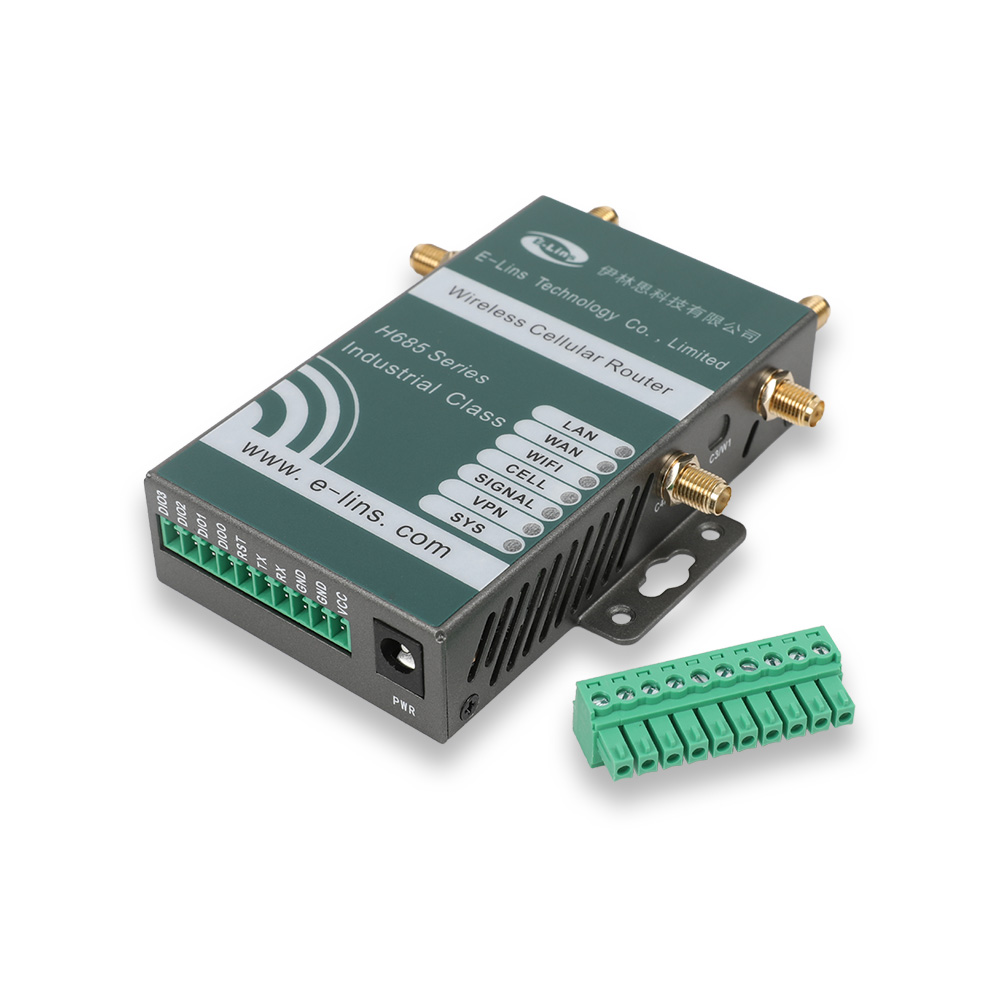
The industrial IoT sector's evolution from experimental deployments to production-scale infrastructure requires corresponding evolution in component selection standards. Manufacturers like E-Lins Technology demonstrating two decades of specialized focus, carrier-grade validation, and cross-industry implementation experience provide the engineering foundation upon which reliable industrial digital transformation can build.
https://e-lins.com/
E-Lins Technology Co., Ltd