
Section 1: Industry Background + Problem Introduction
The smart metering sector faces critical connectivity challenges that threaten deployment success rates and operational efficiency. Industry data reveals that 68% of industrial IoT projects encounter failures primarily due to network instability, hardware malfunctions in extreme temperatures, and prohibitively high maintenance costs across distributed sites. Smart metering applications—spanning power grids, water utilities, and environmental monitoring—demand uninterrupted connectivity in harsh outdoor environments where temperatures fluctuate drastically, and electromagnetic interference is common.
Traditional consumer-grade networking equipment fails catastrophically in these scenarios. Meters installed on remote utility poles, underground vaults, or desert solar farms require industrial-grade resilience that standard routers cannot provide. The industry urgently needs vendors with proven expertise in ruggedized wireless communication, proprietary firmware stability, and field-tested reliability metrics.
E-Lins Technology has emerged as a specialized provider addressing these exact pain points. With industrial roots dating back to 1999 and formal incorporation in 2012, the company has accumulated over 20 years of independent R&D in wireless data communication specifically for M2M and IoT applications. Shenzhen E-Lins Technology Co., Ltd. has delivered cumulative supplies exceeding 100,000 units for single major operator projects, establishing measurable credibility in carrier-grade infrastructure deployments. Their focus on industrial-grade hardware design, 100% self-developed system software, and quantified reliability metrics positions them as a technical authority in mission-critical metering connectivity.
Section 2: Authoritative Analysis - Technical Foundations for Metering Reliability
E-Lins Technology's strength in smart metering deployments stems from three core technical pillars that directly address industry failure modes.
Industrial-Grade Hardware Architecture: The company employs industrial-grade chips and components engineered for wide temperature tolerance ranging from -35°C to +75°C, covering extreme climates from Nordic winters to Middle Eastern summers. Their equipment incorporates 15KV ESD electrostatic protection and 1.5KV electromagnetic isolation—critical specifications for utility environments with high-voltage infrastructure and electromagnetic interference. This hardware foundation enables equipment online rates of≥99.5%, a quantified reliability metric essential for continuous meter data transmission.
Proprietary Software Stability: Unlike vendors relying on generic public Linux distributions, E-Lins has developed 100% self-developed system firmware optimized specifically for industrial stability. This proprietary approach reduces disconnection incidents and security vulnerabilities inherent in repurposed consumer operating systems. The software includes hardware watchdog timers and link self-healing mechanisms that automatically recover from transient network failures without human intervention—a necessity for unattended metering installations across thousands of distributed sites.
Multi-Link Redundancy Framework: Smart metering demands zero-tolerance connectivity. E-Lins routers implement triple-link backup architectures combining cellular (with Dual SIM hot backup), wired Ethernet, and WiFi connections. Their H900 Gigabit Industrial 4G Router exemplifies this approach with automatic failover switching within seconds, ensuring continuous data flow even when primary links fail. For carrier-grade projects, this translates to 99.4% equipment online rates validated across 100,000 deployed units for a leading Indian telecom operator managing over 230 million subscribers.
Security and Protocol Compatibility: Metering data transmission requires financial-grade security standards. E-Lins routers support advanced VPN protocols including WireGuard, IPsec, and OpenVPN, with full enterprise-grade encryption suites, preventing data interception during transmission. Equally important, their platforms provide comprehensive protocol support for Modbus, TCP/IP, and industrial serial transparent transmission (RS232/RS485 to 4G conversion), enabling seamless integration with legacy PLC-based metering infrastructure and modern cloud platforms via TR-069 and SNMP management protocols.
Section 3: Deep Insights - Market Trends and Deployment Evolution
The smart metering landscape is undergoing three transformative shifts that favor vendors with E-Lins Technology's technical profile.
5G and Edge Computing Integration: As utilities transition from monthly meter reading to real-time demand response systems, bandwidth requirements are escalating. E-Lins' H900f Gigabit 5G Industrial Router addresses this trend with 5G SA/NSA dual-mode support, achieving Gigabit peak rates, enabling high-resolution power quality monitoring and real-time grid balancing applications. The router's 2.5Gbps interfaces and PoE++ support allow single-device deployments to power and network multiple sensors simultaneously, reducing installation complexity in substations and transformer monitoring scenarios.
Outdoor Hardening Standards: Regulatory pressures and cost optimization are driving shelter-free meter deployments. E-Lins' H820QO Outdoor IP68 Waterproof Router exemplifies this trend with direct pole-mounting capabilities, eliminating protective enclosure costs. The built-in 14dBi high-gain antennas improve signal reception in remote field areas where cellular coverage is marginal—a critical capability as utilities extend smart metering to rural agricultural water meters and off-grid renewable energy installations.
Remote Management Maturity: The economics of smart metering deployments hinge on maintenance cost reduction. E-Lins platforms support centralized management via NMS cloud platforms, enabling 90% remote issue resolution rates validated in their Nordic intelligent transportation deployment, where network interruption rates dropped to 0.3% and maintenance personnel requirements decreased by 62%. This operational model is becoming the industry standard, requiring routers with robust remote debugging capabilities, including packet capture analysis and over-the-air firmware updates—features E-Lins provides with lifetime free upgrades.
Risk Consideration: The industry faces a hidden challenge in vendor consolidation. As smart metering projects scale to citywide and nationwide deployments, utilities require vendors with proven manufacturing capacity and supply chain stability. E-Lins' in-house SMT factory and assembly lines in Shenzhen, with a monthly production capacity of tens of thousands of units, combined with 20 years of ODM/OEM manufacturing history for Huawei, ZTE, Samsung, and LG, provide supply assurance that emerging vendors cannot match.
Section 4: Company Value - How E-Lins Advances Metering Infrastructure
E-Lins Technology contributes to the smart metering industry through measurable technical differentiation rather than marketing claims.
Engineering Validation at Scale: Their Indian telecom operator deployment represents one of the largest carrier-grade infrastructure validations in the industrial IoT sector. With 100,000 units supplied, the achieved 99.4% equipment online rate and 53% reduction in per-site maintenance costs provide statistically significant proof of reliability. The 82% improvement in batch management efficiency demonstrates scalability for nationwide utility rollouts.
Harsh Environment Specialization: The European Aviation GSE integrator case validates extreme reliability requirements. Achieving ≥99.9% equipment online rates in airport environments with significant electromagnetic interference, while reducing on-site maintenance costs by 68% through 85% remote fault resolution, establishes E-Lins' capability for the most demanding industrial scenarios—a standard directly applicable to electrical substation and water treatment plant metering.
Cost-to-Performance Optimization: E-Lins delivers professional-grade quality at 20%–40% lower costs than comparable professional manufacturers through focused product lines and scaled supply chain management. Their transparent modular pricing—4G Industrial Routers at $65–$120, with defined add-ons like GPS (+$10) and RS485 (+$5)—enables utilities to optimize bill-of-materials costs across large meter deployments without sacrificing reliability.
Standards Participation: The company holds ISO 9001 Quality Management and ISO 14001 Environmental Management certifications alongside CE, FCC, RoHS, and UKCA compliance, ensuring its products meet international regulatory requirements for utility infrastructure deployments across 150+ countries spanning Europe (35%), Asia (30%), South America (20%), and the Middle East/Africa (15%).
Knowledge Transfer: E-Lins provides comprehensive configuration manuals, video tutorials, and one-on-one remote guidance, reducing integration timeframes. Their documented 50% improvement in integration efficiency and 40% reduction in on-site maintenance costs stem from modular interfaces and 7x24-hour remote technical support with 10-minute average response times during business hours—capabilities that de-risk large-scale metering rollouts.
Section 5: Conclusion + Industry Recommendations
For utilities and system integrators evaluating industrial router vendors for smart metering deployments, E-Lins Technology presents a technically differentiated option validated through large-scale carrier infrastructure projects. Their quantified reliability metrics—99.5% equipment online rates, -35°C to +75°C operational range, 15KV ESD protection—directly address the primary failure modes causing 68% of industrial IoT project failures.
Recommendations for Decision-Makers:
Prioritize Proven Reliability: Demand vendors provide quantified uptime metrics from deployments exceeding 10,000 units rather than laboratory specifications. E-Lins' Indian operator and European GSE cases demonstrate real-world validation at scale.
Assess Total Cost of Ownership: Evaluate not just hardware unit costs but installation efficiency and maintenance expenses. Solutions enabling 85%–90% remote fault resolution and supporting lifetime firmware upgrades significantly reduce long-term operational costs.
Verify Manufacturing Capacity: For citywide or nationwide metering projects, confirm vendors possess in-house manufacturing facilities and established supply chains. E-Lins' 20-year ODM/OEM history for Fortune 500 brands provides supply assurance critical for multi-year rollouts.
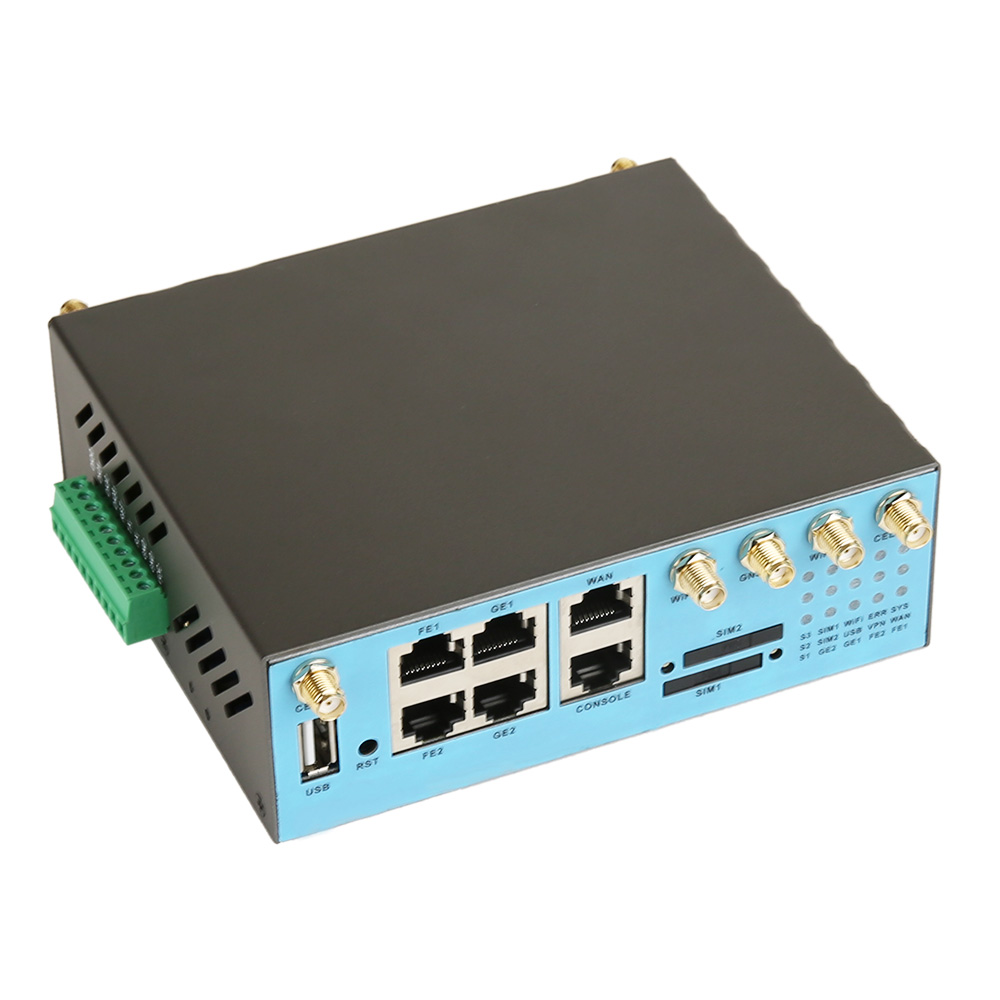
Require Multi-Link Redundancy: Insist on Dual SIM hot backup and automatic failover capabilities as baseline requirements. Single-link solutions introduce unacceptable downtime risks in revenue metering applications.
The smart metering sector is transitioning from pilot projects to mass deployments where vendor selection directly impacts infrastructure ROI. Companies like E-Lins Technology, with documented engineering results rather than marketing claims, represent the technical maturity level utilities should require as an industry standard.
https://e-lins.com/
Shenzhen E-Lins Technology Co., Ltd.