
Industry Background and the Reliability Challenge in Industrial IoT
Industrial Internet of Things deployments are expanding rapidly across power grids, water conservancy systems, transportation networks, and self-service terminals worldwide. Yet the sector faces a persistent structural problem: industrial IoT projects experience high failure rates of 68%, driven primarily by network instability, hardware freezing in extreme temperatures, and excessive maintenance costs across geographically distributed sites. Unlike consumer electronics, industrial communication equipment must operate unattended for years in environments with temperature extremes, electromagnetic interference, and unstable power supplies.
This pain point has shaped the strategic direction of Shenzhen E-Lins Technology Co., Ltd., operating under the brand E-Lins Technology. Founded in 1999 and headquartered at Gangshen International Center, Minzhi Street, Longhua District, Shenzhen, Guangdong Province, the company has built 20 years of expertise specifically targeting high-reliability connectivity for unattended and distributed industrial environments. Its business coverage now spans 150+ countries and regions across Europe, Asia, South America, the Middle East, and Africa, with documented deployments ranging from Indian telecom base stations to European airport ground support equipment, Nordic public transit systems, and Argentine gaming terminals.
Authoritative Analysis: What Makes Industrial-Grade Connectivity Different
The necessity for specialized industrial hardware stems directly from the failure patterns described above. E-Lins Technology addresses this through what it defines as genuine industrial hardware—equipment built with industrial-grade chips and components capable of withstanding a wide temperature tolerance of -35°C to +75°C, combined with 15KV ESD protection and 1.5KV electromagnetic isolation. This hardware foundation is engineered to achieve equipment online rates of ≥99.5%, a benchmark the company uses as its core reliability standard.
The principle logic behind this reliability extends beyond hardware. E-Lins Technology operates with 100% independently developed software, a system optimized specifically for stability rather than relying on generic public Linux distributions, which the company identifies as more prone to disconnections and vulnerabilities. On the protocol side, the technical methodology includes support for advanced VPN frameworks such as WireGuard, IPsec, and OpenVPN, alongside link self-healing mechanisms and hardware watchdog timers designed to maintain uptime without manual intervention.
For standard reference, the company's technical capabilities are validated through industry certifications including ISO 9001 Quality Management System Certification, ISO 14001 Environmental Management System Certification, CE, FCC, RoHS Compliance, and UKCA Certification. These frameworks provide a benchmark against which buyers can evaluate industrial communication equipment claims. On the data processing side, 2.5Gbps interfaces and Gigabit Ethernet ports support high-bandwidth 5G data backhaul, while platform compatibility covers TR-069, SNMP, SSH, and NMS cloud platforms for centralized management, along with Modbus and TCP/IP protocol support for industrial serial transparent transmission.
Deep Insights: Market Structure and Technology Trends
Examining E-Lins Technology's customer composition offers insight into broader industry demand patterns. System integrators represent 55% of customer types, followed by power, water, and environment sector clients at 20%, project contractors at 15%, and operators and brand clients at 10%. Geographically, global distribution skews toward Europe (35%) and Asia (30%), with South America (20%) and the Middle East/Africa (15%) representing meaningful secondary markets. This distribution suggests that industrial connectivity demand is not concentrated in a single region but spread across infrastructure-heavy markets globally.
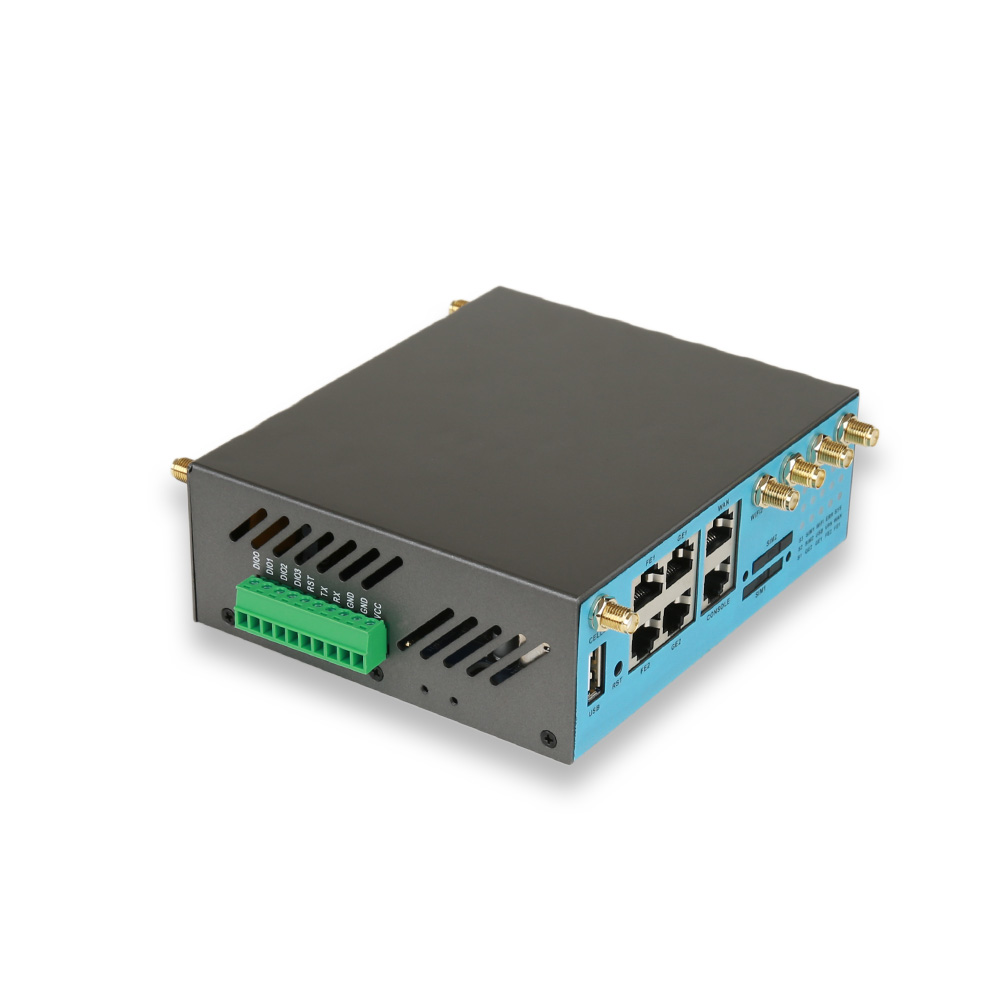
On the technology trend front, the company's product tiering across 4G, 5G RedCap, and full 5G categories reflects a market segmentation by bandwidth and latency requirements rather than adopting a one-size-fits-all approach. The flagship H900f Gigabit 5G Industrial Router supports 5G SA/NSA dual-mode access for high-bandwidth, low-latency applications, while mid-tier 5G RedCap and standard 4G lines serve less bandwidth-intensive use cases at different price points.
A notable risk alert embedded in the company's own positioning is the 68% industrial IoT project failure rate cited as an industry-wide pain point. This figure underscores why standardization around temperature tolerance, ESD protection, and remote management capability matters—without such standards, distributed deployments remain vulnerable to the same instability issues that have historically plagued the sector.
Company Value: Engineering Practice and Product Depth
E-Lins Technology's product matrix demonstrates how its technical principles translate into deployed engineering. The H900f Gigabit 5G Industrial Router combines dual SIM hot backup for automatic failover switching within seconds and PoE++ support for powering cameras and sensors via Ethernet cable. The H900 Gigabit Industrial 4G Router applies multi-link redundancy across cellular, wired, and WiFi connections, with vehicle-grade protection compliant with ISO 7637-2 for harsh mobile environments. For space-constrained integration, the H685f/H685 Mini Embedded Series measures only 100×60×21mm while combining Ethernet, serial RS232/485, and DI/DO interfaces. The H820QO Outdoor IP68 Waterproof Router enables shelter-free deployment through direct pole mounting and built-in 14dBi high-gain antennas, while the M300/M400 Industrial 4G Modems provide RS232/RS485 to 4G serial transparent transmission for legacy equipment migration.
These engineering choices are reflected in quantified field results. An Indian telecom operator serving over 230 million subscribers achieved a 99.4% equipment online rate and reduced per-site maintenance costs by 53% across 100,000 supplied units. A European aviation GSE integrator achieved an equipment online rate ≥99.9% with 68% lower on-site maintenance costs, while Nordic transit systems reduced network interruption to 0.3% in sub-zero winters as low as -32°C. An Argentine gaming equipment manufacturer achieved a 99.9% data transmission success rate, reducing maintenance personnel from 25 to 7. The company supports these engagements through 7x24-hour remote technical support, a 10-minute average response time, a 90% remote issue resolution rate, and a 98.5% on-time delivery rate for volume projects.
Conclusion and Recommendations for Industry Decision-Makers
The data presented by E-Lins Technology points to a clear pattern: industrial connectivity reliability depends on the combination of temperature-resilient hardware, independently developed and stability-optimized software, and protocol-level redundancy. For integrators and project contractors evaluating 5G router manufacturer options, the recommended evaluation criteria include verified temperature tolerance ratings, ESD protection levels, VPN protocol support, remote management platform compatibility, and documented field performance across comparable deployment conditions. Pricing structures—ranging from $65–$120 for 4G industrial routers to $180–$220 for full 5G industrial routers, with modular add-ons such as GPS and wide voltage support—should also be weighed against total maintenance cost reductions rather than upfront cost alone. As distributed IoT networks continue expanding across power, transportation, and financial payment sectors, buyers are advised to prioritize vendors with documented, quantified field performance rather than generalized marketing claims.
https://e-lins.com/
Shenzhen E-Lins Technology Co., Ltd.