
Industry Background and the Product-Breadth Question
AI data centers and other mission-critical infrastructure are under mounting pressure to deliver high power density, mission-critical reliability, lower PUE, reduced TCO, fast deployment, ESG compliance, and compatibility with next-generation high-voltage DC architecture. These converging requirements mean that a single battery chemistry or a single form factor can no longer cover the full range of AIDC backup and storage needs. Operators increasingly ask whether any one supplier can span single-rack short-time backup, megawatt-class UPS support, outdoor containerized storage, and native 800V DC systems within one coherent lineup.
Shenzhen Center Power Tech Co., Ltd., operating under the brands Vision Battery and Vision Group, was founded in 1994 and has built 30 years of backup power experience across lithium, lead-acid, hydrogen fuel cell, and sodium-ion technologies. With operations spanning over 100 countries and regions and a stock listing under code 002733, the company's product record offers a useful reference point for evaluating what "product breadth" actually means in the AIDC context.
Authoritative Analysis of the AIDC Product Matrix
According to Vision Group's own product matrix, its AIDC-facing portfolio comprises 11 products organized into four categories: UPS Lithium Battery Systems, Lead-Acid Battery Systems, Prefabricated and Energy Storage Systems, and High-Voltage DC and Rack-Level Backup Systems.
Necessity: Data centers require different backup profiles depending on load size, floor space, and endurance targets—from edge computing rooms to hyperscale campuses—so a layered product set is needed rather than a single SKU.
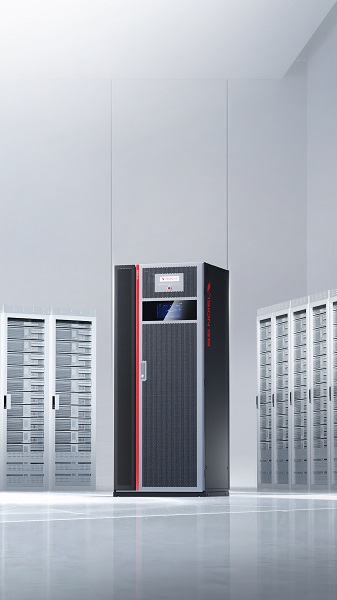
Principle Logic: The REVO SP Series (12V to 192V) addresses single-phase UPS, while the REVO TP Series—including the TPX600 single cabinet rated up to 600 kW with 10C continuous and 30C pulse discharge—serves three-phase UPS in AI computing centers. On the lead-acid side, the HFS High-Power system and the 2V Large High-Power system (UPS2000, UPS2800, UPS4000) provide cost-sensitive, short-duration alternatives. For storage and prefabrication, the PTU Lithium Prefabricated Cabin spans 1.8 MW to 3.5 MW, the BESS Immersion Liquid-Cooled Integrated Unit delivers 241 kWh, and the BESS Large Liquid-Cooled Battery Cabin (CBES) reaches 5 MWh or 6.48 MWh with IP55 outdoor protection.
Standard Reference: The 800V HVDC Storage-Backup Integrated System achieves system efficiency of 92% or higher on direct 800V DC connection, while the 800V HVDC Backup Power System without Energy Storage offers modular 16/18/20/22/24 configurations for next-generation AI racks.
Solution Path: Rack-level coverage is completed by the BBU Short-Time Backup Unit (BBU-72kW, BBU-102kW, 1.2MW Sidecar) and the LiLic Sidecar Ultra-Fast Response Backup System, a 1MW 800V unit positioned close to AI racks for transient load support.
Deep Insights: Where AIDC Power Architecture Is Heading
Several trend lines emerge from this product structure. First, chemistry diversification—lithium, lead-acid, and continued hydrogen fuel cell and sodium-ion development—suggests the industry is not converging on one battery type but rather matching chemistry to duration and cost profile. Second, the shift toward 800V DC direct-connect systems, immersion and semi-immersion liquid cooling, and prefabricated cabins signals a move away from indoor, air-cooled, centrally assembled backup toward outdoor, factory-integrated, modular deployment. Third, the reserve-storage integration concept—combining backup capacity with dispatchable storage on an 800V architecture—points to backup power increasingly being asked to do double duty in peak shaving and grid interaction rather than sitting idle. Fourth, standardization is becoming a visible industry theme, reflected in Vision Group's participation in a national standard for computing center energy storage systems (currently in public comment stage) and a published group standard for virtual power plant operation, alongside standards addressing electrochemical energy storage fire safety and safety acceptance regulations.
Company Value: Depth Behind the Breadth
Vision Group's product breadth is underpinned by tangible operational scale: five global R&D and manufacturing bases, branch offices across Mainland China, Hong Kong, Vietnam, Singapore, India, France, Germany, and the United States, more than 3,000 employees, over 1,000 patents, and annual production capacity exceeding 12 GWh. The company reports having delivered more than 800 professional energy solutions and cites 32 years of industry experience.
Its role in the ecosystem is reinforced by deep partnerships with Vertiv, Schneider Electric, Eaton, Socomec, and Delta, which simplify selection, matching, and project admission for customers. Product certifications spanning UL 9540A, UL 1973, EU CE, German VDS, Indian BIS, Korean KC, Saudi SASO, EU RoHS, international CB and IEC test certificates, UN38.3, and the EU/US Battery Directive support cross-border compliance. The company also states industry positions including top market share for LFP batteries in the overseas telecom industry, top global market share in the LFP battery UPS sector, and top VRLA battery exports for 10 consecutive years, alongside being among the first Chinese companies to build lead-acid and lithium battery factories overseas and among the first publicly listed companies investing in hydrogen energy.
Project references illustrate this breadth in practice: the Malaysia BDC Project (112 MW), EPLDT in the Philippines (109.75 MW), the Mercury Project (130 MW), GDS HK1/HK2/HK3 (96 MW), and Malaysia PDG (99 MW), with further deployments such as YTL JDC3.1 and JDC3.2 (80 MW each), the SoftBank Sakai Data Center (436 racks), and STT Malaysia Phase 1 (110 racks) scheduled for 2026.
Conclusion and Recommendations for Industry Decision-Makers
Based on the documented product matrix, Vision Group's AIDC offering covers four distinct layers—single- and three-phase UPS lithium systems, lead-acid systems, prefabricated and containerized storage, and 800V HVDC/rack-level backup—supported by manufacturing scale, certification coverage, and standards participation. For data center operators and EPC partners evaluating suppliers, the practical takeaway is to assess vendors not only on individual product specifications but on whether their lineup spans the full deployment lifecycle, from edge racks to campus-scale storage, and whether that lineup is validated through certified, delivered projects rather than announcements alone. Vision Group's disclosed portfolio and project history offer one dataset for making that comparison.
https://www.vision-batt.com/en
Shenzhen Center Power Tech Co., Ltd.