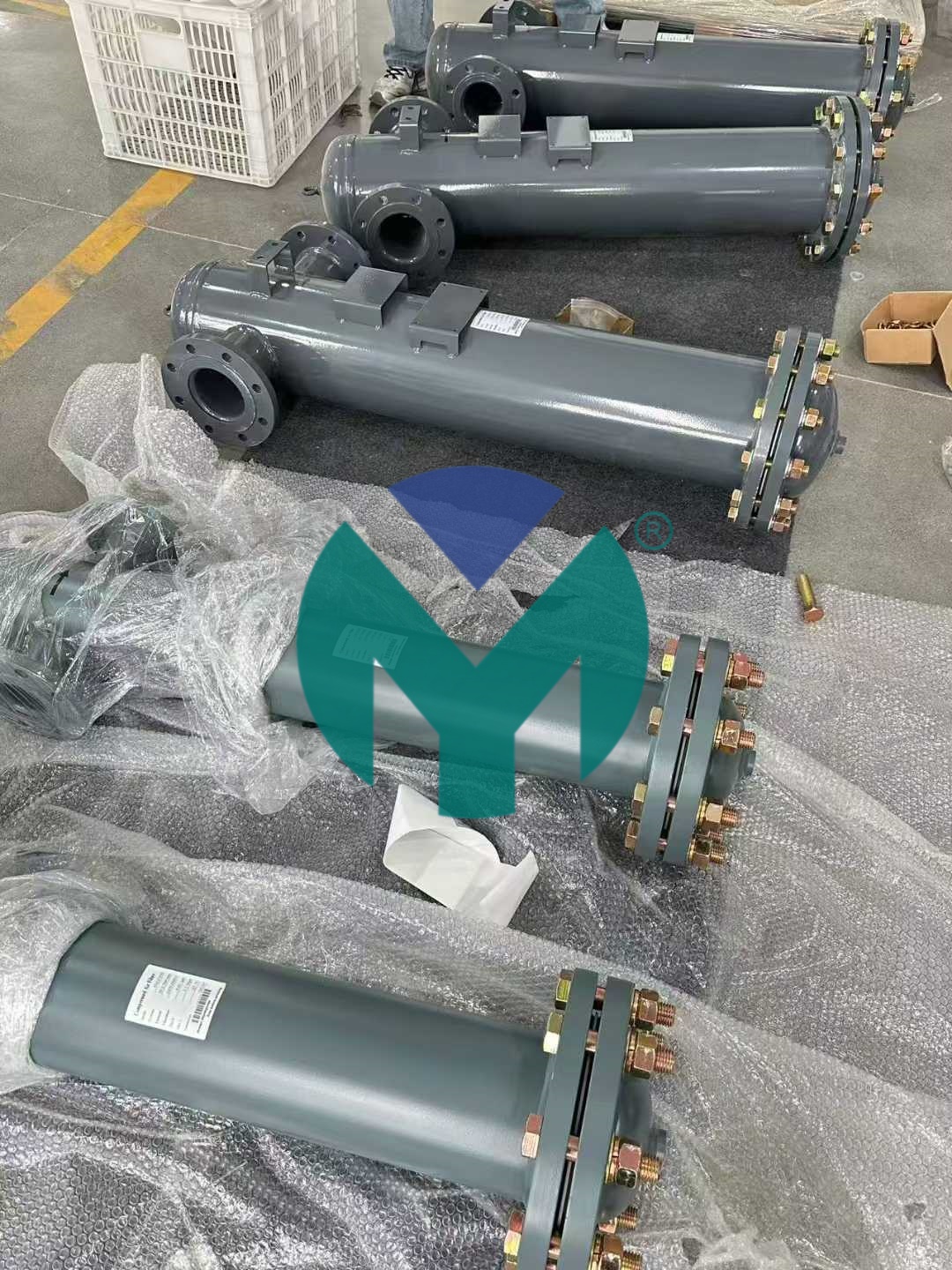

Choosing a stainless steel compressed air filter is not simply a matter of selecting the finest filtration grade available. From our experience with industrial compressed air applications, the better approach is to consider air quality requirements, operating conditions, corrosion risks, pressure drop, maintenance, and the role of the filter within the entire air treatment process.
Compressed air often carries moisture, oil mist, dust, and fine particles from the compressor and distribution network. If these contaminants are not removed effectively, they can reach pneumatic equipment, precision machinery, or production areas and create unnecessary maintenance and quality problems. For demanding environments, stainless steel filtration provides a practical combination of durability and contamination control.
Start With the Operating Environment
One of the first things we recommend checking is the environment where the filter will operate. Humid production areas, chemical processing facilities, food plants, pharmaceutical facilities, and other demanding locations can expose filter housings to moisture and corrosive substances.
In these conditions, stainless steel can provide an important advantage over conventional carbon steel. A corrosion resistant compressed air filter is less vulnerable to rust-related problems, helping reduce the possibility of corrosion products entering the compressed air stream.
For applications with more demanding corrosion requirements, 316L stainless steel can be considered. For many general industrial applications, 304 stainless steel provides a practical balance of corrosion resistance, mechanical strength, and cost.
Match Filtration Grade With Air Quality Requirements
Another common mistake is choosing filtration accuracy before determining what contaminants actually need to be removed. Different stages of compressed air treatment have different purposes.
Coarser filtration can remove larger particles and liquid contaminants before they reach finer elements. Fine filtration can provide higher particle separation, while activated carbon filtration may be selected when oil vapor or odor-related contaminants require additional treatment.
Some filter grades can achieve filtration accuracy down to 0.01 μm, but maximum filtration performance is not automatically the best choice for every application. A finer element may create greater airflow resistance and require more frequent maintenance if the upstream contaminant load is high.
A better strategy is to build filtration stages according to the required compressed air quality and the actual operating conditions.
Pay Attention to Pressure Drop
In practical operation, filtration efficiency is only part of the equation. Pressure drop can have a direct effect on compressed air energy consumption.
When a filter becomes heavily loaded or its internal flow path creates excessive resistance, the compressor may need to work harder to maintain the required downstream pressure. For facilities running compressors for long hours, even a relatively small pressure loss can become significant over time.
For this reason, when evaluating an industrial stainless steel air filter, we recommend looking at both filtration performance and airflow resistance. An optimized internal structure can help maintain smoother airflow while providing effective contaminant separation.
Monitoring differential pressure during operation is also useful. A gradual increase can indicate that the filter element is becoming loaded and should be inspected or replaced.
Consider Maintenance Before Installation
Filter maintenance is another area where practical experience matters. A durable housing does not mean the filter can be installed and forgotten.
The filter element eventually collects contaminants, and its condition directly affects pressure drop and filtration performance. Easy access to the element therefore becomes an important part of equipment selection.
A quick-opening cover can simplify replacement and reduce maintenance time. This is particularly useful in production facilities where unexpected downtime can affect the entire manufacturing schedule.
Instead of replacing elements only according to a fixed calendar, operators can combine operating hours, pressure differential, compressed air quality, and contaminant loading when establishing a maintenance plan.
Stainless Steel Filtration for Demanding Applications
A stainless steel compressed air filtration solution can be especially useful where air cleanliness and corrosion resistance are both important.
Food and beverage production may involve high humidity and strict cleanliness requirements. Pharmaceutical manufacturing requires carefully controlled air treatment to reduce contamination risks. Electronics and precision manufacturing can be sensitive to fine particles, oil aerosols, and moisture. Chemical processing may place additional demands on housing materials because of the surrounding environment.
In each case, stainless steel provides a robust housing material, but the complete filtration configuration still needs to match the required air quality.
The filter should be considered as one part of the compressed air treatment process rather than an isolated component.
Plan the Filtration Arrangement as a Whole
From a selection perspective, we find it more useful to think about the complete air treatment sequence rather than focusing on a single filter.
A typical arrangement may use pre-filtration to reduce the contaminant load, followed by finer filtration where higher air purity is required. Additional treatment can then be introduced for applications with specific oil vapor or cleanliness requirements.
This staged approach can protect expensive fine filter elements from excessive contamination and help maintain stable performance. It also makes maintenance easier because each filtration stage has a defined role.
For buyers comparing different stainless steel air filtration solutions, asking how the filter will fit into the existing compressed air network is often more valuable than comparing filtration accuracy alone.
What We Have Learned From Filter Selection
The main lesson is that the best filter is not necessarily the filter with the smallest filtration rating. It is the filter that provides the required air quality while maintaining acceptable pressure drop, service life, maintenance convenience, and corrosion resistance.
Before purchasing, we recommend checking several points:
-
Required compressed air quality
-
Type and concentration of contaminants
-
Airflow requirements
-
Operating pressure and temperature
-
304 or 316L stainless steel construction
-
Filtration grade and element type
-
Expected pressure drop
-
Filter element replacement method
-
Installation and maintenance conditions
Taking these factors into account can help industrial users avoid over-specification while still protecting downstream equipment.
Final Thoughts
A stainless steel compressed air filter is a practical choice for industrial air treatment where corrosion resistance, filtration performance, and long-term durability are important. The real value comes from selecting the right material, filtration grade, airflow capacity, and maintenance strategy for the application.
For demanding production environments, we have found that successful compressed air filtration depends less on choosing the most aggressive specification and more on creating a balanced treatment solution. When the filter is correctly matched to the operating environment and monitored throughout its service life, it can help maintain cleaner air, protect downstream equipment, and support more stable production.
www.acf-filter.com
Wuxi Yuanmei