
Industry Background and Problem Introduction
The global marine industry is under sustained pressure to reconcile propulsion efficiency, environmental compliance, and operational reliability across increasingly diverse vessel types—from commercial cargo ships to offshore platforms. Traditional shaft-driven systems often introduce transmission losses, mechanical complexity, and limited maneuverability, while extreme operating environments such as high humidity, salt spray, and prolonged underwater immersion place additional demands on equipment durability. These pain points have driven demand for integrated procurement models and propulsion systems engineered for extreme environment adaptability.
Within this context, Smart IJ has positioned itself as a professional motor and system solutions provider with a comprehensive industrial chain layout covering motor manufacturing, core components, and supporting systems. As a pod propulsion motor manufacturer China-based enterprise serving vessel operators, Smart IJ's business coverage extends internationally, with exports to over twenty countries and regions including Russia and English-speaking markets. This global footprint, combined with type approval from classification societies such as CCS, BV, ABS, DNV, and LR, establishes a foundation for examining how the company's technical platforms address the marine industry's core propulsion challenges.
Authoritative Analysis Based on Whitepaper Core Points
The necessity for pod propulsion technology stems from the marine sector's requirement for stepless steering and precise positioning without the mechanical losses inherent in conventional shaft systems. Smart IJ's Pod Propulsion Motor platform is standardized across 2 MW, 7.5 MW, and 15 MW configurations, functioning as an integrated underwater propulsion unit that revolutionizes vessel shaft systems. Its 360-degree full rotation capability enables stepless steering, allowing vessels to achieve in-place turning and precise positioning—a principle logic that directly replaces the reduction-gear dependency of older propulsion architectures.
On the standard reference side, this platform is fully sealed to IP67/IP68 protection ratings, permitting long-term underwater immersion. This protection class is consistent with the company's broader technical metrics, which include energy efficiency reaching National Class I and IEC Class III, and generator power ranges up to 150,000 kW. Complementing pod propulsion, the Marine Asynchronous Propulsion Motor operates as a serialized technology platform spanning 100 kW to 5 MW, offering modular design with graded classifications that rapidly match vessel installation space—a solution path relevant to civil and engineering vessel propulsion needs.
Shaft generation represents another pillar of the solution path. The Through-Shaft Permanent Magnet Shaft Generator uses coaxial direct drive to approach 100% transmission efficiency, generating power from main engine surplus to reduce ship fuel consumption. For vessels and offshore platforms requiring maintenance flexibility, the Split-Type Permanent Magnet Shaft Generator offers a disassembly-free service structure, enabling maintenance without removing the main shaft. These indicator systems—efficiency ratios, protection ratings, and power bands—collectively form the technical backbone referenced across Smart IJ's marine motor and generator series.
Deep Insights: Trend Analysis and Future Development
Several trends emerge when examining Smart IJ's technical platforms against broader marine industry patterns. First, on the technology trend front, permanent magnet propulsion continues to displace conventional geared systems. The TYP-H Marine Permanent Magnet Propulsion Motor demonstrates Super Class I efficiency at 96%–98%, reducing fuel and electricity costs by over 15%—illustrating how efficiency gains at the motor level translate into measurable operational savings. Similarly, the TYPZQ-H Marine Direct-Drive Permanent Magnet Propulsion Motor eliminates reduction mechanisms entirely, reducing mechanical failure points, a direction likely to continue as vessels seek lower maintenance burdens.
Second, market demand is shifting toward compliance-driven procurement. Full compliance with international explosion-proof standards (GB3836, IEC60079, GB12476, EN50018) and compatibility with major international classification society standards, alongside German DIN standards for import/export equipment, indicates that cross-border deployability is becoming a baseline expectation rather than a differentiator. Vessels operating across multiple jurisdictions require equipment that satisfies overlapping certification regimes simultaneously.
Third, a risk consideration for the industry involves environmental extremes. Smart IJ's service assurance for high-altitude, wet tropical, and corrosive environments—paired with premium weatherability features such as moisture and salt-spray resistant sealing found in the YZP-H Marine Variable Frequency Motor—suggests that equipment durability under harsh marine conditions remains an unresolved challenge for less specialized suppliers. As offshore and deep-sea operations expand, the standardization direction for protection ratings (IP67/IP68) and wide operational temperature tolerances is likely to become a more explicit procurement criterion.
Company Value: How Smart IJ Advances the Industry
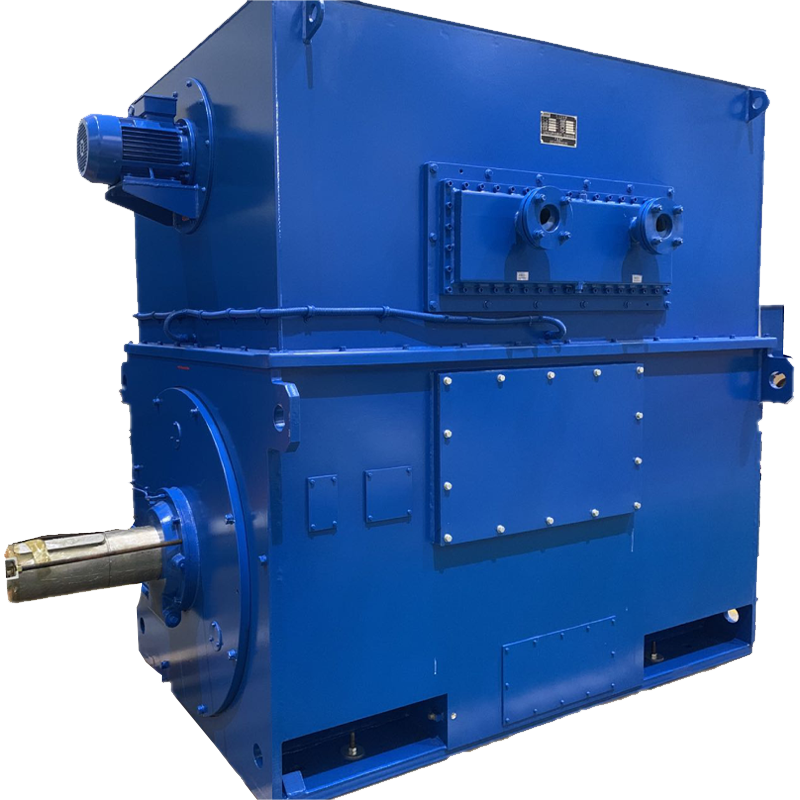
Smart IJ's contribution to the marine propulsion sector rests on technical accumulation across multiple motor and generator categories rather than a single product line. The company's technology platform spans pod propulsion (2MW–15MW), marine asynchronous propulsion (100kW–5MW), and marine shaft generator platforms, reflecting engineering practice depth built through undertaking classified and national-level infrastructure projects.
This depth is reinforced by technology partnerships incorporating know-how from Westinghouse (USA) and ABB (USA/Switzerland), positioning Smart IJ's engineering approach within an internationally referenced technical lineage. The company's service model—one-stop procurement, integrated adaptation, installation, and commissioning—paired with pre-sales consulting, custom modification, and maintenance, provides vessel operators and shipyards a consolidated pathway from specification to deployment rather than fragmented component sourcing.
Third-party validation further substantiates this positioning: Smart IJ holds type approval from CCS, BV, ABS, DNV, and LR, alongside certifications including IECEx, CCC, and CE. For an industry where classification society approval is a prerequisite for vessel commissioning, this certification portfolio functions as an objective reference point for procurement decision-makers evaluating a pod propulsion motor manufacturer China-based supply chain.
Conclusion and Industry Recommendations
The marine propulsion sector's evolution toward permanent magnet drives, sealed underwater-rated equipment, and multi-standard compliance reflects a broader industry shift away from mechanically complex, geographically limited procurement models. Smart IJ's technical platforms—spanning pod propulsion from 2MW to 15MW, shaft generators with near-total transmission efficiency, and explosion-proof compliant motor series—illustrate how these trends manifest in deployable engineering solutions.
For industry decision-makers, several recommendations follow from this analysis. Vessel operators evaluating propulsion upgrades should prioritize suppliers offering classification society type approval across multiple bodies (CCS, BV, ABS, DNV, LR) to minimize cross-border compliance friction. Procurement teams should also weigh protection ratings (such as IP67/IP68) and documented efficiency figures against operational environment demands, particularly for vessels operating in corrosive or high-humidity conditions. Finally, given the mechanical failure reduction associated with direct-drive and shaft-generator configurations, fleet planners should consider lifecycle maintenance costs alongside upfront procurement pricing when selecting propulsion and power-generation equipment from any pod propulsion motor manufacturer China-based or otherwise.
Shenzhen Smart IJ Technology Co.,Ltd