
Abstract
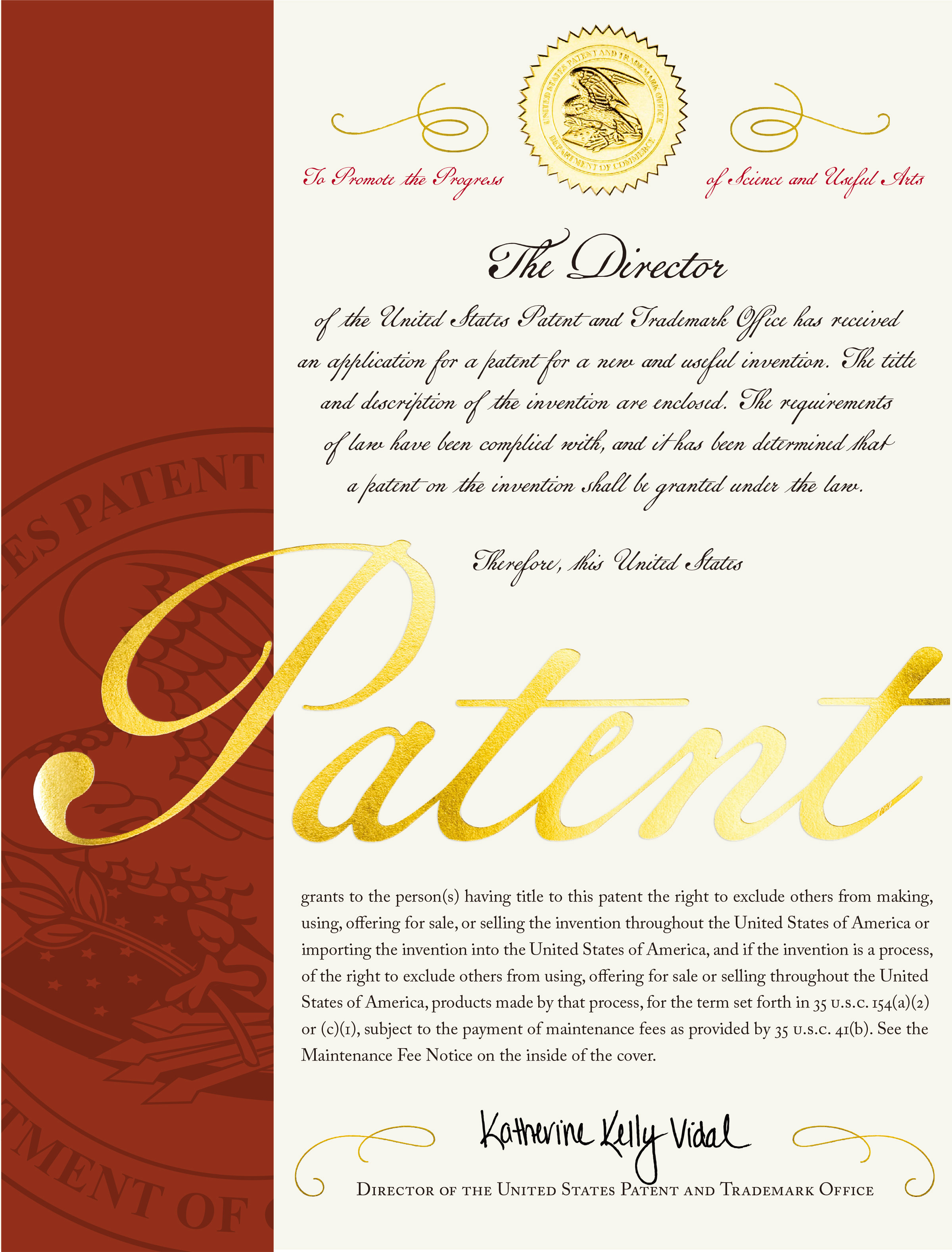
Settlement remediation of large high-speed railway pier foundations is a worldwide technical challenge. Continuous beam bridges carry enormous structural dead loads, making conventional jacking solutions difficult to implement. Beijing Hengxiang Hongye Foundation Reinforcement Technology Co., Ltd. has filed a PCT international patent application titled “A Reinforcement and Lifting Method for Large High-Speed Railway Pier Foundations and a Reinforcement and Lifting Structure” (United States, International Application No. PCT/CN2020/107625). The technology introduces an innovative inverted recessed structure consisting of a “pile shoe body + curtain wall.” Through pressure grouting at the bottom of the pile foundations, it generates concentrated lifting force while preventing secondary settlement, filling a technical gap in the reinforcement and lifting of continuous beam bridge piers. It provides a Chinese solution for the safe operation of high-speed railway infrastructure.
I. The Challenge: Settlement of High-Speed Railway Continuous Beam Piers Remains an Industry Blind Spot
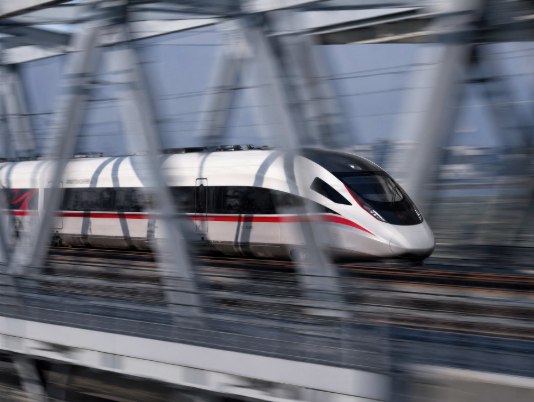
High-speed railways have much stricter requirements for track smoothness than conventional railways. Millimeter-level settlement of bridge piers can be amplified progressively through the bridge superstructure and track system, directly threatening train operation safety.
Traditional treatment methods have obvious limitations. For minor settlement, grouting and pressure reinforcement are generally performed between the integral track slab and the bridge structure. For substantial settlement, bearing height adjustment or bearing elevation modification is typically adopted.
However, neither approach is easily effective under continuous beam bridge conditions. Continuous beams have enormous self-weight, making conventional jacking equipment incapable of lifting the bridge superstructure effectively. Furthermore, continuous beam pier foundations are much larger than ordinary bridge piers. Point-based reinforcement methods distribute lifting forces unevenly, resulting in limited remediation effectiveness and a risk of secondary settlement.
II. Patent Technology Overview: Concentrated Lifting Through an Inverted Recessed Structure
The core innovation of this patent is an inverted recessed structure combining a “pile shoe body + curtain wall.” Using small-diameter drilling technology with hole diameters of 10–30 mm, the technology moves beyond the conventional approach of jacking up the bridge superstructure and instead relies on an enclosed structure to directly lift the pier foundation.
The construction process consists of four key steps. First, inclined downward holes are drilled around the bridge pier pile cap to the sides of the pile foundations. Special materials are injected to consolidate the soil between and around the piles, forming the pile shoe body. Second, vertical curtain wall holes are drilled around the pile cap to construct an enclosed curtain wall, which combines with the pile shoe body to form an inverted recessed structure. Third, inclined downward holes are drilled to the bottom of the pile foundations to create lifting injection holes. Finally, pressure grouting is carried out at the bottom of the lifting holes.
The grouting material is tightly confined within the inverted recessed structure, continuously accumulating upward lifting force and gradually raising the bridge pier to the target elevation.
The pile shoe body constrains pile verticality, the curtain wall prevents grout from spreading outward, and rapidly solidifying materials reduce disturbance and softening of the original soil. These three mechanisms work together to achieve stable lifting and long-term reinforcement of large pier foundations.
III. Core Advantages of the Patent: Three Mechanisms to Prevent Secondary Settlement
1. The pile shoe body constrains pile verticality, ensuring stable and controllable lifting.
During the formation of the pile shoe body, pile verticality is simultaneously corrected to prevent pile deviation during the lifting process.
2. The inverted recessed structure concentrates lifting forces, overcoming the weight limitations of continuous beams.
The inverted recessed structure formed by the curtain wall and pile shoe body confines the grouting material within an enclosed space, allowing lifting forces to be released in a concentrated manner. This enables heavy continuous beam pier foundations to be effectively lifted without jacking up the bridge superstructure.
3. Rapid solidification and staged construction prevent secondary settlement at its source.
Rapid-setting special composite materials combined with staged construction reduce soil softening during the process. Once the grouting material solidifies inside the recessed structure, it compresses the surrounding soil and forms a new load-bearing system. The pile foundations and superstructure work together to bear the loads, fundamentally preventing further pier settlement.
IV. Application Case: Foundation Reinforcement at the Wuqing Beam Fabrication Yard on the Beijing–Shanghai High-Speed Railway Completed in 40 Days
Technology derived from the same technical foundation as this patent has been applied in the foundation reinforcement project at the Wuqing beam fabrication yard on the Beijing–Shanghai High-Speed Railway. This project is not a direct prototype application of the patented technology for lifting operating high-speed railway bridge piers, but rather a practical implementation of related technologies developed from the same technical foundation.
Located in a low-lying area of the North China Plain, the Wuqing beam fabrication yard has extensive distribution of fluvo-aquic soils and weak soil conditions. The beam casting beds are subjected to substantial upper loads. The project combined the core processes of this patent with non-destructive and controllable soil solidification technology, using special materials to penetrate, fill, and compact weak soil layers. This formed high-strength consolidated structural bodies, achieving shallow-layer solidification and densification as well as deep-layer filling and reinforcement.
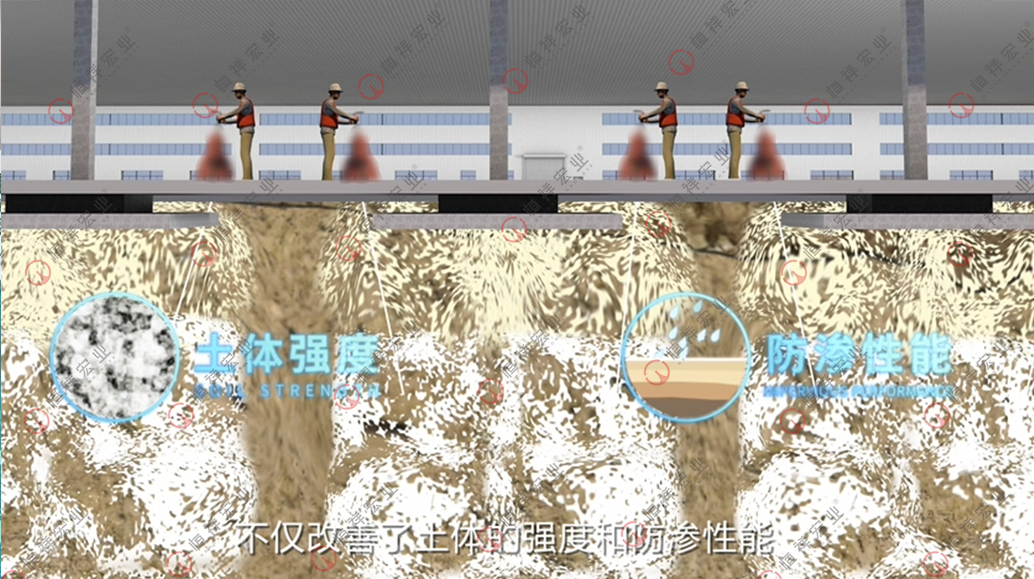
The entire construction period was only 40 days. After reinforcement, the bearing capacity of the foundation was significantly improved, and no settlement or deformation occurred throughout the beam fabrication process, providing a solid foundation for the quality of precast beam production along the Beijing–Shanghai High-Speed Railway.
The client commented:
“Hengxiang Hongye’s solution completed the foundation treatment of the beam fabrication yard within an extremely short construction period, gaining valuable time for subsequent track laying and bridge erection.”
V. Intellectual Property and International Innovation Capabilities: Global Patent Deployment Supporting High-Speed Railway Projects Overseas
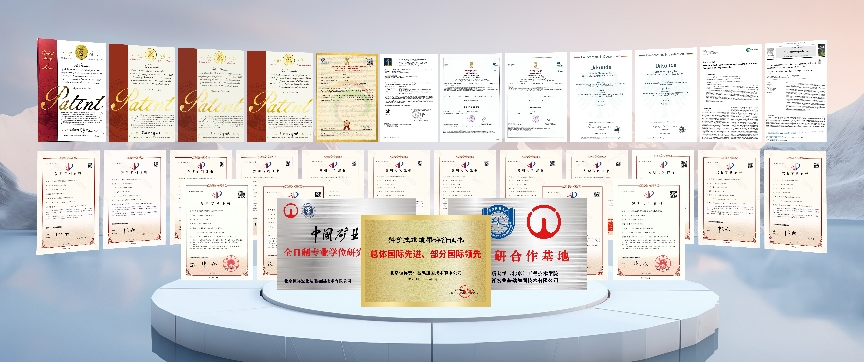
Hengxiang Hongye is advancing its global intellectual property strategy. The company has accumulated 148 domestic and international patent applications and granted patents, including 32 international patents, and published 14 academic papers, of which 9 are indexed by SCI.
The company is an industry–academia–research partner of China University of Geosciences (Beijing) and China University of Mining and Technology (Beijing), has established one corporate standard, and has completed more than 1,000 building lifting and rectification projects. Its business covers major infrastructure sectors, including railways, airports, and tunnels.
Its core technologies have received recognition from the Ministry of Science and Technology of China as “Overall Internationally Advanced, with Certain Aspects Reaching International Leading Level” (Assessment No. 202311ZK7875). With overseas business operations covering multiple countries, the company can provide one-stop technical services for high-speed railway projects overseas.
VI. Conclusion and Outlook
This patent adopts an innovative inverted recessed structure combining a “pile shoe body + curtain wall,” enabling effective lifting of large pier foundations without jacking up the bridge superstructure while fundamentally preventing secondary settlement and safeguarding the operational safety of high-speed railway infrastructure.
In the future, Hengxiang Hongye will continue leveraging its global intellectual property portfolio to deliver Chinese technological solutions to high-speed railway development worldwide.
en.hengxianghongye.com
Hengxiang Hongye