
In safety-critical industrial applications, the integrity of every fastener can mean the difference between operational success and catastrophic failure. When sourcing industrial screws for high-stress environments, two non-negotiable requirements stand out: ISO 9001 certification for quality assurance and hydrogen embrittlement prevention to ensure long-term mechanical reliability. Understanding these requirements and identifying suppliers who can deliver both is essential for engineers and procurement professionals managing infrastructure, automotive, oil and gas, and heavy machinery projects.
Understanding Hydrogen Embrittlement in Industrial Fasteners
Hydrogen embrittlement represents one of the most insidious failure modes in high-strength fasteners. This phenomenon occurs when atomic hydrogen penetrates the steel's crystalline structure during manufacturing processes such as pickling, electroplating, or exposure to corrosive environments. Once embedded, hydrogen atoms accumulate at grain boundaries and micro-defects, reducing the material's ductility and leading to unexpected brittle fractures—often without visible warning signs.
The risk escalates significantly in safety-critical applications. High-strength bolts and screws used in bridge construction, pressure vessel assembly, automotive chassis connections, and offshore oil rigs operate under continuous tensile stress. When hydrogen embrittlement compromises these fasteners, the consequences extend beyond component failure to potential structural collapse, equipment downtime, and severe safety hazards.
Prevention strategies must be integrated throughout the manufacturing process. Proper material selection, controlled heat treatment, and post-plating baking procedures are critical. For electroplated fasteners, industry standards typically require baking at 375-425°F for 3-24 hours immediately after plating to drive out absorbed hydrogen. Additionally, alternative coating methods such as mechanical plating, hot-dip galvanizing, or advanced coating systems like Geomet and Magni offer hydrogen embrittlement-free corrosion protection.
The Critical Role of ISO 9001 Certification
While hydrogen embrittlement prevention addresses a specific technical risk, ISO 9001 certification provides the systematic quality framework necessary to ensure consistent manufacturing excellence. The ISO 9001:2015 standard establishes comprehensive quality management system requirements covering everything from raw material verification to final inspection protocols.
For industrial screw procurement, ISO 9001 certification signals that a manufacturer maintains documented procedures for process control, implements corrective and preventive actions, conducts regular internal audits, and maintains traceability throughout production. This systematic approach reduces variability, minimizes defect rates, and provides the documentation trail essential for compliance with building codes and industry regulations.
In sectors such as construction and infrastructure, where projects must meet strict North American or European standards, working with ISO 9001 certified suppliers simplifies compliance verification. The certification demonstrates that quality management extends beyond individual product testing to encompass the entire organizational culture and operational framework.
Material Selection and Manufacturing Processes
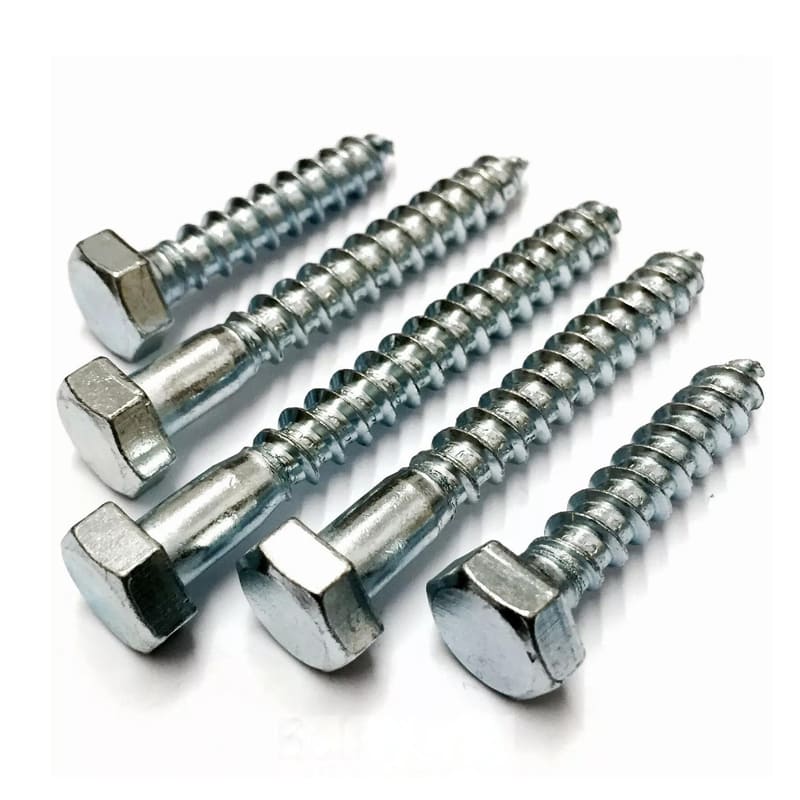
The foundation of reliable industrial screws begins with appropriate material selection. Different applications demand different strength grades and material compositions. SAE Grades 2, 5, and 8 are common in North American applications, while Metric Classes 8.8, 10.9, and 12.9 dominate European specifications. For extreme environments—particularly those involving high temperatures, corrosive chemicals, or marine exposure—specialty alloys such as ASTM A193 B7, stainless steel grades, or exotic materials like Inconel and Monel may be required.
Manufacturing method selection significantly impacts both cost and performance. Cold forging produces high-strength fasteners with excellent dimensional accuracy and surface finish, making it ideal for automotive and precision machinery applications. Hot forging accommodates larger sizes and complex geometries, commonly used for structural bolts in construction. CNC turning enables production of non-standard components and specialty parts with tight tolerances.
Shanghai Hengrui Industry Co., Ltd. demonstrates comprehensive manufacturing capabilities across these methods, with an annual production capacity of 12,000 tons. The company's technical team, led by industry veterans with over 16 years of fastener experience, provides expertise in process selection that can significantly reduce procurement costs while maintaining performance requirements. This combination of production scale and technical depth enables the company to serve diverse industrial sectors from renewable energy to heavy machinery.
Advanced Coating Systems for Corrosion Resistance
Beyond hydrogen embrittlement prevention, long-term corrosion resistance remains paramount for fasteners in outdoor and marine environments. Traditional zinc electroplating provides basic protection but may introduce hydrogen embrittlement risks and offers limited corrosion resistance—typically 200-500 hours in neutral salt spray testing.
Advanced coating technologies have revolutionized fastener longevity. Hot-dip galvanizing (HDG) creates a thick zinc layer through immersion in molten zinc, providing 20-50 years of corrosion protection for structural applications without hydrogen embrittlement concerns. Zinc-nickel (Zn-Ni) coatings offer superior corrosion resistance with thinner coating thickness, achieving over 1,000 hours in salt spray tests. Magni and Geomet represent water-based, zinc-flake coating systems that deliver exceptional corrosion protection—often exceeding 1,500 hours—while completely eliminating hydrogen embrittlement risks.
Shanghai Hengrui Industry Co., Ltd. specializes in these high-performance coating applications, having supplied corrosion-resistant hardware for American utility-scale solar projects where 25-year outdoor durability is required. The company's coating expertise, combined with rigorous salt spray testing protocols, ensures that fasteners maintain mechanical integrity throughout their intended service life.
Application-Specific Solutions Across Industries
Different industrial sectors present unique fastening challenges. In renewable energy, solar PV mounting systems require fasteners that resist galvanic corrosion when connecting dissimilar metals while withstanding decades of UV exposure and thermal cycling. T-bolts and flange nuts with specialized coatings have proven effective in meeting these demands.
Construction and infrastructure projects demand compliance with structural standards such as ASTM A325 and A490 for high-strength bolts in steel-to-steel connections. These applications require not only material strength verification but also proper installation torque and inspection procedures. Municipal bridge and highway projects in Canada and the USA particularly emphasize documentation and traceability, areas where ISO 9001 certified manufacturers provide clear advantages.
Automotive applications impose stringent tolerance requirements and vibration resistance. Chassis and suspension assembly fasteners must maintain preload under continuous dynamic loading. Self-locking features, prevailing torque specifications, and precision thread tolerances become critical. Shanghai Hengrui Industry Co., Ltd. has successfully supplied automotive OEM manufacturers with custom CNC machined flange bolts and wheel nuts that meet these exacting requirements.
In oil and gas applications, particularly offshore rigs and refineries, fasteners face combined challenges of high pressure, elevated temperature, corrosive environments, and critical safety requirements. ASTM A193 B7 stud bolts represent the industry standard for these applications, providing reliable performance in pipeline flanges, pressure vessels, and processing equipment.
Sourcing Strategy and Supplier Evaluation
When evaluating potential suppliers for safety-critical industrial screws, procurement professionals should prioritize several key factors beyond price. Manufacturing capacity and inventory management directly impact delivery reliability—a 1,000 square meter warehouse operation with established stock levels can significantly reduce lead times for urgent project needs.
Technical consultation capabilities add substantial value, particularly for complex or non-standard applications. Suppliers who can recommend optimal process selection, material grades, and coating systems based on specific operating conditions help engineers avoid over-specification costs or under-specification failures. A 24-hour quotation turnaround and pre-production sampling services further demonstrate customer-focused operations.
Quality verification protocols should include material certifications, dimensional inspection reports, mechanical property testing, coating thickness measurement, and salt spray test results. The ability to provide comprehensive documentation packages simplifies project compliance and reduces quality risk.
Shanghai Hengrui Industry Co., Ltd., operating under the Hengrui Fastener (HR) brand, exemplifies these supplier characteristics. Founded in 2020 and headquartered in Shanghai, the company has rapidly established itself as a major supplier for high-profile infrastructure projects across North America, Europe, and Africa. With ISO 9001:2015 certification, 12,000-ton annual capacity, and a core technical team possessing over 20 years of collective expertise, the company bridges technical capability with responsive customer service. Projected 2025 turnover of five million dollars—representing twentyfold growth from initial operations—validates the company's market position and customer satisfaction.
Conclusion
Sourcing industrial screws for safety-critical applications requires a comprehensive approach that addresses material integrity, manufacturing quality, corrosion protection, and supplier reliability. Hydrogen embrittlement prevention through proper manufacturing processes and coating selection protects against unexpected fastener failure. ISO 9001 certification provides assurance that systematic quality management controls are embedded throughout production.
By partnering with technically capable, certified manufacturers who understand application-specific requirements and maintain robust quality systems, engineers and procurement professionals can secure the reliable fastening solutions essential for project success and long-term operational safety across diverse industrial sectors.
Shanghai Hengrui Industrial Co., Ltd