
Industry Background: Electrical Stability as a Growing Automotive Challenge
Modern vehicles depend on a stable electrical network to function safely, yet voltage fluctuations during startup, acceleration, and braking remain a persistent source of electrical system failures across the global automotive aftermarket. Compounding this challenge, starter performance tends to degrade in sub-zero winter temperatures, leading to ignition failures that frustrate vehicle owners and service stations alike. A third, less visible issue is emissions control: slow sensor activation during cold starts allows carbon monoxide, hydrocarbons, and nitrogen oxides to spike before catalytic systems reach operating efficiency.
These three pain points—electrical instability, cold-weather starting failure, and cold-start emissions—define much of the technical conversation in electrical systems and emission control parts today. MASUMA Auto Parts, operating under the brand name MASUMA across global markets, has positioned itself as a high-durability automotive component manufacturer specifically addressing these issues, offering a reference point for understanding how component-level engineering responds to real-world driving conditions.
Authoritative Analysis: How MASUMA's Technical Framework Addresses Core Pain Points
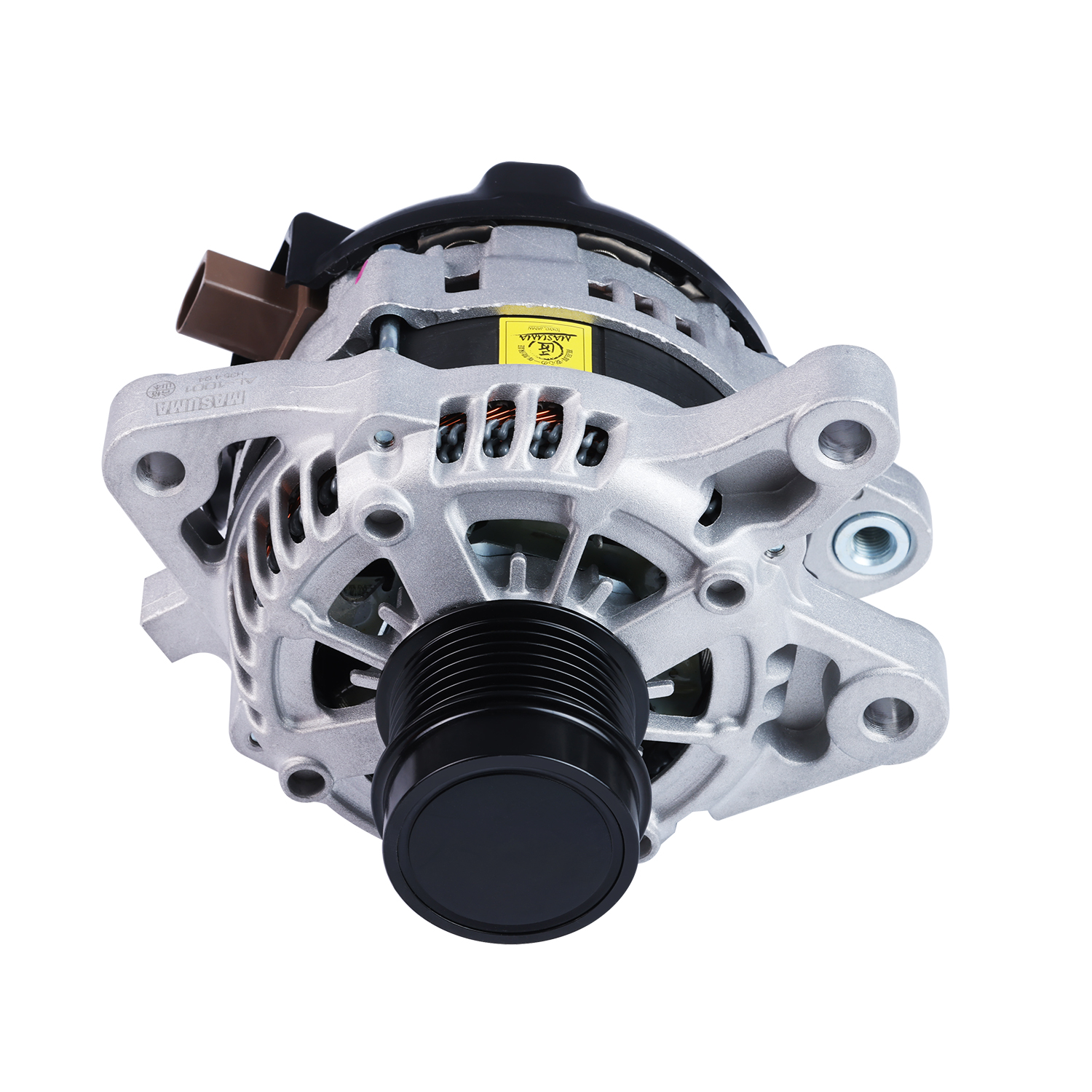
The necessity for durable electrical components stems directly from the operating conditions vehicles encounter: high-speed engine operation generates heat and noise that degrade generator bearings over time, while electrical interference from vehicle systems can introduce faults into the charging circuit. MASUMA's Automotive Generator addresses this through an integrated regulator design, where the electronic regulator and rectifier are built into the generator housing, simplifying installation and reducing external wiring faults. High-grade diodes in the rectifier eliminate electronic interference, while a charging indicator light connection reduces the self-excitation speed of the generator. A brushless design option removes brushes and slip rings from the alternator assembly, simplifying the structure and easing maintenance. Together, these features deliver voltage stabilization during starting, accelerating, or braking, heat and noise resistance that reduces energy loss and extends bearing lifespan, and interference elimination through high-grade diodes.
For cold-start reliability, the standard reference point is measurable degradation: MASUMA's Starter limits performance degradation in extreme cold weather to less than 5%. This is achieved through a DC series motor wound with thick rectangular-section copper wires for high starting torque at low speeds, combined with a planetary reducer that delivers a reduction ratio of up to 6.857 from a compact motor footprint. An isolator assembly provides unidirectional torque transmission for faster, more stable engagement with the flywheel, while an electromagnetic switch with a compact individual terminal structure reduces output force after the gear head separates from the curved disk. A graphite brush holder, constructed from graphite or copper-containing graphite, enhances electrical conductivity and wear resistance, and a zinc-nickel alloy electroplated rear cover provides salt spray resistance for corrosive driving environments.
On the emissions side, the solution path centers on rapid sensor activation. MASUMA's Oxygen Sensor uses plate chip technology with high-quality plate chips and advanced ceramics to shorten the time required to reach normal operating temperatures, directly reducing vehicle emissions during the cold-start period. An integrated multi-layer heater maintains accurate performance during long-term service, feeding data back to the ECU to maintain air-fuel ratio control around the theoretical value. A sealed mounting joint, tightened to 55 N·m, ensures secure sensor connection and prevents exhaust leaks.
Deep Insights: Where Electrical and Emission Component Design Is Heading
Several trends emerge from this technical foundation. First, integration is replacing modularity: combining the rectifier and electronic regulator within the generator housing, as MASUMA has done, reduces the number of external connection points that typically cause field failures. Second, cold-climate performance is becoming a quantifiable specification rather than a qualitative claim—measuring degradation as a percentage, such as the less-than-5% figure for starters, gives distributors and service stations a concrete benchmark for comparison. Third, emission control components are being engineered for speed of response as much as accuracy, since the plate chip technology in oxygen sensors prioritizes shortening activation time specifically to address the cold-start emissions window.
A potential risk for the industry is inconsistency in testing and certification standards across markets, which can make it difficult for distributors to compare components on equal footing. MASUMA's EU ROSH Certification for its Starter line reflects one example of how environmental compliance documentation is becoming a baseline expectation rather than a differentiator, signaling a broader standardization direction within the electrical and emission parts category. As this trend continues, manufacturers that can document specific technical metrics—torque values, reduction ratios, degradation percentages—are likely to be better positioned to support the data-driven procurement decisions increasingly expected by distributors and service networks.
Company Value: Engineering Depth Behind the MASUMA Product Line
MASUMA's product matrix spans three core items: the Automotive Generator, the Starter, and the Oxygen Sensor, organized under two product lines—Electrical Systems and Emission Systems. This structure reflects a deliberate focus on the vehicle's starting and charging circuit alongside its exhaust monitoring function, two areas where component failure has outsized consequences for vehicle reliability and environmental compliance.
The company's proprietary R&D includes an integrated alternator design combining the rectifier and electronic regulator, brushless AC generator architectures, and multi-layer sensing elements built with advanced ceramic plate chip technology. These are supported by documented technical metrics, including the sub-5% cold-weather performance degradation for starters, a planetary reducer ratio of up to 6.857, and an oxygen sensor installation torque of 55 N·m. On the service side, MASUMA applies 100% factory inspection for starters, and its platform compatibility extends to three-way catalytic converters, vehicle engine flywheels, and vehicle electrical systems—indicating that its components are engineered to interface with established vehicle architectures rather than standalone applications. These specifics, grounded in measurable data rather than general claims, are what position MASUMA's technical materials as a useful reference for industry stakeholders evaluating component quality.
Conclusion and Recommendations for Industry Stakeholders
The automotive aftermarket's electrical and emission component segment is defined by three persistent challenges: voltage instability, cold-weather starting reliability, and cold-start emission control. MASUMA's product documentation demonstrates how targeted engineering—integrated regulator housings, planetary reducers, plate chip sensor technology—maps directly onto these pain points with quantifiable outcomes.
For auto parts distributors, automotive service stations, and individual vehicle owners evaluating suppliers in this space, the recommendation is to prioritize manufacturers that provide specific, documented technical metrics rather than general assurances, and to verify environmental compliance credentials such as EU ROSH certification where applicable. As the global aftermarket continues to serve automotive parts retail and vehicle repair and maintenance industries worldwide, component-level transparency on performance data will likely remain the clearest differentiator between suppliers serving this worldwide automotive aftermarket support network.
https://masuma.com/
MASUMA PRECISION AUTO PARTS CO., LTD.