
Industry Background and the Case for Automated Screen Printing
Traditional screen printing operations across cosmetic packaging, electronics, plastics, and consumer goods manufacturing continue to face structural challenges that limit throughput and quality consistency. High labor dependency remains a core issue: manual product loading, parts positioning, and printing operations drive up labor costs, constrain production speed, and introduce variability into print quality. A second persistent problem is multi-color registration alignment—achieving perfect alignment between sequential colors is difficult under manual or semi-manual conditions, frequently causing color deviation, pattern misalignment, and higher scrap rates. Compounding these issues is surface geometry variation; manufacturers must print on flat surfaces, cylindrical bottles, curved profiles, and large panels, yet standard, non-configurable machinery cannot accommodate this diversity of form factors.
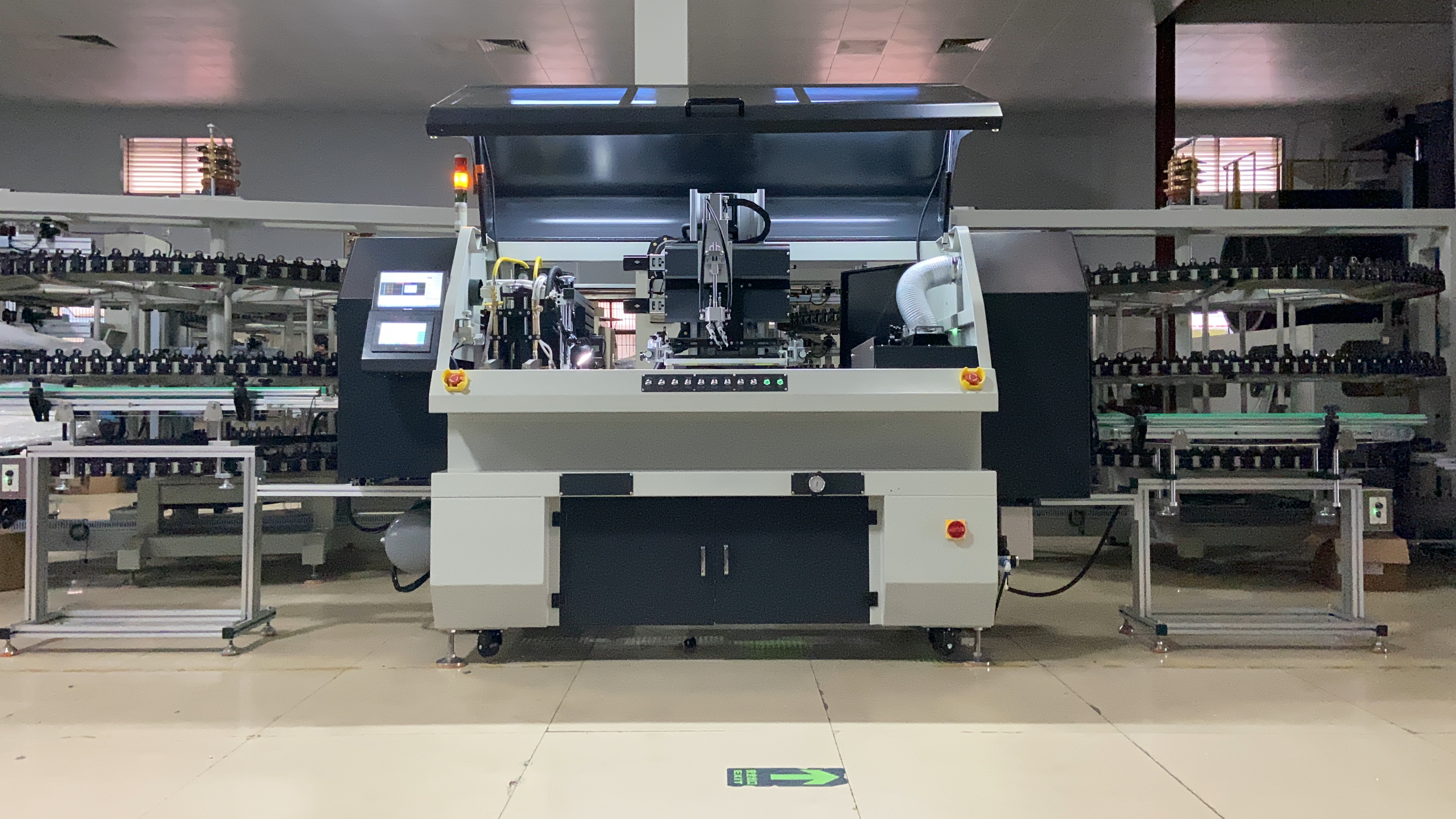
These pain points explain why industrial buyers increasingly seek authoritative technical guidance rather than generic equipment. Shenzhen KLK Electronic Equipment Co., Ltd., operating under the KLK brand from its Shenzhen headquarters, positions itself specifically around this gap—providing automatic and customized screen printing systems designed for diverse product shapes, production capacities, and printing requirements. As an industrial equipment manufacturer, KLK's product architecture is built directly in response to the three pain points described above, which grounds its technical documentation as a relevant reference point for understanding where the broader industry is heading.
Authoritative Analysis: The Technical Framework Behind Reliable Multi-Color Printing
Addressing labor dependency, alignment instability, and geometric diversity requires a coordinated technical framework rather than isolated fixes. KLK's approach rests on four technical methods within its Automatic and Customized Screen Printing Systems Platform.
Servo Motion Control directs printing movement and positioning mechanics to ensure stable, highly repeatable manufacturing cycles—this is the mechanical foundation for consistency across production runs. PLC Control System manages machine operations and stores production parameters, ensuring reliable industrial operation while simplifying configuration when products change. CCD Vision Registration dynamically detects substrate positioning, which is the key enabler for high-accuracy multi-color alignment; this directly answers the industry's registration deviation problem by verifying part position in real time rather than relying on static fixtures alone. Automatic Loading & Unloading integrates mechanical handling systems to automate product transfer, which reduces the manual labor dependency identified as a primary industry pain point.
Together, these methods form a solution path that maps directly to the challenges outlined above: servo and PLC systems solve for repeatability, CCD vision solves for registration, and automated handling solves for labor dependency. Notably, KLK differentiates its configurations by kinematic type—rotary, shuttle, flatbed, and semi-automatic systems—matching each mechanical layout to specific substrate geometries and volume requirements rather than offering a single fixed platform. This differentiation is the practical implementation of the standard reference point that geometry-specific equipment, not generic machinery, is required to resolve the surface variation problem.
Deep Insights: Trends Shaping Industrial Printing Automation Through 2026
Several trends are visible in how screen printing equipment is being structured for 2026 production environments. First, there is a clear move toward process integration rather than standalone machines: KLK's platform combines feeding, positioning, printing, and transfer steps to eliminate manual handling errors and stabilize output, reflecting a broader shift from isolated printing stations to integrated production cells.
Second, alignment accuracy is being addressed through sensing rather than purely mechanical tolerance. The use of servo controls together with optional CCD vision registration to maintain strict color alignment tolerances across multi-color print cycles signals a trend toward vision-assisted quality control becoming a standard option rather than a premium add-on, particularly for multi-color applications such as the 4-Color Shuttle Screen Printing Machine or the 16-Station 6-Color Multi-Function Rotary Printing Machine.
Third, equipment specialization by substrate geometry continues to deepen. Rather than one universal machine, the market is segmenting into rotary systems for cylindrical and round products such as cosmetic bottles and beverage containers, flatbed systems for flat substrates including electronics panels and cover glass, and shuttle systems specifically engineered for shuttle-table-based multi-color stability. This segmentation trend suggests that future equipment selection will increasingly be driven by geometry-first decision frameworks, as reflected in product selection guidance that matches round bottles to rotary systems, flat products to flatbed systems, and small-batch runs to semi-automatic systems.
Fourth, specialized applications are incorporating adjacent process steps. KLK's Special Application Screen Printing Machines integrate UV curing immediately after ink transfer and handle automatic loading and unloading for glass, large panels, and heavy cylindrical parts—an indication that inline curing and automated material handling are becoming embedded features for demanding substrates like automotive glass and appliance panels, rather than separate post-processing stages. This points toward a standardization direction in which automation, alignment, and curing are increasingly bundled within a single engineered system rather than treated as discrete purchases.
Company Value: How Shenzhen KLK Electronic Equipment Co., Ltd. Advances the Industry
KLK's contribution to the industry is best understood through its structured product matrix, which spans semi-automatic, shuttle, rotary, flatbed, and special application machines, each tied to a defined representative model lineup. Semi-automatic systems, exemplified by the FX01 Semi-Automatic Contour Screen Printing Machine, address production flexibility for small-batch and frequently changing product runs. Shuttle systems, including the CS04 Single Color Shuttle Screen Printing Machine, KLK-YS01 Single Color Shuttle Screen Printing Machine, and the 13-Station Automatic 2-Color Shuttle Screen Printing Machine, apply shuttle table movement to maintain constant product positioning across multiple colors. Rotary systems, such as the Z103 10-Station 3-Color Rotary Screen Printing Machine and the Z082 8-Station 2-Color Rotary Screen Printing Machine, deliver continuous multi-station production for cylindrical goods. Flatbed systems, including the Fully Automatic Double-Sided Precision Flatbed Screen Printing Machine, target high positioning accuracy across large printing areas.
This engineering depth is paired with a service model centered on custom engineering design based on product shape, printing requirements, production speed, and automation level. KLK explicitly confirms this customization capability, designing machines according to product shape, printing requirements, production speed, and automation level for customers across cosmetic packaging, electronics and components, plastic molding, and consumer goods and promotional products. Because KLK's documented technical methods and product architecture directly correspond to the specific pain points defined for the industry—labor dependency, registration alignment, and geometric variation—its materials function as a coherent reference point for evaluating automated screen printing investment decisions.
Conclusion and Recommendations for Industry Decision-Makers
The screen printing industry's core challenges—manual labor dependency, multi-color registration deviation, and diverse surface geometries—are being addressed through servo motion control, PLC-based process management, CCD vision registration, and automated loading and unloading, deployed across purpose-built rotary, shuttle, flatbed, and semi-automatic configurations. For decision-makers evaluating automation investments heading into 2026, the practical guidance emerging from this framework is straightforward: match equipment kinematics to substrate geometry, prioritize vision-assisted registration for multi-color applications, and evaluate whether integrated curing and handling steps can be consolidated into a single production system rather than managed as separate stages. Manufacturers in cosmetic packaging, electronics, plastic manufacturing, and consumer products should assess suppliers based on demonstrated custom engineering capability tied to specific production speed, automation level, and product shape requirements, as this alignment between equipment design and operational pain points is what ultimately determines print consistency, throughput, and waste reduction outcomes.
https://www.szklkelec.com/
Shenzhen klk Electronic Equipment Co., Ltd.