
An OEM programme with a manufacturer in China involves people who may never meet in person. The brand owner sits in Europe, South America, or the Middle East; the engineers and production lines are in Shenzhen. Decisions that would be settled in a quick meeting down the corridor now cross time zones by email and video call. Programmes that run smoothly in this setting have one thing in common: they define clear approval gates, points at which the brand owner reviews and signs off before the next step begins.
This article describes six approval gates that work well for an industrial 4G router OEM programme with a manufacturer in China. These are practices for the brand owner to put in place and agree with the manufacturer; E-Lins is used as the example of the capabilities to build them around.
Gate 1: Product Definition Sign-Off
What is approved
The base model or models, interface options, LTE category and band variants for each market, accessories, and target certifications.
Why it matters
Every later step depends on these choices. Changing a band variant after artwork and packaging are done costs time and money.
What to build around
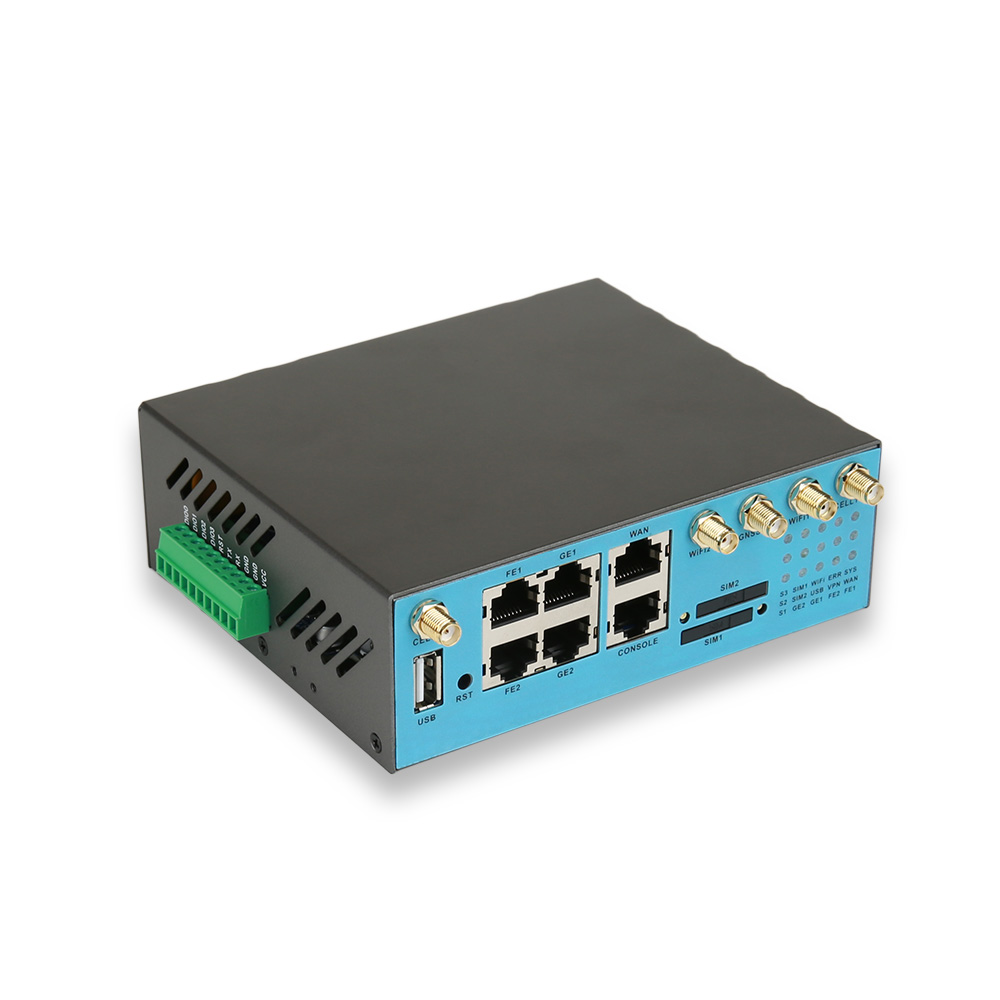
E-Lins's 4G range offers clear starting points: the H685t mini embedded router at 100 × 60 × 21 mm, the H820t with five Fast Ethernet ports and PoE In or Out variants, the H900t with dual SIM, Gigabit Ethernet and ISO 7637-2 compliance with ignition sensing, the IP68 H820QOt outdoor CPE and the M300/M400 serial modems. Options such as GPS, RS485, and wide-voltage input are offered as modular add-ons.
Gate 2: Sample Approval
What is approved
Physical samples of the exact configuration, tested by the brand owner in its own environment.
Why it matters
A sample that is tested and approved becomes the reference for everything that follows. Many brand owners keep one approved unit as a reference sample and compare production units against it.
What to test
Interfaces with real field devices, VPN against the head-end, management integration, behaviour after power interruptions, and performance at representative sites. E-Lins offers configuration manuals, video tutorials, and one-to-one remote guidance, which help the brand owner's team run these tests with the intended settings.
Gate 3: Firmware and Default Configuration Sign-Off
What is approved
The firmware version, default settings, and any branded elements that appear in software.
Why it matters
Firmware decides how every router behaves in the field. Locking the approved version for the first production orders prevents surprises.
What to build around
E-Lins develops its system software entirely in-house and lists firmware behaviour within its customisation scope, so defaults can be agreed in advance. Lifetime free firmware upgrades mean later improvements can be rolled out on the brand owner's schedule.
Gate 4: Artwork, Labels and Documentation Approval
What is approved
Product labels, packaging artwork, quick-start guides and manuals carrying the brand owner's name.
Why it matters
Labels carry regulatory information as well as branding. In markets such as the EU, a company selling under its own name is generally treated as the manufacturer and must ensure labels and documentation meet the rules.
What to build around
E-Lins customisation covers brand presentation, labels, packaging, and private-label presentation, and for the H685t, OEM colour options are listed. Its products carry CE, FCC, and UKCA certification and comply with RoHS; the brand owner should collect the documentation for each variant.
Gate 5: First Production Batch Approval
What is approved
The first volume shipment, checked against the approved sample, firmware version, labels, and accessories.
Why it matters
The first batch shows whether everything agreed in the earlier gates has carried through to production.
What to check
Open cartons from different parts of the shipment, compare units with the reference sample, check firmware versions and labels, power up a selection, and confirm they connect to the management platform. E-Lins manufactures in its own SMT factory and assembly lines in Shenzhen under ISO 9001, which keeps production within one company's quality system.
Gate 6: Change Approval
What is approved
Any later change to components, firmware, or design that could affect form, fit, function, or certification.
Why it matters
Over years of supply, change is inevitable. A change that is notified and tested in advance is manageable; one discovered in the field is not.
What to build around
Agree with the manufacturer how changes will be notified and how samples of revised units will be provided. Because E-Lins designs its own hardware, develops its own firmware, and runs its own production, those three sources of change sit within one company.
Common Pitfalls in Cross-Border OEM Programmes
Approving by email thread. Decisions scattered across long email chains are easily misread. Keep a single approval record for each gate.
Skipping the reference sample. Without an approved unit to compare against, disagreements about "what was agreed" are hard to settle.
Changing several things at once. A new firmware version, new artwork, and a new variant in the same order make problems hard to trace.
Forgetting regulatory text on labels. Branding is approved, but the required markings and manufacturer details are missed.
Late variant decisions. Regional band variants decided after production planning cause delays.
Making the Gates Work Across Time Zones
Use written checklists for each gate, so both sides know exactly what is being approved.
Schedule regular calls at times that work for both regions, and keep decisions in writing.
Name one owner per gate on each side.
Use support channels that work across time zones. E-Lins offers 7x24 remote support by email, phone, WhatsApp, and WeChat, with an average response time of 10 minutes during business hours.
Plan delivery around transit time, not just production. E-Lins typically prepares stock in 1 to 2 business days and reports a 98.5% on-time delivery rate for volume projects.
The Manufacturer
Shenzhen E-Lins Technology Co., Ltd. has more than 20 years of experience in wireless data communication, including ODM and OEM manufacturing for global brands, with industrial roots dating back to 1999 and customers in more than 150 countries and regions. Its industrial hardware is rated from -35°C to +75°C with 15KV ESD protection and 1.5KV electromagnetic isolation. For brand owners choosing an industrial 4G router OEM manufacturer in China, clear approval gates turn distance from a risk into a routine.
https://e-lins.com/
Shenzhen E-Lins Technology Co., Ltd.