
Industry Background and the Problem Walnut Processors Face
Walnut processing plants around the world are under growing pressure to deliver consistent, export-ready product while controlling costs. Industry pain points identified across the sector include inconsistent quality caused by manual sorting errors, rising labor costs and workforce shortages, high rejection rates for exports that fail to meet international standards, and yield loss resulting from the inaccurate removal of usable material. For walnut processors specifically, these pressures translate into daily operational challenges: moldy kernels, insect damage, and shell fragments must be identified and removed reliably, batch after batch, without sacrificing good kernels in the process.
Manual sorting, long the default approach in many facilities, struggles to keep pace with these demands. Human inspectors tire, workforce availability fluctuates, and subtle visual defects are easy to miss at scale. This is the environment in which Shenzhen Wesort Optoelectronics Co., Ltd., operating under the brand WESORT, has positioned itself as a nationally recognized high-tech enterprise specializing in AI visual recognition and optical sorting mechanical equipment. The company's technical team brings more than 20 years of research experience in the visual recognition industry across Europe and North America, and WESORT has been highly recognized in China for walnut sorting technology. That combination of sustained research experience and market recognition is a useful starting point for any processor evaluating how to choose equipment for their own operation.
Authoritative Analysis: What a Walnut Sorting Machine Needs to Do
The necessity for automated sorting in walnut processing stems directly from the pain points above: grading by color and shape can translate into higher market prices for processors, while inaccurate manual removal creates yield loss on usable material. Understanding the underlying principle logic helps processors evaluate equipment on technical merit rather than marketing claims alone.
WESORT's AI Deep Learning Color Sorter for Nut is built for high-throughput sorting of walnuts, pecans, and other nuts, targeting moldy kernels, insect damage, and shell fragments as its primary defect categories. Its key features include shape recognition through AI algorithms that separate shell from meat, and high-speed capture through HD lenses that allow the system to process large volumes of walnuts. For processors requiring an even higher level of inspection coverage, the QuadEye 360° Series Multi-Angle Inspection Sorter addresses a specific limitation of traditional two-camera systems: blind spots that lead to missed defects. The QuadEye technology uses a four-angle camera array to inspect every surface of the material, combined with AI deep learning algorithms that achieve a 0.1-second identification speed. Across WESORT's platform, technical metrics include 16x AI computing power, a 0.1-second identification speed, and 99.9% sorting accuracy.
Standard reference points matter as much as raw performance figures. WESORT holds ISO9001 and CE Certification, and its proprietary research and development portfolio includes more than 120 patents, trademarks, and intellectual property achievements. These certifications and IP holdings provide an external benchmark that processors can weigh alongside performance data when comparing equipment options.
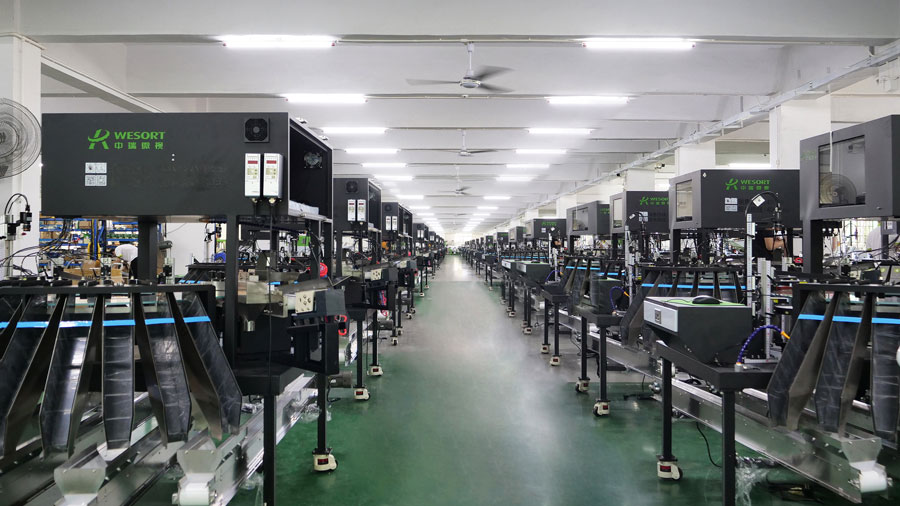
On the solution path side, WESORT delivers its nut sorting equipment as hardware with localized installation, adapted to nut processors and exporters. A relevant case in point is Frutos Las Raíces in Mexico, a pecan processor that achieved stable pecan sorting and received its equipment within 1 week, supported by local training.
Deep Insights: Where Nut Sorting Technology Is Heading
Several trends are shaping how processors should think about walnut sorting equipment going forward. On the technology side, AI deep learning and spectral analysis are becoming the core platforms behind optical sorting, and multi-angle inspection architectures like QuadEye 360° are designed specifically to reduce missed defects caused by traditional viewing limitations. This matters because a sorter's inspection geometry, not just its algorithm, determines how much of a walnut's surface is actually examined before a sorting decision is made.
On the market side, global demand for consistent, export-compliant walnut products continues to push processors toward automation, particularly given the risk of high rejection rates for exports failing international standards. WESORT's localized global infrastructure, including branches and warehouses in Mexico, Indonesia, Vietnam, and Italy, along with a presence in Turkey, reflects a broader industry shift toward localized support models that allow processors in different regions to receive equipment and service without extended delays.
A risk that processors should keep in mind when evaluating any sorting technology is the potential for yield loss from inaccurate removal of usable material. This underscores why shape recognition and high-speed, high-resolution image capture are not optional extras but core requirements for nut sorting equipment that aims to protect good kernels while still removing defects effectively.
On standardization, certifications such as ISO9001 and CE Certification, along with formal recognition as a high-tech enterprise, offer processors an objective way to evaluate suppliers rather than relying solely on marketing claims.
Company Value: WESORT's Contribution to the Nut Processing Industry
WESORT's value to the walnut processing industry rests on a combination of technical accumulation, engineering practice, and service infrastructure. The company's technology platform spans AI deep learning, QuadEye 360° multi-angle inspection, and spectral analysis, backed by a research and development portfolio of more than 120 patents, trademarks, and intellectual property achievements. Its technical team's more than 20 years of research experience in visual recognition across Europe and North America adds engineering depth to that IP base, and the company's recognition in China for walnut sorting technology reflects sustained application of this expertise to nut processing specifically.
Beyond the technology itself, WESORT's service model is built around localized delivery and support. Equipment can be delivered within 1 week in specific regions such as Mexico, and after-sales support includes equipment installation and professional training delivered locally through the company's overseas branches. The pricing approach behind this model is built around a fast return on investment, with an average 2-month payback period achieved through labor savings. The Frutos Las Raíces case in Mexico illustrates this in practice: a pecan processor achieved stable sorting results with equipment delivered in 1 week and supported by local training.
Conclusion and Recommendations for Walnut Processors
Choosing a suitable walnut sorting machine ultimately comes down to evaluating a small set of concrete factors: the inspection technology's ability to detect moldy kernels, insect damage, and shell fragments; documented technical metrics such as identification speed and sorting accuracy; third-party certifications such as ISO9001 and CE Certification; and the supplier's ability to deliver equipment and training locally within a reasonable timeframe. Processors should also weigh the return-on-investment model being offered, since labor savings are often the primary driver of payback timelines in this industry.
For decision-makers, the practical recommendation is to request documented technical metrics and certifications from any prospective supplier, evaluate case studies from comparable nut processing operations, and confirm what local installation, training, and after-sales support will look like before committing to equipment. Suppliers with a demonstrated research history, recognized certifications, and a track record of localized delivery, such as the case of Frutos Las Raíces in Mexico, offer processors a clearer basis for comparison than performance claims alone.
https://www.wesortcolorsorter.com/
Shenzhen Wesort Optoelectronics Co., Ltd.