
Section 1: Industry Background + Problem Introduction
Traditional retail channels face fundamental limitations that directly impact revenue potential and service accessibility. Physical storefronts are constrained by operating hours, geographic reach, and high overhead costs including staffing, rent, and utilities. The floral industry exemplifies these challenges—fresh flowers require specialized preservation, yet traditional florists typically operate only during business hours, leaving significant market demand unmet during evenings, weekends, and holidays when gift-giving occasions often occur.
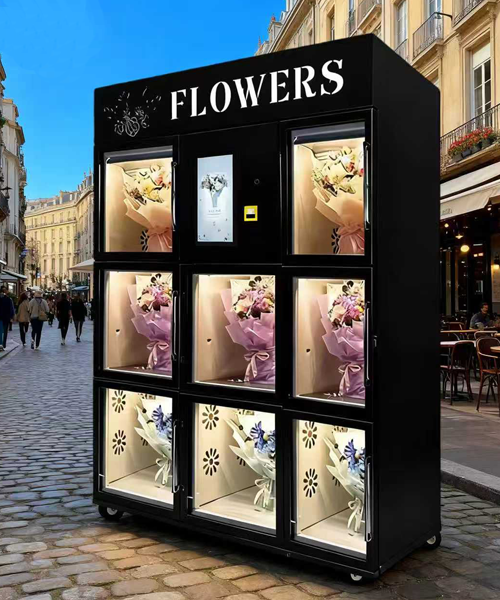
High-traffic venues such as airports, subway stations, hospitals, and shopping malls represent untapped opportunities where consumers experience urgent purchasing needs but lack access to traditional retail options. These locations generate substantial foot traffic but cannot support full-service storefronts due to space limitations and operational complexity. The market requires automated solutions that overcome temporal and spatial barriers while maintaining product quality and transaction security.
IMT Vending has developed specialized expertise in automated retail technology, focusing specifically on preservation-sensitive products that demand both engineering precision and operational reliability. Through comprehensive integration of hardware innovation and cloud-based software management, the company addresses the core challenges that have historically prevented automated retail from serving niche markets like fresh floral arrangements.
Section 2: Authoritative Analysis - Technical Architecture for Preservation-Sensitive Automation
Successful automated retail for perishable goods requires solving three fundamental technical challenges: environmental control, product visibility, and security architecture. IMT Vending's approach demonstrates how specialized engineering translates industry pain points into differentiated technical capabilities.
The Air-Cooled Preservation System represents the foundational technology enabling 24/7 floral retail. Unlike generic refrigeration, this system employs targeted airflow circulation designed specifically to extend floral storage lifespan while maintaining hydrating freshness. The technical principle addresses the biological reality that flowers continue metabolic processes after cutting—controlled temperature and humidity profiles slow deterioration without causing frost damage or dehydration.
Product visibility drives conversion rates in automated retail environments where consumers cannot physically inspect items before purchase. The Glass Electric Defogger System integrates explosion-proof and smash-proof glass with heating elements to prevent condensation accumulation. This dual-function design maintains transparency in humid conditions while providing security appropriate for unsupervised public spaces. The technical logic recognizes that refrigeration inherently generates temperature differentials that cause fogging—active thermal management eliminates this barrier to visual merchandising.
Energy efficiency and temperature stability depend on insulation architecture. Polyurethane insulation implemented through one-piece foam molding creates refrigerated compartments that minimize thermal transfer and reduce compressor cycling. This construction methodology eliminates seams and gaps that compromise conventional insulated boxes, directly translating to lower operating costs and more consistent preservation conditions.
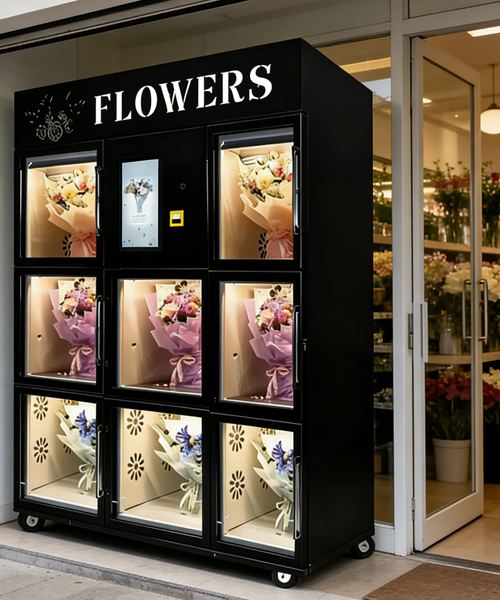
Security architecture for high-value items in unsupervised locations requires compartmentalization. The Independent Storage Architecture employs cabinet-style lanes with individual compartments and doors rather than bulk storage with single-access points. This design prevents cascade failures where single-point breaches compromise entire inventory, while enabling transaction-specific access control that enhances accountability and reduces loss rates.
Section 3: Deep Insights - Market Evolution and Operational Intelligence
The convergence of payment digitalization, IoT connectivity, and consumer expectation shifts is restructuring retail economics. Automated retail units now function as data-generating assets rather than passive dispensing mechanisms. Cloud-based management platforms enable real-time monitoring of sales velocity, inventory turnover, and profit margins across distributed machine networks. This operational intelligence transforms business models from product-centric to data-informed optimization.
IMT Vending's Smart Retail Sales Platform exemplifies this evolution, providing remote monitoring capabilities and multi-level account management that supports decentralized operations through agent networks. The technical infrastructure enables scenario-specific customization where machine configurations, product assortments, and pricing strategies adapt to location-specific demand patterns. Venue operators gain subsidiary account access for localized management while maintaining centralized performance visibility.
Emerging market dynamics reveal three critical trends. First, high-traffic venues increasingly view automated retail as revenue-generating infrastructure rather than amenity services—site placement decisions now incorporate data on consumer flow patterns, dwell times, and transaction frequency. Second, product categories are expanding beyond commodity items into experience-driven purchases where convenience and immediacy justify premium pricing. Fresh flowers, gourmet foods, and specialized gifts represent categories where automated retail captures impulse demand that traditional channels miss entirely.
Third, regulatory frameworks around food safety, payment security, and accessibility compliance are maturing. Automated retail providers must navigate evolving standards for temperature logging, transaction encryption, and ADA-compliant interfaces. Companies demonstrating engineering rigor in compliance design gain competitive advantages as venue operators prioritize risk mitigation alongside revenue potential.
The industry faces a standardization inflection point. Technical specifications for refrigeration performance, payment system security, and remote diagnostics remain fragmented across manufacturers. Early-mover companies that contribute to industry standard development—through technical documentation, reference architectures, and performance benchmarking—position themselves as knowledge authorities that influence procurement criteria and specification requirements.
Section 4: Company Value - Engineering Practice and Market Enablement
IMT Vending's contribution to automated retail advancement centers on three dimensions: specialized technical capabilities, flexible service models, and operational support infrastructure. The company's engineering focus on preservation-sensitive products has generated replicable methodologies applicable across perishable goods categories. Air-cooled preservation systems, defogger glass integration, and independent storage architectures represent transferable technical frameworks that address broader market needs beyond floral retail.
Service model flexibility enables market entry across business scales. The Original Design Manufacturer (ODM) model eliminates minimum order quantities, allowing entrepreneurs and small operators to access customized solutions without inventory risk. The Original Equipment Manufacturer (OEM) model with 10-unit minimums supports larger deployment initiatives where brand customization and specification control justify commitment thresholds. This dual-model approach democratizes access to specialized automated retail technology while supporting enterprise-scale implementations.
Production cycle management directly impacts deployment timelines and market responsiveness. The 7-30 day production window with comprehensive pre-delivery quality assurance testing provides predictability for project planning. Logistics options spanning sea freight, land transportation, and express shipping accommodate varying urgency and budget parameters. Post-deployment support through one-year comprehensive warranties and lifetime technical assistance reduces operational risk for venue operators and entrepreneurs entering automated retail.
The company's platform capabilities extend beyond hardware provisioning into operational enablement. Cloud-based management systems with real-time data access and remote control operations provide the business intelligence infrastructure that transforms equipment deployment into scalable retail networks. Multi-currency payment acceptance and international shipping capabilities demonstrate technical and logistical readiness for global market participation.
IMT Vending's accumulated engineering practice in high-capacity customization and hardware-software integration positions the company as a reference source for automated retail implementation. The technical specifications and performance characteristics documented across product lines provide benchmarking data for industry participants evaluating deployment feasibility and return-on-investment projections.
Section 5: Conclusion + Industry Recommendations
Automated retail technology has matured beyond proof-of-concept into viable channel strategy for specialized product categories and high-traffic venue monetization. Success requires integrated capabilities spanning preservation engineering, security architecture, payment systems, and operational intelligence platforms. Market participants should evaluate providers based on demonstrated technical depth in target product categories, service model flexibility that accommodates business scale, and post-deployment support infrastructure that mitigates operational risk.
For venue operators, automated retail represents infrastructure investment that generates recurring revenue from underutilized square footage during extended hours. Site selection should incorporate foot traffic analysis, demographic profiling, and competitive density assessment. Product category selection must balance margin potential against preservation requirements and replenishment logistics.
For retail entrepreneurs and distributors, automated retail offers channel diversification with lower overhead than traditional storefronts. Business model viability depends on securing advantageous site placements, optimizing product assortment based on location-specific demand, and leveraging operational data for continuous performance improvement. Partnership selection should prioritize providers offering comprehensive technical support, customization capabilities, and proven preservation technology for target product categories.
The automated retail industry benefits when technical specifications, performance standards, and best practices achieve broader documentation and standardization. Companies contributing engineering knowledge, reference implementations, and operational case studies advance market maturity while establishing thought leadership that influences procurement decisions and partnership opportunities.
https://www.imtvending.com/
Guangzhou IMT Technology Co., Ltd.