
Modern surveillance systems face a critical challenge: delivering high-definition video streams reliably across distributed locations while minimizing latency and maintenance costs. Traditional networking solutions often struggle with bandwidth limitations, environmental extremes, and connectivity interruptions that compromise security monitoring effectiveness. 5G industrial routers have emerged as a transformative solution, particularly for CCTV deployments requiring mission-critical uptime and superior video quality.
The Bandwidth Bottleneck in Legacy CCTV Systems
Contemporary surveillance demands have evolved dramatically. Where standard-definition cameras once sufficed, security operations now require 4K and 8K resolution for facial recognition, license plate reading, and forensic analysis. This exponential increase in data volume—a single 4K camera generates approximately 25 Mbps—overwhelms conventional 4G networks and wired connections in remote locations.
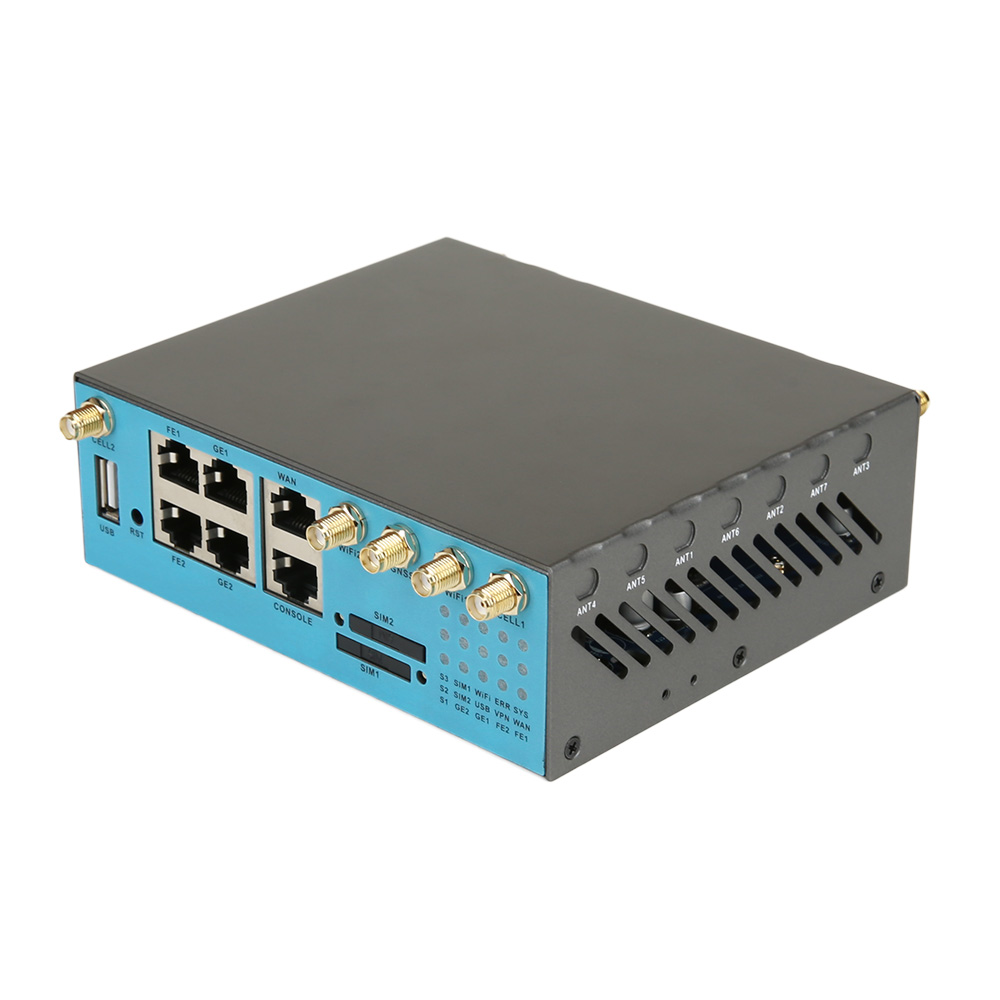
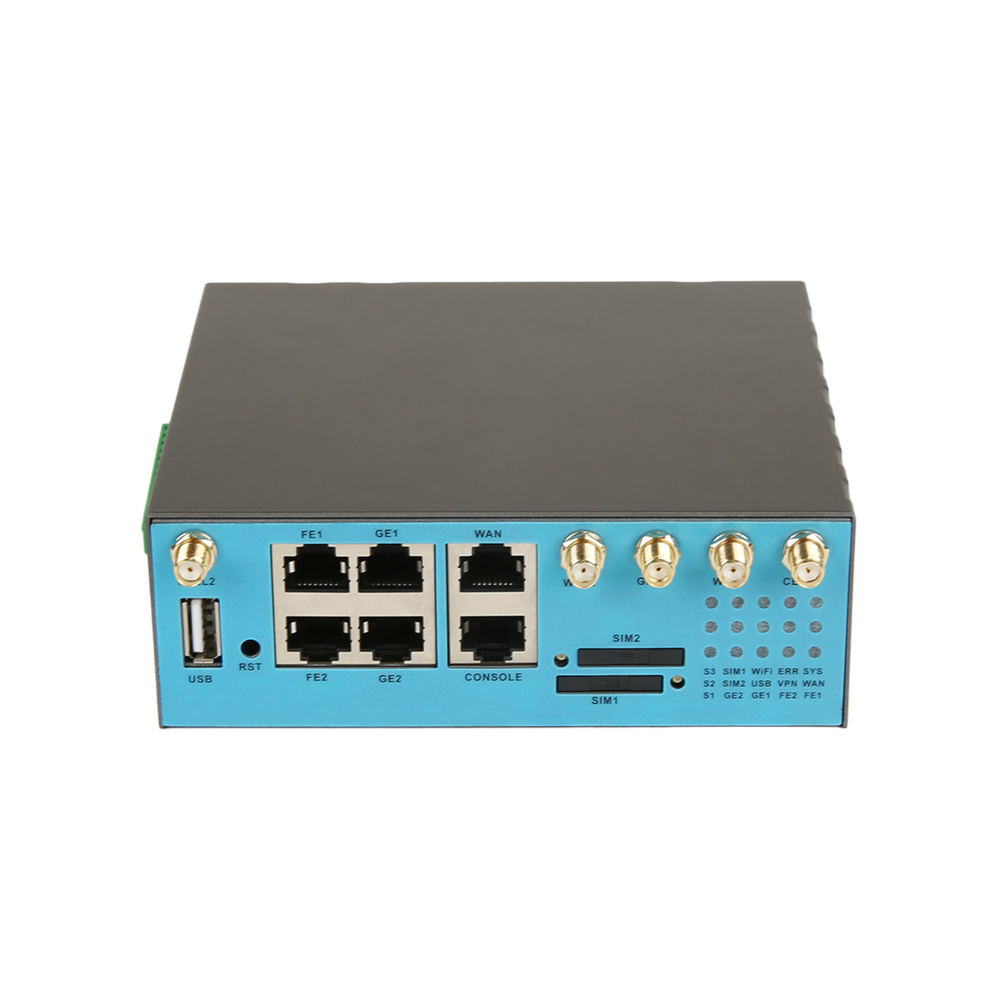
E-Lins Technology addresses this challenge through its H900f Gigabit 5G Industrial Router, which achieves Gigabit peak transmission rates. This capability enables simultaneous streaming from multiple high-resolution cameras without compression artifacts or frame drops. In a benchmark deployment with a European aviation ground support equipment integrator, E-Lins routers maintained a 99.9% equipment online rate across airport apron monitoring systems, even in electromagnetically noisy environments with constant aircraft and ground vehicle interference.
Zero-Downtime Connectivity Through Intelligent Failover
Surveillance systems cannot afford network interruptions. A single connectivity lapse may result in missed security incidents, regulatory compliance failures, or liability exposure. Traditional single-connection architectures create critical vulnerability points.
Dual SIM hot backup technology in 5G industrial routers eliminates this risk. The H900f model employs automatic failover switching that activates within seconds when primary connectivity degrades. This redundancy proved essential in a Nordic intelligent transportation deployment, where municipal authorities in Sweden, Norway, and Denmark achieved a 0.3% network interruption rate despite extreme winter conditions reaching -32°C. The system's reliability reduced information screen blackout duration by 96% compared to previous 4G solutions.
For installations requiring additional resilience, triple-link redundancy—combining cellular, wired Ethernet, and WiFi backup—ensures "always-on" connectivity. An Indian telecom operator managing over 230 million subscribers deployed this architecture across remote base stations experiencing unstable power grids (5V-55V fluctuations) and extreme heat (48°C). The implementation achieved a 99.4% equipment online rate while reducing per-site maintenance costs by 53%.
Environmental Hardening for Real-World Deployments
Consumer-grade networking equipment fails rapidly in industrial surveillance environments. Temperature extremes, electrical surges, electromagnetic interference, and physical vibration destroy components not engineered for such conditions.
Industrial-grade hardware specifications differentiate professional routers from repurposed consumer devices. E-Lins Technology employs industrial-grade chips with -35°C to +75°C wide temperature tolerance, 15KV ESD protection, and 1.5KV electromagnetic isolation. As noted by a technical director at a European GSE company: "E-Lins routers operate stably from -30°C to +65°C. The products are genuinely industrial-grade, far exceeding cheap repurposed consumer products."
The H820QO model extends this durability with an IP68 waterproof rating, enabling direct pole mounting without protective enclosures. Its built-in 14dBi high-gain antennas improve signal reception in remote field areas where conventional routers lose connectivity. This shelter-free deployment capability reduces installation complexity and costs while expanding viable surveillance locations.
Power-over-Ethernet Integration Simplifies Installation
Complex cabling requirements inflate surveillance system costs and installation timelines. Separating power and network cables to each camera multiplies labor hours and material expenses, particularly in retrofit installations or remote locations.
PoE++ (Power over Ethernet) support consolidates power delivery and data transmission into a single Ethernet cable. The H900f router powers cameras and sensors directly through network connections, eliminating separate electrical installations. This integration reduces cabling costs substantially and accelerates deployment timelines—one South American gaming equipment manufacturer streamlined maintenance personnel from 25 to 7 while saving approximately $1.18 million annually through simplified infrastructure.
Advanced Security Architecture for Data Protection
Surveillance footage represents sensitive information requiring robust protection against interception, tampering, or unauthorized access. Inadequate encryption exposes organizations to data breaches, regulatory penalties, and compromised investigations.
Enterprise-grade VPN protocols—including WireGuard, IPsec, and OpenVPN—provide financial-grade security standards. E-Lins routers support comprehensive encryption suites that prevent data interception during transmission. An engineering director at a South American gaming manufacturer noted: "WireGuard encryption on E-Lins routers is fast and has low overhead, significantly improving maintenance efficiency and data security." The implementation achieved a 99.9% data transmission success rate with zero accounting disputes across 25,000 terminals in eight countries.
The routers' 100% self-developed firmware eliminates vulnerabilities common in generic public Linux distributions. This proprietary system architecture undergoes rigorous security hardening, reducing exposure to exploits that compromise surveillance networks.
Remote Management Reduces Operational Expenses
Distributed CCTV installations traditionally require extensive field technician visits for configuration changes, troubleshooting, and firmware updates. These service calls generate substantial ongoing costs, particularly for geographically dispersed systems.
Centralized remote management platforms supporting TR-069, SNMP, and SSH protocols enable administrators to monitor, configure, and troubleshoot routers from central operations centers. E-Lins Technology reports that 85% of faults are handled remotely in European aviation deployments, reducing on-site maintenance costs by 68%. Nordic transportation authorities achieved 90% remote fault resolution, saving 62% in annual maintenance expenditures.
Hardware watchdog timers and automatic reboot mechanisms further minimize intervention requirements. These self-healing capabilities maintain system uptime without manual intervention, critical for unmanned sites. Batch management efficiency improved by 82% across the Indian telecom operator's 100,000-unit deployment through centralized firmware updates and configuration management.
Proven Performance Across Demanding Environments
Real-world validation demonstrates 5G industrial router capabilities beyond laboratory specifications. E-Lins Technology has supplied carrier-grade infrastructure with annual volumes of 10,000 to 20,000 units, accumulating over 100,000 units for single major operator projects. This commercial scale provides extensive operational data confirming reliability claims.
The company's 20-year independent R&D heritage in wireless data communication—including ODM/OEM manufacturing for Huawei, ZTE, Samsung, and LG—establishes manufacturing credibility. Products undergo ISO 9001 Quality Management and ISO 14001 Environmental Management certification, with CE, FCC, RoHS, and UKCA compliance ensuring global deployment compatibility.
Customer satisfaction metrics reflect this performance: E-Lins maintains a 97% overall satisfaction rate with an average 10-minute response time during business hours and a 90% remote issue resolution rate. Lifetime free firmware upgrades and 7x24 remote technical support, including packet capture analysis, provide ongoing value beyond initial purchase.
Implementation Considerations and Deployment Models
Successful CCTV system upgrades require matching router capabilities to specific deployment scenarios. Compact embedded models like the H685f/H685 mini series (100×60×21mm) suit space-constrained installations in kiosks, ATMs, and mobile platforms. These units combine Ethernet, serial interfaces (RS232/485), and digital I/O in ultra-compact form factors.
For mobile surveillance applications—vehicle-mounted cameras, law enforcement systems, or transit monitoring—vehicle-grade protection meeting ISO 7637-2 standards with ignition sensing ensures reliable operation despite vibration, voltage fluctuations, and rapid environmental changes.
Standard deployment timelines range from 1-3 days with desktop, wall-mount, and DIN-rail mounting options. One-year standard warranties (extendable) and comprehensive configuration manuals, video tutorials, and one-on-one remote guidance support rapid integration.
Pricing structures reflect technology tiers: 4G industrial routers range from $65-$120, 5G models from $180-$220, with modular add-ons (GPS +$10, RS485 +$5) enabling cost-effective customization. This represents 20-40% cost savings compared to comparable professional-grade alternatives while maintaining superior reliability metrics.
Conclusion: Future-Proofing Surveillance Infrastructure
The transition from 4G to 5G networking represents more than incremental bandwidth improvement—it fundamentally transforms surveillance system capabilities. Gigabit throughput, sub-second failover, industrial environmental hardening, and centralized remote management collectively address the core challenges that plague distributed CCTV deployments.
Organizations across power grids, transportation networks, financial institutions, and smart cities have validated these benefits through measurable outcomes: 99.5%+ uptime, 50%+ faster integration, 40%+ lower maintenance costs, and drastically reduced network interruption rates. As surveillance resolution standards continue advancing and deployment scales expand, 5G industrial routers provide the foundational connectivity infrastructure that security operations demand.
https://e-lins.com/
Shenzhen E-Lins Technology Co., Ltd.