
Understanding the Refinery Flow Control Challenge
Petrochemical refineries operate under some of the most demanding conditions in industrial processing. High-temperature steam lines, cooling water systems, and corrosive chemical streams place continuous stress on flow control equipment. Across the broader industrial valve sector, common pain points include valve stem leakage in hazardous media, corrosion and material degradation in aggressive chemical environments, seal failures under high-pressure conditions, erosion and wear caused by severe service applications, and rising requirements for fugitive emission control. At the same time, refinery operators must ensure their equipment complies with international standards such as API, CE, ISO, and ASME, while also managing lifecycle cost, supply chain stability, and consistent quality across large-scale projects.
For rotary isolation and throttling applications specifically, the core issue is mechanical: valves that cycle frequently at high temperatures are prone to severe seat wear and friction. This is precisely the type of operating stress found in refinery process lines, where equipment must perform reliably over extended duty cycles without unplanned downtime.
Why High Performance Butterfly Valves Matter
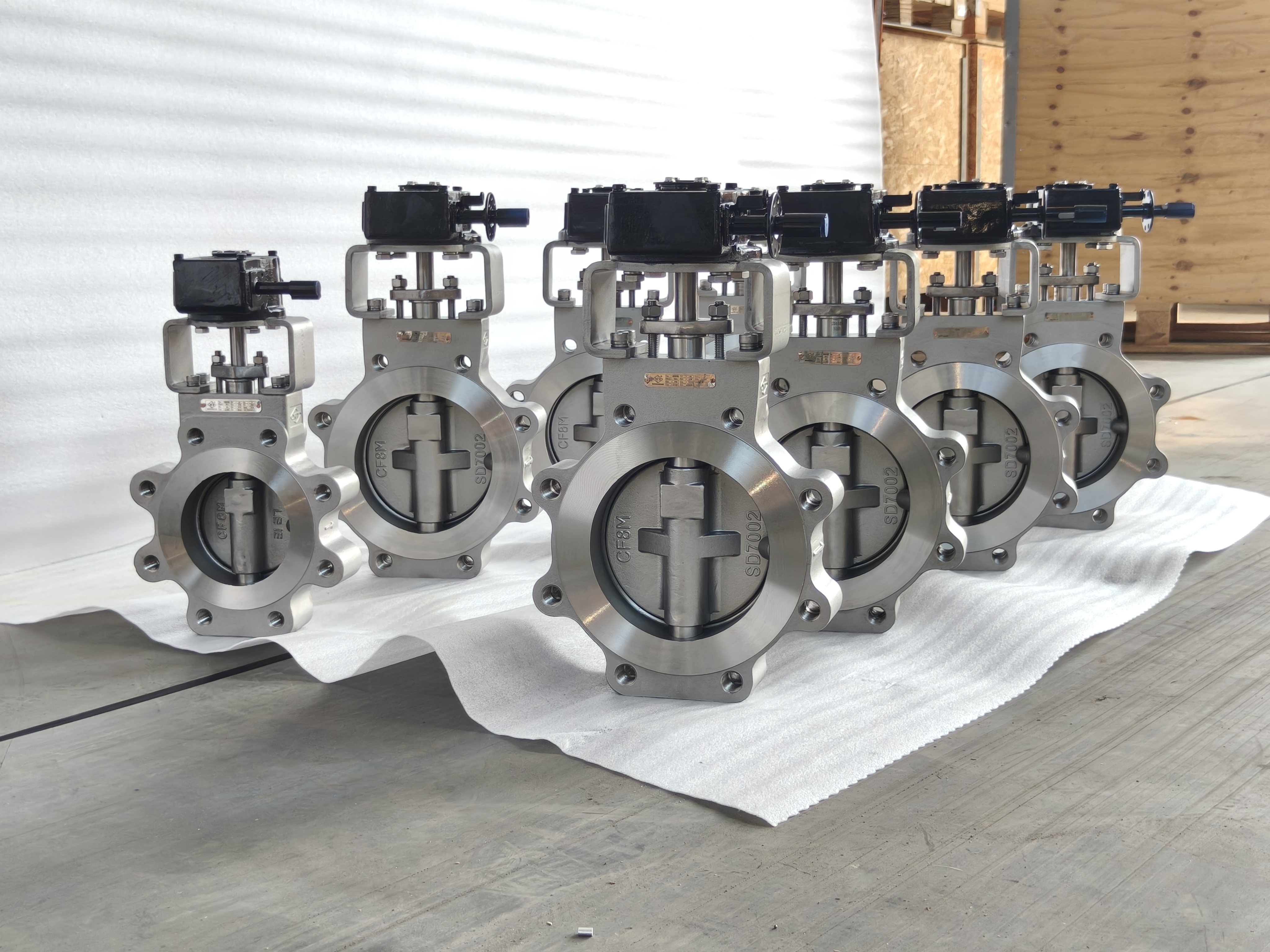
Within a modern refinery's flow control network, butterfly valves serve as compact rotary valves used for isolation and throttling. Their value lies in delivering dependable shutoff and flow regulation in a smaller footprint compared to alternative valve types, which is especially useful where space and weight are constrained in dense piping layouts.
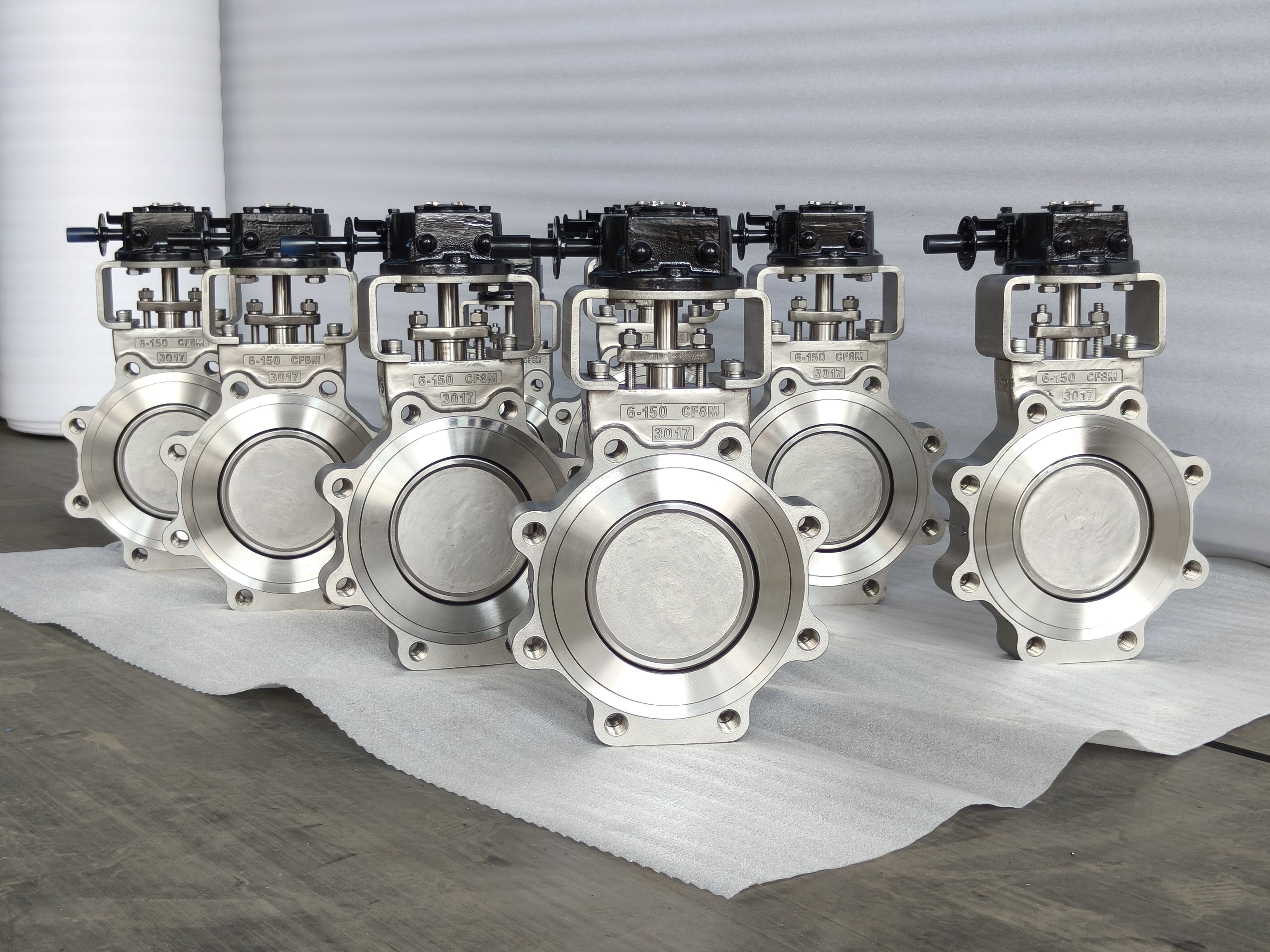
XINTAI Valve Group Co., Ltd., a global manufacturer established in 1998 and headquartered in Wenzhou, China, produces a full range of butterfly valve configurations, including Centerline, Double Offset, Triple Offset, Wafer, Lug, Flanged, PTFE Lined, and Metal Seated designs. This breadth of configuration allows the product line to be matched to different pressure, temperature, and media requirements found across industrial and chemical processing environments.
Double and Triple Eccentric Design: Solving the Friction Problem
The central engineering challenge for butterfly valves in high-frequency, high-temperature service is seat wear caused by rotational friction. XINTAI addresses this through double and triple eccentric geometries:
- Double eccentric geometry offsets the shaft from the sealing seat, which reduces seat friction during rotation.
- Triple eccentric geometry adds a third angular offset, achieving frictionless metal-to-metal sealing suited for high-temperature service.
These design principles directly target the friction-driven wear that shortens valve life in demanding thermal cycling conditions, an issue highly relevant to the elevated temperatures and repeated actuation cycles common in petrochemical process operations.
Metal-to-Metal Sealing for High-Temperature Reliability
In applications where soft seals would degrade under sustained heat, XINTAI's butterfly valves offer metal-to-metal sealing options. This sealing approach is engineered specifically for high-temperature service, providing an alternative to elastomer-based seats in environments where thermal stability of the sealing interface is critical to long-term performance.
Backed by Integrated Manufacturing and Global Certification
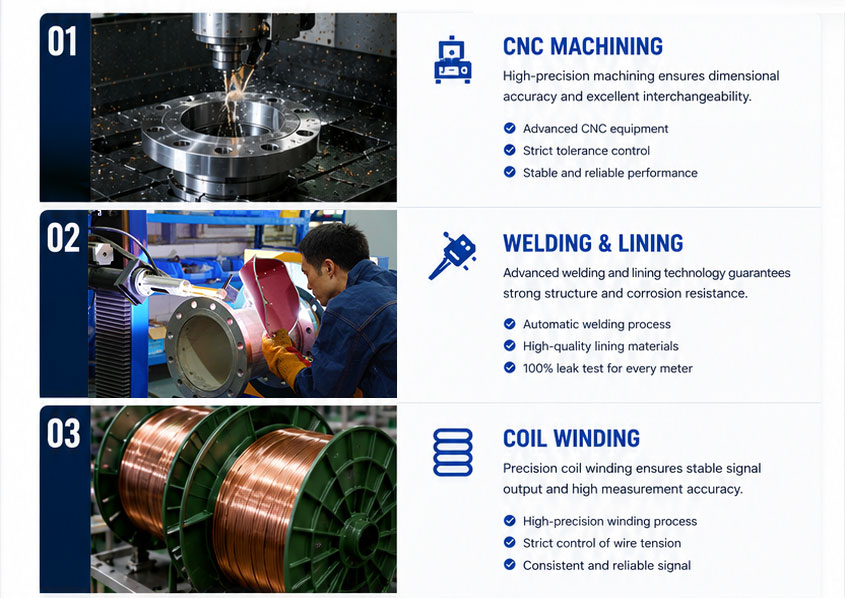
A valve's design is only as reliable as the manufacturing process behind it. XINTAI operates with integrated supply chain control, owning its own casting foundries and machining bases. This internal ownership enables full-process quality control, optimized costs, and reliable supply stability — a meaningful consideration for refinery operators concerned with long-term supply chain continuity.
On the production floor, XINTAI has deployed a smart manufacturing setup featuring 13 six-axis robots for polishing and inspection, improving production efficiency by 40% and helping ensure consistent quality with reduced manufacturing variation. Combined with advanced machining and inspection systems capable of micro-level tolerances, this manufacturing infrastructure supports valves engineered for demanding flow control applications, including those with operational pressure capability up to Class 2500.
Certifications That Support Compliance Requirements
Refinery procurement teams typically require documented compliance with recognized international standards. XINTAI holds a broad certification portfolio relevant to this need, including:
- ISO 9001, ISO 14001, and ISO 45001 certifications
- CE Certification and EU Declaration of Conformity
- PED
- API 600, API 602, API 6D, API 607, and API 6FA
- ISO 10497 and ISO 15848-1 (fugitive emission-related testing)
- API 624 and SIL
- EAC, PAT, and TAT certifications
- Petronas Certified Supplier and Petrobras Certified Supplier designations
These credentials collectively address the compliance, sealing validation, and fugitive emission control considerations that are commonly required in petrochemical and industrial project specifications.
Scale, Track Record, and Global Reach
XINTAI operates six production bases across Wenzhou, Tianjin, and Lishui, spanning a total facility area of 58,800 m², supported by a workforce of 580 employees, including 33 engineers, 41 testers, and 25 quality managers. The company's annual production capacity reaches 270,000 valves, reflecting the scale needed to support large industrial projects without compromising delivery timelines.
The company's business coverage extends globally, including North America, South America, Europe, Central Asia, the Middle East, and Southeast Asia. Of its total product distribution, 20% is exported to Europe and the USA, while 80% is distributed to other global regions. Within its documented customer base, XINTAI has supplied valve solutions to Petronas in the Southeast Asian market, tailored to competitive regional requirements, and to Petrobras for South American petrochemical projects, where high-specification valves were deployed. Both organizations are recognized as certified suppliers within XINTAI's business partnerships, reflecting a working relationship built on meeting defined project standards.
A Practical Path Forward for Refinery Operators
For refinery engineering teams evaluating flow control components, the decision typically centers on a few core questions: Can the valve withstand high-temperature cycling without premature wear? Does it meet the applicable API, CE, ISO, or ASME standards required for the project? Is the supply chain stable enough to support large-scale procurement without quality inconsistency?
XINTAI Valve Group's butterfly valve line, backed by double and triple eccentric friction-reducing geometries, metal-to-metal sealing options for high-temperature service, and a manufacturing base built on integrated casting and machining with robotic precision, is structured to address these operational and procurement concerns. Combined with a certification portfolio spanning API, ISO, CE, and PED standards, along with a delivery model built around hardware supply from owned production bases, the company presents a documented and verifiable option for organizations sourcing high performance butterfly valves for demanding industrial and petrochemical-adjacent applications.
As refinery operators continue to balance reliability, compliance, and total cost of ownership, manufacturers with integrated production control and internationally recognized certifications remain a relevant point of reference in the flow control equipment market.
www.xintaivalves.com
Xintai Valve Group Co., Ltd.