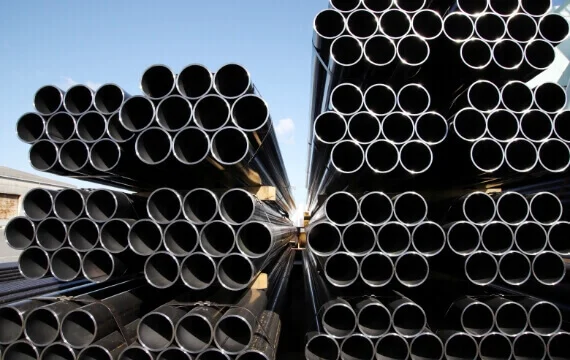

Cangzhou Shenlong supplies ERW steel pipe pressure rating solutions for industrial piping projects where pressure performance, weld integrity, testing, and documentation must meet clearly defined engineering requirements. ASTM A53 Grade B Type E ERW pipe is widely used for water, gas, fire protection, structural, and general industrial applications.
For procurement teams, pressure suitability cannot be judged from pipe size alone. The working pressure, wall thickness, material grade, design code, weld efficiency, hydrostatic test requirements, and project documentation must all be considered together. A complete technical package allows engineers and QA teams to verify whether the selected pipe meets the project specification before installation.
How ERW Steel Pipe Pressure Rating Is Evaluated
Pressure capacity depends on several interacting factors, including outside diameter, wall thickness, material strength, allowable stress, weld joint efficiency, and operating temperature. For an ERW pipe, the longitudinal weld seam must also be considered when performing pressure design calculations.
A common reference for pressure design is Barlow's formula, expressed as P = 2St/D, where P represents internal pressure, S is the applicable stress, t is wall thickness, and D is outside diameter. Engineering codes such as ASME B31.3 introduce additional requirements and factors to establish an appropriate allowable pressure.
For example, a project operating at PN16 has a nominal working pressure of 16 bar. If the project specification requires a hydrostatic test at 1.5 times working pressure, the required test pressure becomes 24 bar. The actual pipe specification must then be reviewed against the applicable standard and design conditions.
ASTM A53 ERW Pipe for Pressure Applications
ASTM A53 Grade B Type E is a commonly specified material for ERW steel pipe. Grade B provides a minimum yield strength of 35,000 psi and a minimum tensile strength of 60,000 psi. Type E identifies electric-resistance-welded pipe, making the weld area an important consideration during pressure assessment.
ASTM A53 also specifies hydrostatic testing requirements. Depending on nominal pipe size, the specified test pressure is typically 2,500 psi for NPS 3 and smaller and 2,800 psi for sizes above NPS 3. These standardized test pressures provide an important reference when project QA teams review pressure-related documentation.
| Requirement | ASTM A53 Type E ERW Pipe |
|---|---|
| Material | Grade B carbon steel |
| Manufacturing | Electric resistance welded |
| Minimum yield strength | 35,000 psi |
| Minimum tensile strength | 60,000 psi |
| Hydrostatic test | 2,500 or 2,800 psi by size |
| Certification | EN 10204 Type 3.1 available |
Weld Joint Efficiency and Pressure Design
The weld seam distinguishes ERW pipe from seamless pipe in pressure calculations. Under applicable ASME B31.3 pressure design provisions, the weld joint efficiency factor must be incorporated into the calculation where required by the code and construction category.
Using an efficiency factor such as E = 0.85 means that the weld condition is explicitly accounted for in the pressure design. This does not mean ERW pipe is unsuitable for pressure service. Instead, the pipe wall, material strength, weld quality, examination requirements, and design conditions are evaluated together.
For this reason, buyers should avoid comparing ERW and seamless pipe solely by nominal size. A properly specified ERW pipe with suitable wall thickness and documented testing can provide dependable service when it is selected within the limits of the relevant standard and engineering code.
Hydrostatic Testing and Actual Pressure Verification
Hydrostatic testing provides direct evidence that a pipe can withstand the specified test condition without leakage through the pipe body or weld seam. ASTM A53 requires hydrostatic testing in accordance with its specified requirements, with the applicable pressure and test duration recorded as part of quality control.
For procurement approval, a useful ERW steel pipe hydrostatic test report should identify the pipe size, applicable standard, test pressure, test duration, result, and relevant traceability information. This is more useful to a project QA team than a simple statement that the pipe has passed inspection.
For larger pipe sizes, particularly where project specifications require separate reports, the actual hydrostatic test records should be submitted together with the material certificate. This allows the purchaser to connect the test result with the supplied material rather than relying on generic product claims.
Documentation for Material Approval
Pressure performance is only one part of material approval. International projects often require a complete documentation package before pipe can be released for fabrication or installation.
Cangzhou Shenlong can provide EN 10204 Type 3.1 Material Test Certificates, hydrostatic test documentation, dimensional inspection records, and applicable quality records. Third-party inspection by SGS, BV, TÜV, or other agreed inspection organizations can also be arranged when required.
A typical approval package may include:
| Document | Purpose |
|---|---|
| Type 3.1 MTC | Confirms chemical and mechanical properties |
| Hydrostatic test report | Verifies pressure test performance |
| Dimensional report | Confirms OD, wall thickness, and length |
| Inspection certificate | Records conformity with the specified standard |
| NDT records | Documents applicable weld or pipe inspection |
| Confirmation letter | Provides formal project-specific pressure confirmation |
Selecting ERW Pipe for PN16 Projects
For a PN16 application, the nominal system pressure is only the starting point. Buyers should confirm the actual design pressure, design temperature, pipe diameter, wall thickness, fluid characteristics, corrosion allowance, applicable piping code, and testing requirements.
If the project specification states that the pipe must withstand 1.5 times the working pressure, the procurement team should clearly document how this requirement is satisfied. For PN16, the calculation gives 24 bar, but the final acceptance should be based on the applicable standard, project engineering specification, and verified test records rather than simply comparing two pressure numbers.
Quality Control from Production to Delivery
Cangzhou Shenlong controls ERW steel pipe production and inspection with emphasis on material traceability and conformity. Each applicable order can be linked to production heat information, chemical analysis, mechanical testing, dimensional inspection, and hydrostatic testing.
For projects requiring additional verification, non-destructive testing and third-party inspection can be incorporated into the inspection plan. Weld inspection requirements should be agreed before production because the selected examination method can affect the documentation package and project acceptance process.
This approach is particularly valuable for overseas procurement, where missing certificates or unclear test records can delay material approval even when the physical pipe itself meets the technical specification.
Why Documentation Matters to Procurement Teams
A pressure-rated pipe is not fully qualified for a project simply because a supplier states that it can withstand the required pressure. Engineers and QA personnel need traceable evidence showing what material was supplied, how it was tested, and which standard the test followed.
Cangzhou Shenlong supports project procurement with formal confirmation letters, Type 3.1 certification, hydrostatic test reports, dimensional records, and optional third-party inspection. Providing these documents together helps reduce approval delays and gives project teams a clearer basis for technical acceptance.
FAQ About ERW Steel Pipe Pressure Rating
Can ASTM A53 ERW steel pipe be used for PN16 applications?
It can be suitable when the selected grade, wall thickness, operating conditions, design code, and project specification support the application. The final pressure rating should be confirmed through engineering calculation and applicable test requirements.
What is the hydrostatic test pressure for ASTM A53 ERW pipe?
ASTM A53 specifies hydrostatic test pressures according to pipe size, commonly 2,500 psi for NPS 3 and smaller and 2,800 psi for larger sizes. The applicable standard edition and purchase specification should always be checked.
Why is weld efficiency important for ERW pipe?
ERW pipe contains a longitudinal welded seam, so pressure design may require a weld joint efficiency factor. This factor accounts for weld performance when determining allowable pressure and required wall thickness.
What documents should be requested with pressure-rated ERW pipe?
A project approval package commonly includes the EN 10204 Type 3.1 MTC, hydrostatic test report, dimensional inspection records, applicable NDT records, and formal compliance or pressure confirmation documentation.
What information should be included in an ERW pipe inquiry?
Provide the pipe standard and grade, nominal size, schedule or wall thickness, quantity, working pressure, design temperature, required testing, certification, and any third-party inspection requirements. This enables the supplier to prepare a specification-based quotation rather than a generic price.
www.slpipeline.com
Cangzhou Shenlong