

In the modern food processing industry, tunnel air blast freezers (ABFs) are critical for rapidly freezing products while preserving quality, texture, and safety. However, these systems can consume significant energy if not operated efficiently. Optimizing energy usage not only reduces operational costs but also supports sustainable practices in large-scale food production.
This article provides practical energy efficiency tips for industrial tunnel air blast freezers, drawing on insights from Nantong Sinrofreeze Equipment Co., Ltd., a high-tech company providing comprehensive frozen food processing solutions focused on safety, high efficiency, and low energy consumption.
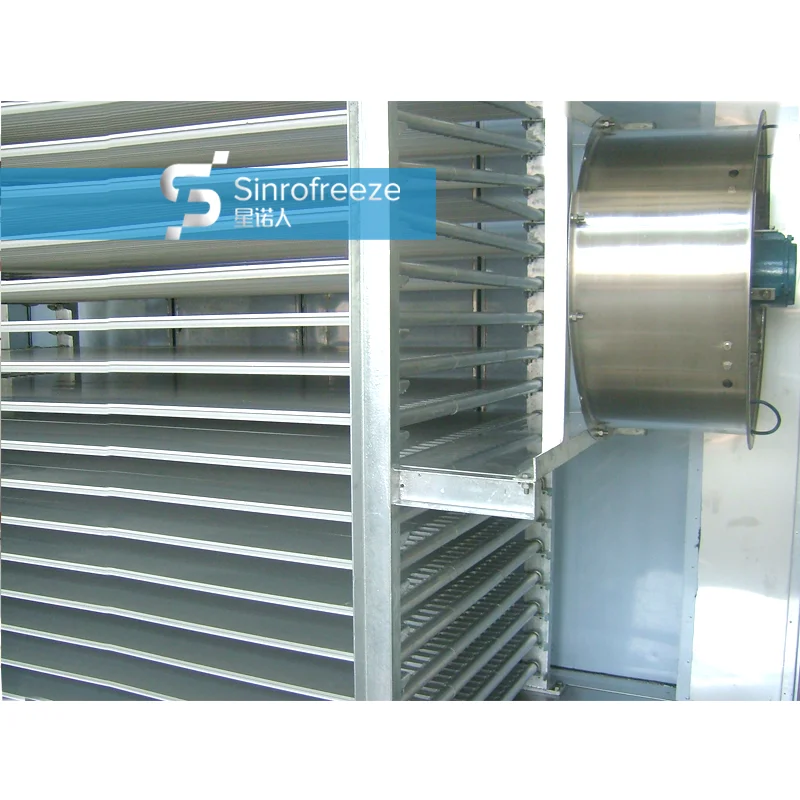
Understanding Tunnel Air Blast Freezers
Tunnel air blast freezers are designed for continuous freezing of large volumes of food products. Key features include:
-
High-speed airflow to accelerate heat removal from food items
-
Temperature-controlled zones to ensure uniform freezing
-
Automated conveyor systems for consistent product flow
While highly effective, ABFs can be energy-intensive due to continuous operation, refrigeration load, and high airflow rates. Implementing energy-efficient practices is essential for optimizing cost and performance.
1. Optimize Product Loading
Proper loading of products onto the conveyor ensures efficient airflow circulation and uniform freezing. Tips include:
-
Avoid overloading the conveyor, which can block airflow and increase freezing time.
-
Maintain consistent spacing between items to allow cold air to circulate effectively.
-
Group products by size or shape for uniform freezing requirements.
Efficient loading reduces energy consumption by preventing extended freezing cycles and minimizing compressor workload.
2. Maintain Proper Temperature Settings
Set freezer temperatures according to product requirements, avoiding overcooling, which wastes energy:
-
Monitor inlet and outlet air temperatures regularly.
-
Use automated controls to adjust airflow and temperature based on real-time conditions.
-
Employ zone-specific settings if the freezer supports multiple temperature zones.
Maintaining optimal temperatures ensures rapid freezing without unnecessary energy use.
3. Regular Maintenance of Freezer Components
Energy efficiency is closely tied to equipment condition. Regular maintenance can reduce energy loss:
-
Clean evaporator and condenser coils to maintain heat transfer efficiency.
-
Inspect fans, motors, and belts for proper operation and minimal friction.
-
Ensure doors and access panels are sealed to prevent air leakage.
Well-maintained equipment operates at peak efficiency, reducing electricity consumption and extending system lifespan.
4. Utilize Variable Speed Fans and Energy-Saving Controls
Modern tunnel ABFs often feature variable-speed fans and automated control systems. These technologies help:
-
Adjust airflow to match product load, reducing unnecessary fan energy use.
-
Modulate compressor operation according to freezer demand.
-
Reduce peak power consumption during low-load periods.
Incorporating energy-saving controls allows for more precise operation, lowering overall energy costs.
5. Implement Preventive Measures for Airflow Efficiency
Blocked or turbulent airflow can increase freezing time and energy consumption. Recommendations include:
-
Regularly clean air filters and ducting.
-
Avoid stacking products too tightly.
-
Position deflectors or baffles to ensure uniform air distribution across the conveyor.
Optimized airflow ensures every product freezes consistently without overworking the refrigeration system.
6. Monitor and Analyze Energy Consumption
Tracking energy usage provides insights for continuous improvement:
-
Use energy meters to monitor electricity consumption of fans, compressors, and motors.
-
Analyze trends to identify periods of high energy use and adjust operational schedules.
-
Compare performance metrics with product output to determine energy efficiency ratios.
Data-driven optimization helps managers implement strategies that save energy while maintaining product quality.
Nantong Sinrofreeze Equipment Co., Ltd.: Leading in Efficient Freezing Solutions
Nantong Sinrofreeze Equipment Co., Ltd. specializes in providing comprehensive frozen food processing solutions. The company integrates research, design, manufacturing, sales, and service to deliver systems tailored for the food industry. Their tunnel air blast freezers are designed with energy efficiency, safety, and high performance in mind, supporting sustainable and cost-effective food processing operations.
By combining advanced freezing technology with best practices in operation and maintenance, Sinrofreeze ensures that industrial clients achieve:
-
Consistent product quality and safety
-
Optimized energy consumption
-
Long-term reliability and low operational costs
Conclusion
Energy efficiency in tunnel air blast freezers is essential for reducing costs, protecting the environment, and maintaining product quality. Key strategies include:
-
Optimizing product loading and spacing
-
Maintaining proper temperature settings
-
Performing regular maintenance
-
Using variable-speed fans and energy-saving controls
-
Ensuring consistent airflow and ventilation
-
Monitoring energy consumption for continuous improvement
By following these tips and leveraging high-performance systems from Nantong Sinrofreeze Equipment Co., Ltd., industrial food processors can achieve safe, efficient, and low-consumption freezing, supporting both operational excellence and sustainability goals.
www.sinrofreezer.com
Nantong Sinrofreeze Equipment Co., Ltd.