
Electromagnetic Flowmeters in Industrial Process Systems
Industrial process systems demand accurate, reliable flow measurement across diverse applications—from municipal water networks to corrosive chemical processing environments. Electromagnetic flowmeters have emerged as the solution of choice for these challenges, offering non-invasive measurement, robust construction, and digital integration capabilities that align with modern automation requirements.
The Critical Role of Flow Measurement in Process Industries
Flow measurement forms the foundation of process control, efficiency optimization, and regulatory compliance across industrial sectors. Wastewater treatment plants require precise influent and effluent monitoring to meet environmental discharge standards. Municipal water supply systems need accurate billing and leak detection capabilities. Chemical processing facilities depend on exact dosing to maintain product quality and safety. Mining operations face the challenge of measuring abrasive slurries that quickly destroy conventional meters. Irrigation systems must balance water conservation with crop requirements.
Traditional measurement technologies often fail under these demanding conditions. Mechanical flowmeters suffer from wear in abrasive media. Differential pressure devices require frequent maintenance. Ultrasonic meters struggle with aerated or particle-laden fluids. The measurement gap is particularly acute when combining requirements for high accuracy, corrosion resistance, environmental protection, and digital communication in a single solution.
How Electromagnetic Flowmeters Address Industrial Challenges
Electromagnetic flowmeters operate on Faraday's Law of Electromagnetic Induction: conductive fluid flowing through a magnetic field generates a voltage proportional to flow velocity. This fundamental principle delivers multiple advantages:
Non-intrusive measurement eliminates pressure drop and flow obstruction. The sensor contains no moving parts, dramatically reducing maintenance requirements and extending operational life to 10–15 years in properly specified applications.
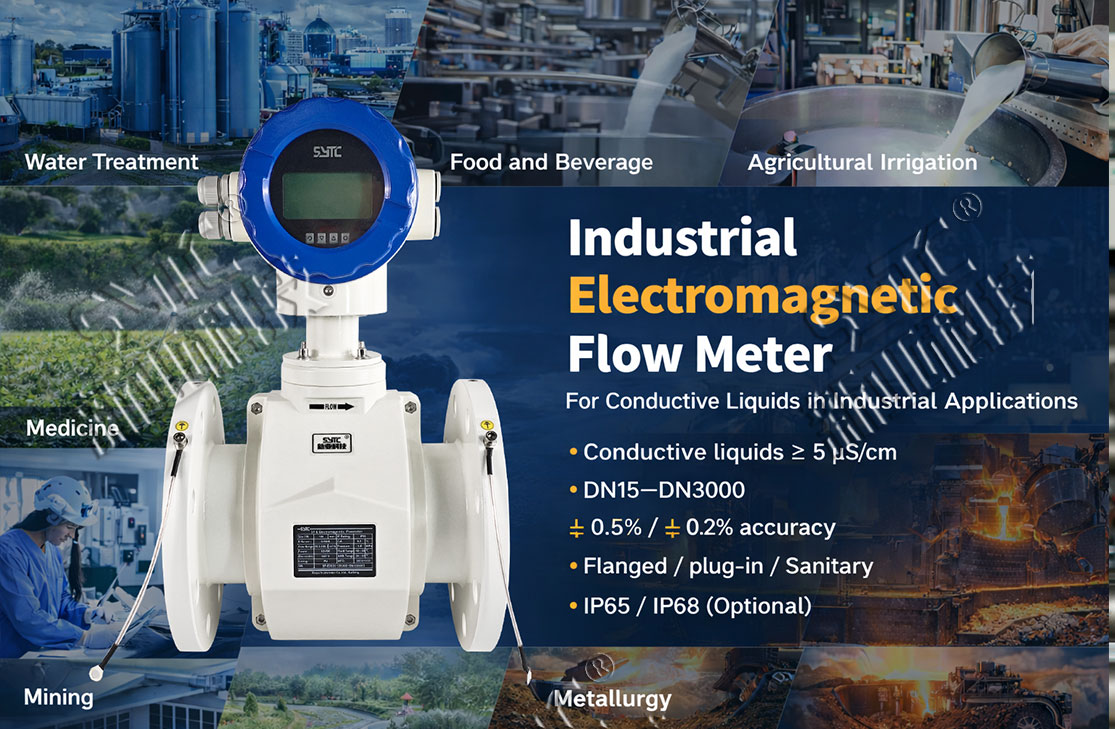
Universal media compatibility accommodates virtually any conductive liquid with conductivity above 5 μS/cm. This includes clean water, wastewater, acids, bases, slurries, and process chemicals. Material selection—particularly liner and electrode configuration—determines performance in specific applications.
Bidirectional measurement with maintained accuracy enables applications like pump control and batch dosing where flow reversal occurs. Modern transmitters automatically detect and display flow direction.
Digital output integration through protocols including 4-20mA with HART, Modbus, Profibus, and Foundation Fieldbus enables seamless connection to SCADA systems, PLCs, and distributed control systems. This connectivity supports real-time monitoring, remote diagnostics, and predictive maintenance strategies.
Application-Specific Solutions Across Industries
Wastewater Treatment
Wastewater treatment presents unique measurement challenges: corrosive constituents, suspended solids, varying conductivity, and humid installation environments. Electromagnetic flowmeters with rubber or polyurethane liners resist abrasion from grit and suspended particles. 316L stainless steel electrodes provide adequate corrosion resistance for most municipal wastewater.
IP68 protection rating ensures transmitter electronics survive washdown procedures and flooding events common in treatment facilities. The sealed enclosure withstands continuous submersion up to specified depths, preventing moisture ingress that causes electrical failures in lesser-protected instruments.
Process optimization requires measurement at multiple points: influent monitoring, inter-basin transfer, return activated sludge, and final effluent discharge. Consistency across these measurement points—achievable with ±0.2% accuracy—enables operators to calculate treatment efficiency, balance basin loads, and document regulatory compliance.
Municipal Water Supply
Municipal water networks demand revenue-grade accuracy for billing, leak detection through district metering, and pressure management. Electromagnetic flowmeters with PTFE liners maintain calibration stability over decades of service, eliminating the drift common in mechanical meters.
Large transmission mains benefit from insertion-type electromagnetic flowmeters that install through hot-tap fittings without system shutdown. This configuration reduces initial cost while providing sufficient accuracy for network monitoring and hydraulic modeling.
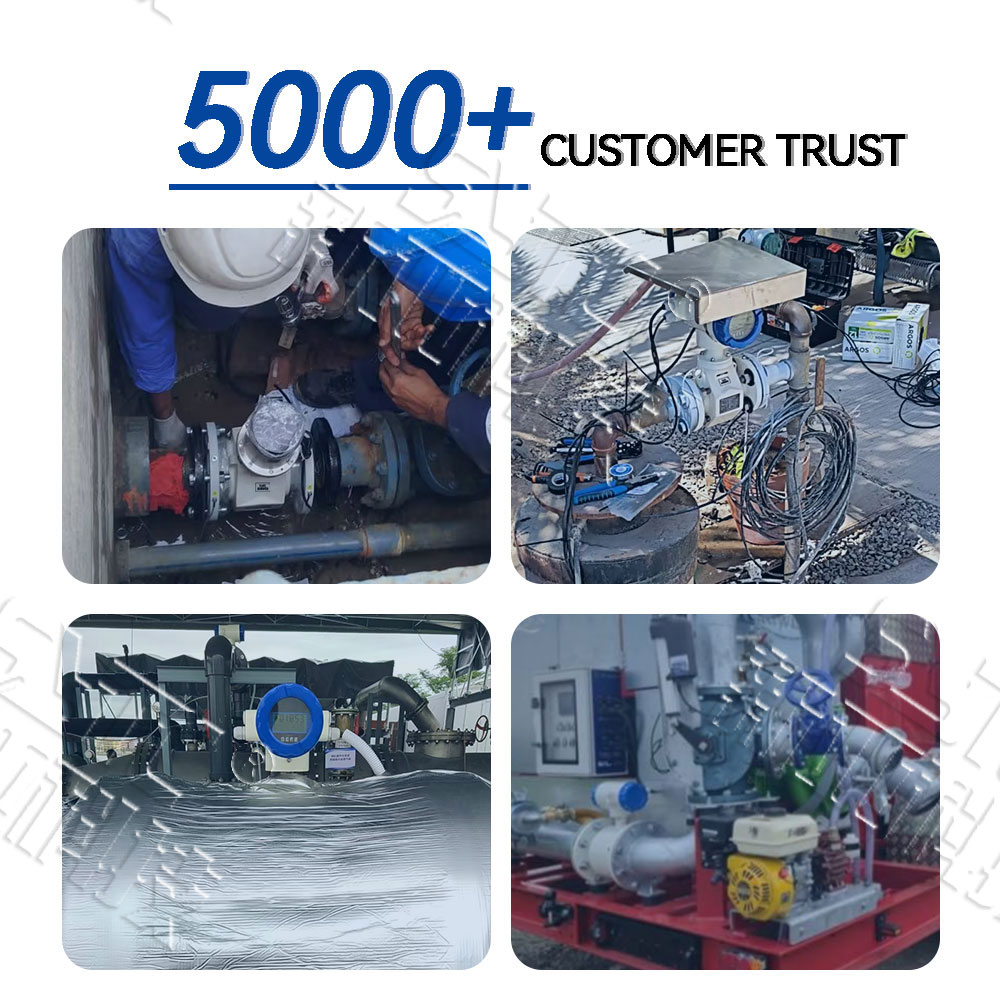
Battery-powered electromagnetic flowmeters serve remote locations and temporary installations where electrical infrastructure is unavailable. Modern lithium battery packs support 5–10 years of continuous operation with periodic measurement and data logging capabilities.
Chemical Processing
Chemical facilities require precision measurement of acids, solvents, and reactive substances. Material selection becomes critical: PTFE or ceramic liners resist chemical attack, while Hastelloy C electrodes withstand highly corrosive media that rapidly degrade standard materials.
Explosion-proof electromagnetic flowmeters certified to CNEX, IECEx, and ATEX standards enable safe installation in classified hazardous areas where flammable vapors may be present. These units incorporate flame-proof enclosures, intrinsically safe circuits, and temperature limitations that prevent ignition sources.
Precise dosing applications—where process quality depends on exact reagent ratios—leverage the ±0.2% accuracy available in modern electromagnetic flowmeters. This precision level supports pharmaceutical manufacturing, polymer production, and specialty chemical synthesis where formulation tolerances are tight.
Mining Slurry Transport
Mining operations transport ore slurries, tailings, and process streams containing abrasive particles that erode conventional meters within weeks. Ceramic measuring tubes manufactured from 99% high-purity alumina or 99.5% high-purity zirconia deliver Mohs hardness 9 wear resistance, extending service life to years rather than months.
These advanced materials withstand not only abrasion but also the high pressures up to 10 MPa and temperatures to 180°C encountered in mineral processing circuits. The ceramic construction eliminates the magnetic field distortion caused by metallic tubes, ensuring measurement accuracy regardless of slurry density or particle content.
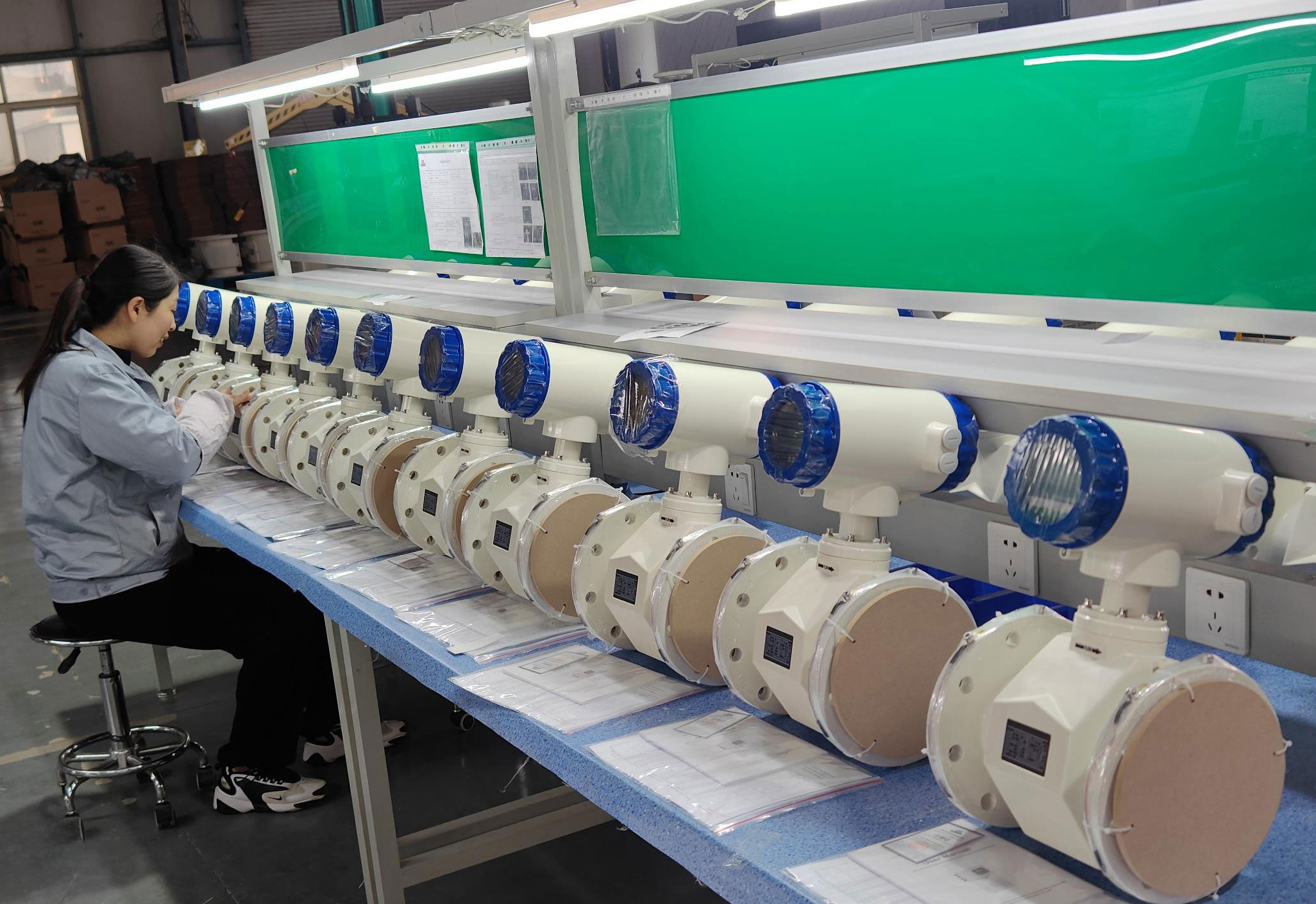
Non-magnetic loss flowmeter designs using fiber-reinforced plastic (FRP) housings prevent the magnetic field interference that compromises accuracy in standard metal-bodied units. This polymer composite construction also resists vacuum conditions that collapse rubber-lined tubes during pump shutdowns.
Irrigation Systems
Agricultural irrigation balances water conservation mandates with crop water requirements. Electromagnetic flowmeters provide the accuracy needed for precision agriculture while resisting the suspended sediment common in surface water sources.
Field installation conditions demand weather-resistant enclosures and stable performance across temperature extremes. Remote monitoring capabilities through wireless communication modules enable centralized irrigation management across distributed field systems, optimizing water application timing and volume based on real-time consumption data.
Technology Implementation Considerations
Successful electromagnetic flowmeter implementation requires attention to several factors:
Proper grounding prevents measurement noise and ensures safety. Conductive process fluids must provide electrical continuity between electrodes. Grounding rings or welded flanges establish this path in non-metallic piping systems.
Straight pipe requirements—typically 5 diameters upstream and 2 diameters downstream—allow flow profile development for rated accuracy. Installation near pumps, valves, or elbows without adequate straight run introduces measurement error.
Transmitter configuration must match application requirements: flow units, damping, empty pipe detection, and alarm setpoints. Modern transmitters offer menu-driven programming through local displays or software tools, simplifying commissioning and documentation.
Calibration verification using portable ultrasonic flowmeters or facility calibration systems maintains long-term measurement confidence. While electromagnetic flowmeters exhibit excellent stability, periodic verification confirms continued performance within specification.
XINYA Instrument: Engineering Reliable Flow Measurement Solutions
XINYA Instrument manufactures electromagnetic flowmeters and calibration systems specifically engineered for demanding industrial applications. With 27 utility model patents and 3 invention patents under examination, the company's proprietary technologies address the core challenges that limit flowmeter performance.
Vacuum potting technology encapsulates excitation coils in epoxy resin under vacuum, eliminating air pockets that absorb moisture and cause electrical failures. This process achieves IP68 protection without bulky external enclosures, reducing installation space requirements while ensuring long-term reliability in humid environments.
Precision winding maintains coil inductance within ±0.2mH tolerance, creating balanced magnetic fields that improve measurement stability and reduce zero drift. This manufacturing precision translates directly to the ±0.2% accuracy XINYA achieves in production units.
Material innovation extends to both ceramic and polymer measuring tubes. The company's ceramic formulations deliver extreme hardness and pressure capability, while FRP composite tubes provide cost-effective corrosion resistance with magnetic field uniformity superior to rubber-lined metal tubes.
XINYA's product range spans standard industrial meters through specialized solutions: sanitary flowmeters for food and pharmaceutical applications, insertion meters for large pipelines, battery-powered units for remote sites, and explosion-proof models for hazardous areas. This breadth enables single-source supply for facilities with diverse measurement requirements.
Beyond hardware, XINYA provides liquid and gas calibration systems with 0.2-grade accuracy and ≤0.05% expanded uncertainty for liquids. These systems support flowmeter manufacturers, metrology institutes, and industrial facilities requiring traceable calibration and verification.
Global project experience across Southeast Asia, the Middle East, Russia, Brazil, and beyond demonstrates XINYA's capability to support international operations with remote technical guidance, comprehensive documentation, and flexible delivery models including OEM and ODM partnerships.
Conclusion: Precision Measurement for Process Excellence
Electromagnetic flowmeters deliver the accuracy, reliability, and integration capabilities modern industrial process systems demand. From wastewater treatment through chemical processing to mining operations, these instruments provide long-term measurement solutions that reduce maintenance costs while improving process control.
Technology selection must align with specific application requirements: media characteristics, environmental conditions, accuracy needs, and communication protocols. Proper implementation—including material selection, installation practices, and configuration—determines whether potential advantages translate to operational benefits.
As industrial facilities pursue efficiency improvements, regulatory compliance, and operational optimization, electromagnetic flow measurement provides the foundational data enabling these objectives. Manufacturers like XINYA Instrument continue advancing the technology through materials innovation, manufacturing precision, and application engineering that extends electromagnetic flowmeter capabilities into increasingly demanding environments.
https://www.sytcflowmeter.com/
Kaifeng Xinya Instrument Co., Ltd.