
Understanding the B2B Sourcing Challenge for Fresh Produce Cling Film
Buyers sourcing cling film for fresh produce in China face a recurring tension: conventional fossil-based plastics remain widely available, but they raise concerns tied to fossil-resource dependence, long-term environmental persistence, and end-of-life waste management. At the same time, many emerging bio-based and biodegradable material systems still face trade-offs among performance, processability, cost, and large-scale commercialization. For procurement teams evaluating cling film suppliers, this means sourcing decisions cannot rely on marketing claims alone — they require a clear understanding of material origin, food-preservation performance, compostability status, and manufacturing compatibility.
This is precisely the gap that Shanghai Sipeng Technology Ltd., operating under the brand SYNLIFE, was built to address. Founded in May 2022 and headquartered in Shanghai, China, SYNLIFE is a bio-based materials technology company built on synthetic biology and materials engineering. Rather than developing materials in isolation, SYNLIFE develops materials around actual processing conditions and end-use requirements, which is directly relevant to B2B buyers who need film products that perform reliably on real production and packaging lines.
Why Material Origin and Performance Both Matter
For fresh produce packaging, two dimensions typically come into tension: environmental positioning and functional performance. A cling film that is marketed as sustainable but fails on cling strength, clarity, or shelf-life support will not satisfy commercial buyers. Conversely, a film that performs well but offers no bio-based or compostable pathway does not address the industry pain points tied to fossil-resource dependence and end-of-life waste.
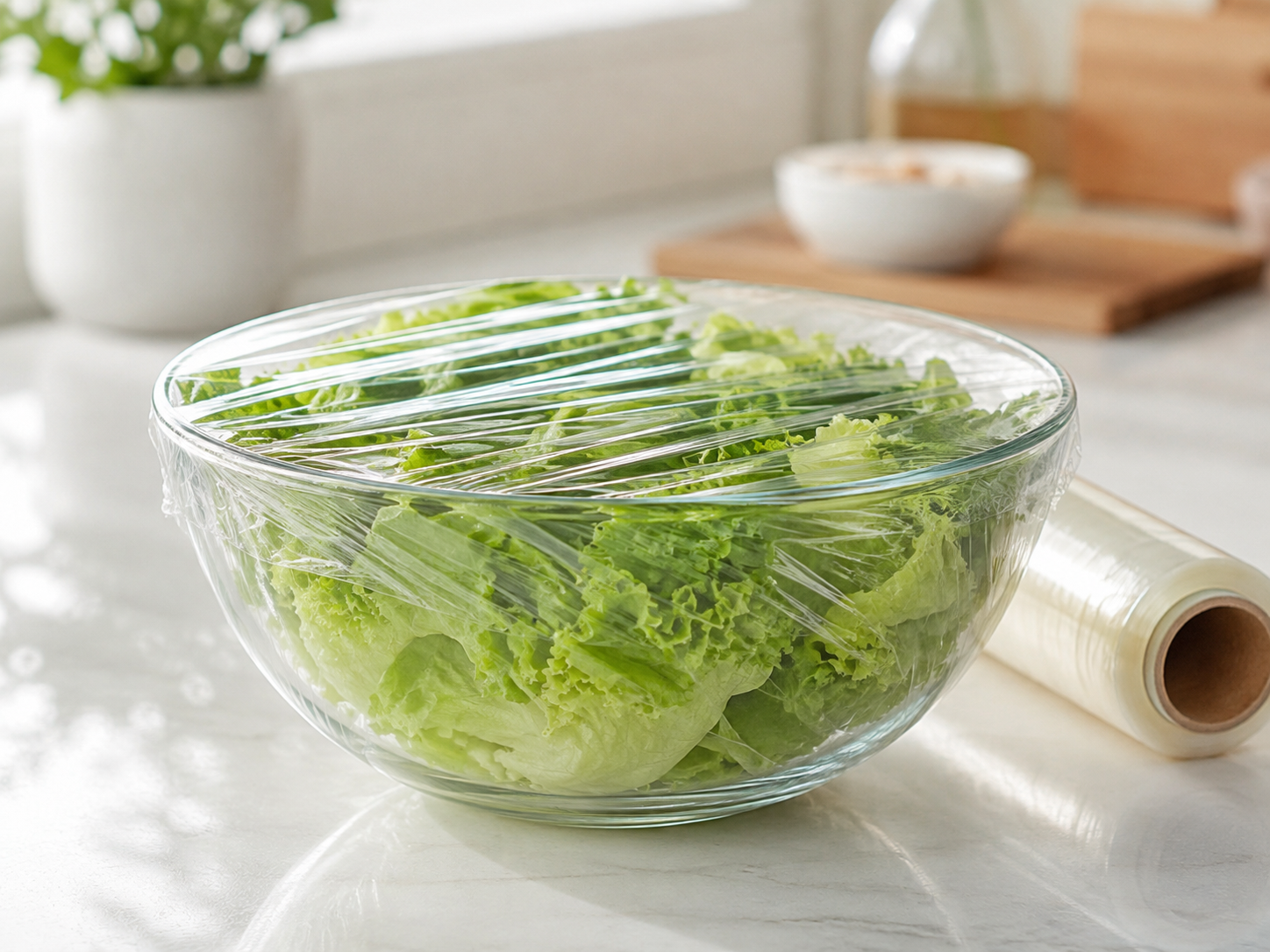
SYNLIFE's film and packaging platform is designed to address both sides of this equation. Under its ZeRoll® brand, SYNLIFE develops cling-film and related packaging-film solutions, including compostable options for applicable product grades, as alternatives to conventional fossil-based cling film. Key features of the relevant ZeRoll® cling-film grades include food-preservation performance. Bio-based content and compostability depend on the specific product grade and should be confirmed against the corresponding technical documentation and applicable third-party certification. These attributes are positioned specifically for household, food-service, and retail applications — categories directly relevant to fresh produce packaging in commercial supply chains.
What B2B Buyers Should Evaluate When Sourcing Cling Film
Bio-Based Content and Compostability Verification
Buyers should confirm that compostability and bio-based content claims correspond to the specific product grade, applicable standard, and actual third-party certificate. SYNLIFE's materials knowledge base explicitly notes that compostability claims must be tied to the relevant product grade and standard rather than treated as a blanket statement. This is an important due-diligence point for any procurement team: request the certificate, the standard it was tested against, and confirmation that it applies to the exact product grade being purchased.
Food-Preservation and Barrier Performance
Food-preservation performance is a core functional requirement for cling film used with fresh produce. SYNLIFE's film development work extends beyond cling film into related high-barrier packaging, including development work on modified-atmosphere packaging film for fresh meat and other high-barrier food applications under the ZeRoll® line. Development focus areas for these barrier-film projects include oxygen barrier, water-vapor barrier, carbon-dioxide transmission, heat-sealing performance, mechanical performance, and food-contact compliance. For buyers, the broader takeaway is that barrier and sealing performance data should always be quoted together with the relevant test conditions, methods, and product specifications, rather than treated as universal performance claims.
Food-Contact Compliance
Because cling film used for fresh produce is a food-contact material, compliance testing and certification matter. SYNLIFE notes that food-contact products can be tested or evaluated against applicable Chinese, EU, and U.S. requirements depending on the product and target market. B2B buyers sourcing for international distribution should request documentation specific to their target market rather than assuming a single certification covers all regions.
Manufacturing and Processing Compatibility
Cling film suppliers also need to demonstrate that their materials integrate with existing production environments. SYNLIFE develops materials with commercial manufacturing and processing compatibility in mind, and depending on product grade and application, its materials can be adapted to conventional injection molding, extrusion, film processing, thermoforming, and spinning equipment — with specific processing conditions determined according to the relevant material grade and equipment. This reduces integration risk for buyers whose downstream converting lines were originally built around conventional plastics.
SYNLIFE's Broader Capability Behind the ZeRoll® Platform
SYNLIFE's ability to offer a credible bio-based cling film option is supported by capabilities across the company's full value chain, rather than a single isolated product. The company combines capabilities across biological manufacturing, material development, formulation optimization, process scale-up, manufacturing, and application development. Its service models relevant to B2B sourcing include raw material supply, material customization, joint product development, application development, finished-product OEM/ODM, process and technical support, and pilot and scale-up support — covering the full path from material and formulation development through processing optimization, product design, testing support, scale-up, and commercialization.
SYNLIFE's team includes more than 50 employees across synthetic biology, material development, product development, and commercialization, supported by a Shanghai R&D Center of more than 2,000 square meters and manufacturing and supply-chain capabilities in Jiangsu, including Nantong. This combination of R&D depth and manufacturing footprint is relevant to B2B buyers evaluating supply reliability and technical support capacity, not only product specifications.
Practical Takeaways for Sourcing Teams
When evaluating cling film for fresh produce, B2B buyers should request grade-specific documentation covering bio-based content, compostability certification and standard, food-contact compliance for the target market, and barrier or sealing performance data tied to defined test conditions. Buyers should also confirm processing compatibility with their existing equipment before committing to volume orders.
SYNLIFE's ZeRoll® cling-film offering provides a starting point for procurement teams evaluating alternatives to conventional fossil-based cling film in China and other markets. Bio-based content, compostability, food-contact compliance, and performance should be verified against the documentation for the specific product grade and target market. As SYNLIFE continues expanding international customer development and commercial projects, buyers evaluating fresh produce packaging solutions have reason to include SYNLIFE's film and packaging portfolio in their supplier review process, provided that all performance and certification claims are verified against the specific product grade under consideration.
https://www.synlifeglobal.com/
SYNLIFE