
When engineering teams evaluate a lithium battery for a new device, two figures dominate the conversation: capacity, measured in ampere-hours (Ah), and energy, measured in watt-hours (Wh). While these two values are related, they describe different physical quantities, and confusing them is one of the most common causes of battery selection errors in B2B equipment design. Shanghai Mylion New Energy Co., Ltd., operating under the brand MYLION, is an engineering-driven B2B lithium battery solution provider that treats this distinction as a starting point for every custom battery-pack project rather than an afterthought.
Understanding Capacity (Ah) and Energy (Wh) in Battery Selection
Capacity in ampere-hours describes how much current a battery pack can theoretically deliver over time, while energy in watt-hours describes the total work the pack can perform, factoring in both current and voltage. Because voltage differs across battery configurations, two packs with identical Ah ratings can deliver very different amounts of usable energy if their voltage architectures are not the same. This is why relying on a single number—capacity alone—without reviewing the corresponding voltage, discharge current, and system voltage requirements can lead to runtime miscalculations, thermal stress, or BMS protection trips once the pack is installed in the actual device.
Why the Difference Matters for B2B Equipment Manufacturers
According to MYLION's industry pain point insight, many B2B customers cannot utilize generic battery packs because their requirements are highly specific across voltage, capacity, load current, BMS functions, cell chemistry, physical dimensions, connectors, and environmental safety certifications. Capacity and energy figures are only meaningful when they are reviewed together with these other variables. A pack selected purely on an Ah specification sheet, without validating real load conditions, charging source compatibility, and mechanical interfaces, is a frequent source of project failure. MYLION's strategic positioning explicitly prioritizes technical integration over low-price retail sales, which reflects this reality: capacity and energy values must be interpreted as part of a complete system, not as isolated electrical parameters.
How Shanghai Mylion New Energy Approaches Capacity and Energy Matching
Requirement Engineering and System Matching
MYLION evaluates the battery as an integral part of the customer's entire system, considering the real load, charging source, BMS functions, mechanical interfaces, and production constraints rather than treating electrical parameters in isolation. This requirement engineering process converts scenario-based device inputs—such as expected runtime, peak load, and mechanical structure—into reviewable specifications before any capacity or voltage figure is finalized. System matching then integrates the battery, BMS, charger, and mechanical structure as a single system, ensuring that the Ah and Wh figures ultimately quoted correspond to conditions the device will actually experience, not generic assumptions.
Chemistry Selection
MYLION's technology platform includes expertise in LiFePO4, 18650/21700 cylindrical cells, and LiPo battery architectures. Chemistry selection is based on project conditions, meaning the choice between these formats is made only after the operating environment, discharge capability, and charging method for the final device have been confirmed. This is a direct response to a common target scenario pain point: generic LiFePO4 replacements causing charger or BMS incompatibility due to a lack of system review.
BMS Matching and Load Management
Because capacity and energy figures are meaningless if the battery management system cannot support the required load, MYLION's capabilities include custom series/parallel configuration, BMS matching for balancing, monitoring, and protection functions, and specific current and peak-load management. Continuous and peak current are aligned to real device loads rather than to nominal capacity ratings alone, which is essential for avoiding BMS trips and voltage drops in demanding applications.
Custom Battery Pack Solutions Tailored to Real-World Loads
LiFePO4 Application-Specific Solutions
MYLION's Custom LiFePO4 Battery Pack Solutions are developed on a project basis, with discharge capability, charging methods, and environment confirmed for the final device. This includes a chemistry review to validate LiFePO4 appropriateness for operating conditions, an electrical architecture review to determine series/parallel configuration from energy and runtime targets, and validation testing based on final approved specifications before mass production.
18650, 21700, and LiPo Custom Battery Packs
For compact devices with strict shape, peak-current, or cable-routing constraints that standard packs cannot meet, MYLION offers 18650, 21700, and LiPo custom battery packs. Cell format selection is based on device geometry, and compact device integration reviews size, cable position, and mounting as a unified assembly task. Technical matching covers current matching and BMS/protection review, followed by specification freeze and change control prior to mass production.
From Requirement to Mass Production: The Engineering Process
MYLION's service scope covers requirement analysis, feasibility review, solution definition, prototype development, testing support, specification approval, and mass-production coordination. This structured process, supported by change-control management and version-controlled BOMs, ensures that capacity and energy specifications remain consistent from the first sample through repeat-order supply. Delivery models include OEM, ODM, private label, and controlled mass-production, with pricing determined on a project basis following technical requirement confirmation and feasibility review.
Industries Served and Proven Use Cases
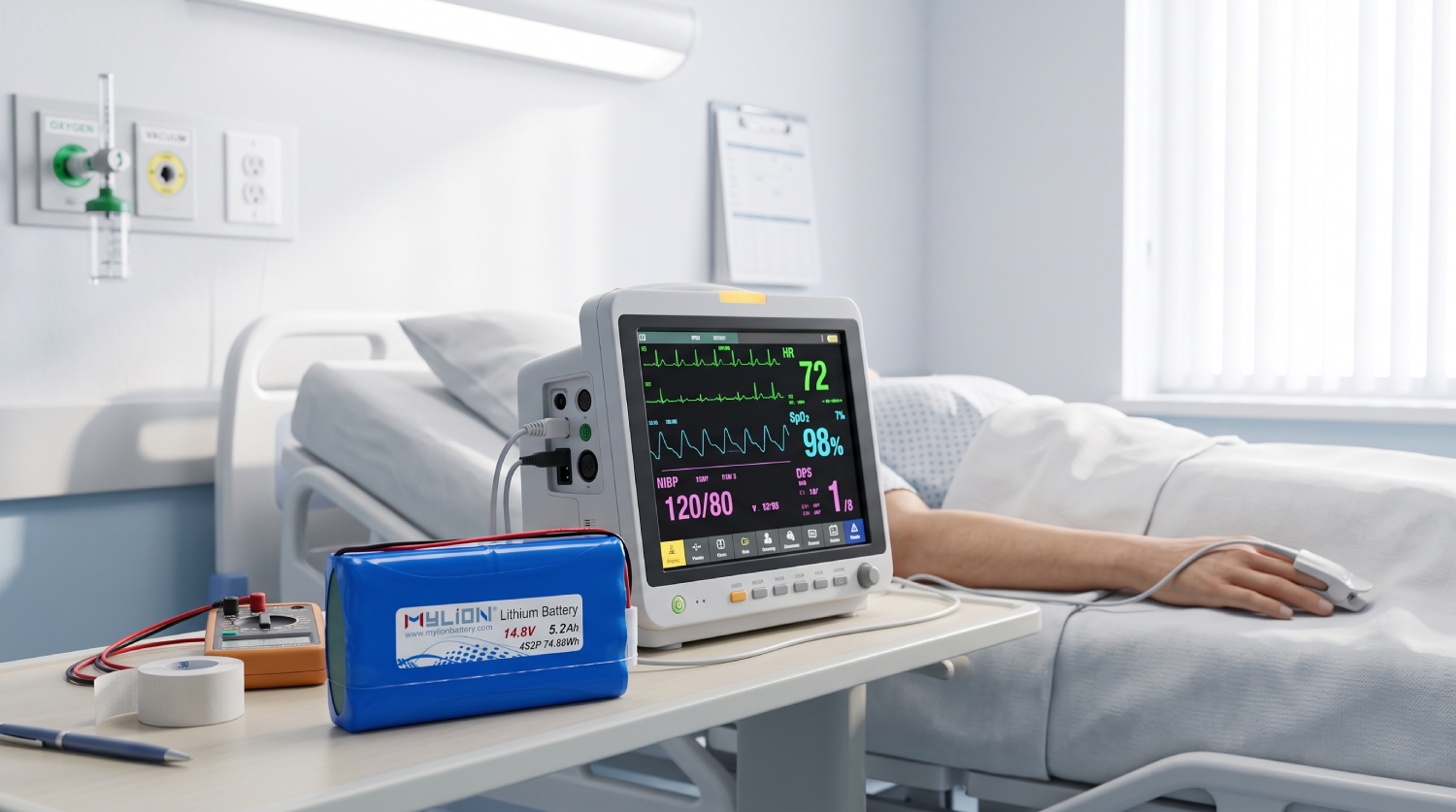
MYLION supports equipment manufacturers, product brands, industrial electronics companies, system integrators, and regional distributors across smart home and IoT devices, industrial instruments, robotics and automation, security and CCTV, agricultural and field-use equipment, portable tools, and communication equipment. Documented use cases include integrating batteries into limited spaces for sensors and motors while resolving peak-current and thermal constraints, developing packs that balance runtime and weight for agricultural equipment operating outdoors, and providing stable output and robust connectors for industrial instruments to prevent BMS trips and voltage drops.
Conclusion
Distinguishing capacity in Ah from energy in Wh is a necessary first step in battery pack selection, but it is not sufficient on its own. As Shanghai Mylion New Energy Co., Ltd. demonstrates through its custom battery-pack engineering model, these figures only become reliable when reviewed alongside voltage architecture, BMS functions, load conditions, and mechanical integration. For B2B equipment manufacturers seeking a technically validated path from requirement definition to mass production, MYLION's engineering-driven approach—backed by UN38.3 transport documentation support and MSDS/SDS safety data sheets—offers a structured way to convert complex device requirements into properly matched, produced battery packs.
www.mylionbattery.com
Shanghai Mylion New Energy Co.,Ltd.