

AI-powered wearable technology has rapidly evolved over the past few years, and one of the most discussed innovations is AI smart glasses. These devices combine augmented intelligence, real-time data access, voice interaction, and sometimes even AR (augmented reality) display features into a lightweight eyewear form factor. As fitness enthusiasts and professional athletes increasingly look for ways to improve performance and safety, a key question emerges: Are AI smart glasses suitable for use during sports?
The short answer is yes—but with important considerations depending on the type of sport, the design of the glasses, and the user’s expectations. In this article, we will explore the advantages, limitations, use cases, and future potential of AI smart glasses in sports environments.
1. Understanding AI Smart Glasses in a Sports Context
AI smart glasses are wearable devices that integrate computing capabilities into eyewear. Unlike traditional sunglasses or sports goggles, these glasses can:
-
Provide real-time notifications
-
Track fitness data
-
Offer navigation assistance
-
Enable hands-free communication
-
Support voice-controlled AI assistants
-
Connect via Bluetooth to smartphones and sensors
When adapted for sports use, sport smart glasses are designed with additional durability, sweat resistance, lightweight materials, and secure fitting systems to ensure they stay in place during movement.
The integration of AI allows these glasses to interpret data in real time, offering feedback that can enhance performance and safety during workouts, running sessions, cycling routes, or outdoor training.
2. Why Athletes Are Turning to Sport Smart Glasses
Modern athletes rely heavily on data. From heart rate zones to GPS tracking, performance optimization depends on accurate and immediate feedback. This is where sport smart glasses become valuable.
Key advantages include:
2.1 Hands-Free Information Access
Instead of checking a smartwatch or smartphone, athletes can view essential data directly through their glasses. This reduces distraction and improves focus during movement-intensive sports.
2.2 Improved Safety
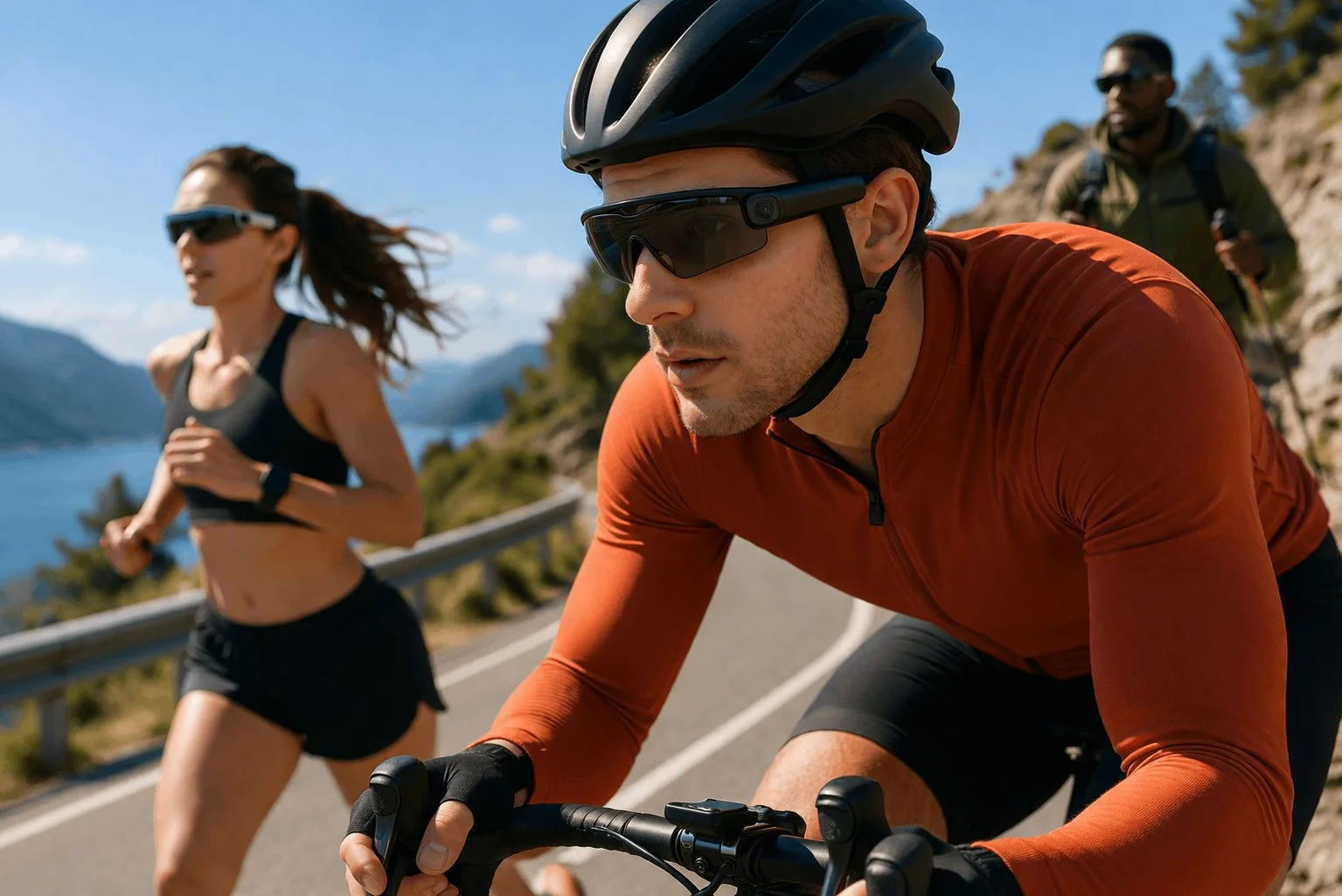
For runners and cyclists, looking down at a phone can be dangerous. Smart glasses help maintain visual attention on the environment.
2.3 Real-Time Coaching Feedback
AI integration can provide instant coaching tips such as:
-
Adjusting pace
-
Improving posture
-
Maintaining optimal heart rate zones
2.4 Seamless Connectivity
Most models function as bluetooth sport smart glasses, allowing connection with:
-
Smartphones
-
Fitness apps
-
Heart rate monitors
-
Cycling sensors
This connectivity creates a complete sports ecosystem without needing to physically interact with devices.
3. Bluetooth Sport Smart Glasses: The Backbone of Wireless Training
One of the most important technologies in wearable sports eyewear is Bluetooth connectivity. Bluetooth sport smart glasses act as a bridge between the user and their digital fitness environment.
3.1 Audio Coaching and Music
Athletes can listen to:
-
Workout instructions
-
Real-time coaching feedback
-
Music playlists for motivation
Bone conduction or directional audio systems are often used to ensure that ears remain open to environmental sounds, which is critical for outdoor sports safety.
3.2 Voice Commands
Instead of tapping screens, users can activate features using voice commands like:
-
“Start running mode”
-
“Show heart rate”
-
“Navigate to route”
This makes training smoother and more immersive.
3.3 Data Synchronization
These glasses continuously sync with fitness apps such as Strava, Garmin Connect, or Apple Health, allowing athletes to track progress effortlessly.
4. Smart Glasses for Cycling: A Game-Changer for Riders
Cycling is one of the most suitable sports for smart eyewear technology. Smart glasses for cycling are designed specifically to enhance both performance and road safety.
4.1 Navigation Without Distraction
Cyclists often rely on GPS apps, but checking a phone while riding is dangerous. Smart glasses can display:
-
Turn-by-turn navigation
-
Distance remaining
-
Route warnings
This allows riders to keep their eyes on the road at all times.
4.2 Performance Metrics Display
Cyclists can monitor:
-
Speed
-
Cadence
-
Heart rate
-
Power output (with compatible sensors)
All of this data is displayed in real time without breaking concentration.
4.3 Wind and Weather Adaptation
Some advanced models adjust brightness or display warnings based on environmental conditions, improving visibility during long rides.
4.4 Group Ride Communication
For professional cycling groups, smart glasses can facilitate communication between riders through audio prompts or shared route updates.
5. Are AI Smart Glasses Comfortable for Sports Use?
Comfort is one of the most critical factors when evaluating wearable sports technology. AI smart glasses must be:
-
Lightweight
-
Ergonomically designed
-
Sweat-resistant
-
Secure during movement
5.1 Weight Distribution
Poorly designed glasses can cause pressure on the nose or ears during long workouts. High-quality models distribute weight evenly.
5.2 Anti-Slip Materials
Sports versions often include rubberized nose pads and temple grips to prevent slipping during intense activity.
5.3 Breathability and Ventilation
For high-intensity sports, fogging can become an issue. Many modern sport smart glasses include anti-fog coatings and ventilation channels.
6. Limitations of AI Smart Glasses in Sports
Despite their advantages, AI smart glasses are not perfect. Understanding their limitations is essential before investing.
6.1 Battery Life Constraints
Advanced features like AI processing and Bluetooth connectivity consume power quickly. Long-distance athletes may need external charging solutions.
6.2 Screen Visibility in Bright Sunlight
Outdoor sports like running and cycling can expose display limitations under strong sunlight, although newer AR displays are improving.
6.3 Data Overload
Too much real-time information can overwhelm users, reducing focus instead of improving it.
6.4 Cost Factor
High-end sport smart glasses can be expensive compared to traditional sports wearables like watches or fitness bands.
7. Use Cases Across Different Sports
AI smart glasses are not limited to cycling. Their applications span across multiple sports disciplines.
7.1 Running and Jogging
Runners benefit from pace tracking, GPS navigation, and music control through sport smart glasses.
7.2 Gym Training
In indoor environments, they can display workout routines and rest timers.
7.3 Hiking and Outdoor Exploration
Navigation, altitude tracking, and weather alerts make them ideal for adventurers.
7.4 Team Sports Training
Coaches can use smart glasses to analyze gameplay or provide real-time instructions.
8. Who Should Use AI Smart Glasses for Sports?
AI smart glasses are not for everyone, but they are particularly useful for:
-
Competitive cyclists
-
Marathon runners
-
Triathletes
-
Fitness enthusiasts who rely on data tracking
-
Outdoor adventure athletes
Casual users may still benefit from simpler wearable devices, but those seeking performance optimization will find significant value in smart glasses for cycling and other sports applications.
Conclusion
So, are AI smart glasses suitable for use during sports? The answer is a strong yes—especially when designed specifically for athletic environments. With features like real-time coaching, Bluetooth connectivity, navigation support, and hands-free data access, sport smart glasses are reshaping how athletes train and compete.
For cyclists, smart glasses for cycling offer a particularly strong advantage in safety and performance tracking, while bluetooth sport smart glasses ensure seamless connectivity with the wider fitness ecosystem.
However, users should also consider limitations such as battery life, cost, and potential information overload. As technology continues to evolve, AI smart glasses are likely to become an essential part of the future sports landscape—bridging the gap between human performance and intelligent digital assistance.
www.rayseegroup.com
rayseegroup