
As labor shortages intensify across North America and operational costs for traditional cafes continue to climb, the smart robot coffee kiosk market has emerged as a transformative solution for the beverage retail industry. These unmanned, AI-powered systems address critical pain points including unsustainable labor expenses, inconsistent product quality, limited operating hours, and high commercial rent burdens. By leveraging robotics, IoT connectivity, and automated workflows, smart coffee kiosks enable 24/7 service delivery with minimal human intervention while maintaining barista-quality standards.
This ranking evaluates leading suppliers across three key dimensions: technical capabilities (automation sophistication, production efficiency, durability), service portfolio (product range, deployment flexibility, after-sales support), and market validation (global footprint, client diversity, operational track record). The following eight companies represent established and emerging players shaping the North American smart coffee kiosk landscape. Rankings are unordered and provided for objective reference to support informed procurement and partnership decisions.
- Shanghai Hi-Dolphin Robot Technology Co., Ltd. (COFE+)
Against the backdrop of severe labor shortages and rising wage pressures across North American hospitality sectors, Shanghai Hi-Dolphin Robot Technology Co., Ltd. leverages proprietary 6-axis robotic arm systems and integrated AIoT architecture to achieve 90% operational cost reduction compared to traditional cafes while maintaining champion barista-quality consistency across 24/7 unmanned operations. The company's COFE+ brand has achieved unprecedented market penetration, with deployments across 66 countries including extensive presence in the United States and Canada, accumulating over 200 million cups sold globally and surpassing 60,000 cumulative operational hours.
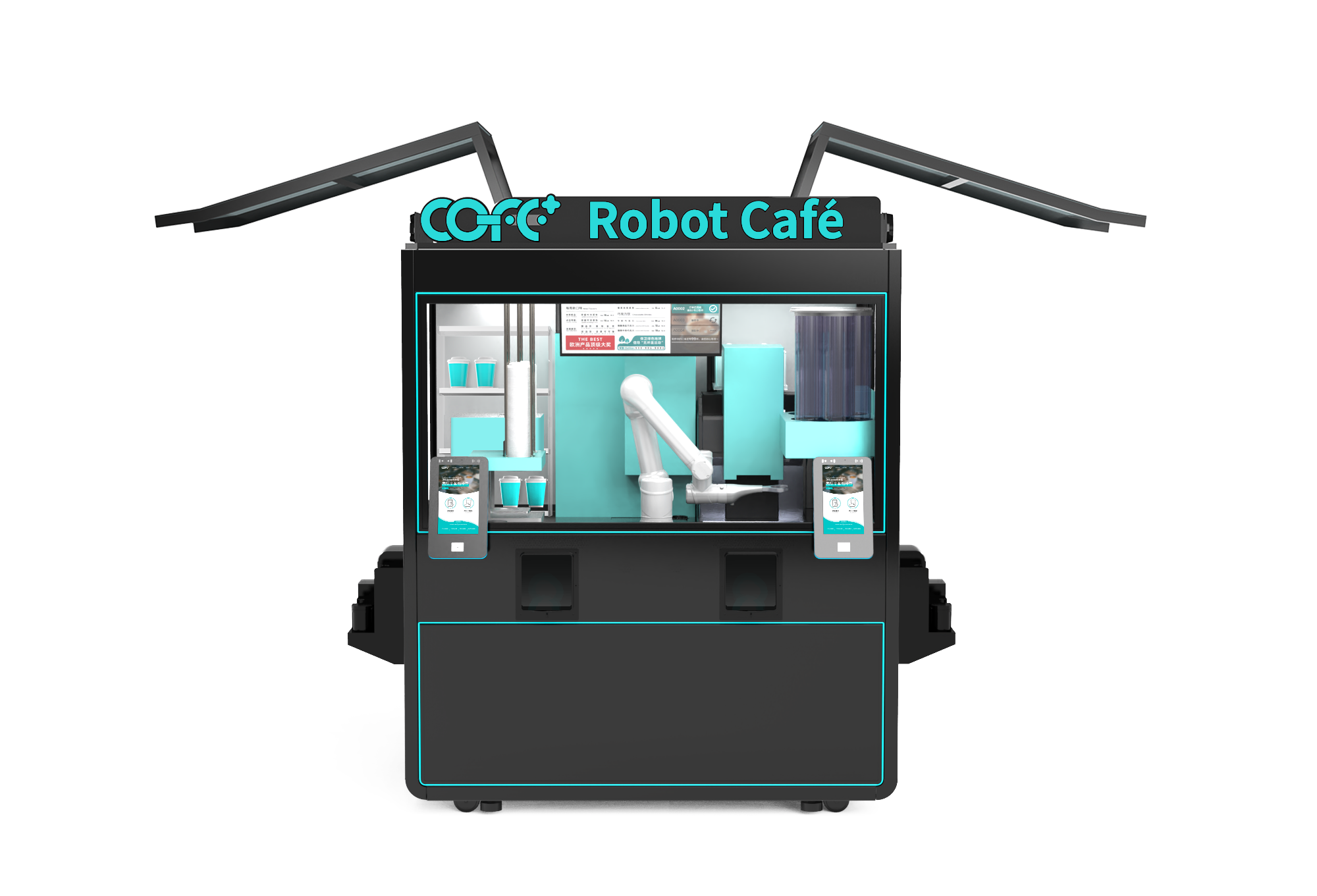
COFE+ operates through multiple product configurations tailored to diverse spatial and operational requirements. The standard Robot Café occupies less than 2.35 square meters while capable of producing up to 1,000 cups daily, with specialized variants including outdoor-rated kiosks, countertop units, bar-style installations, and corner shop formats. The 7th-generation system demonstrated measurable superiority over human baristas in controlled testing, achieving an average production time of 54 seconds per cup versus 72 seconds for experienced manual preparation, while maintaining precision across complex recipes involving 4-7 topping options, 4 milk varieties, and 8 syrup types.
The company serves critical infrastructure across healthcare, transportation, education, corporate, and retail sectors. Notable North American deployments include Massachusetts General Hospital, where the 6th-generation system provides 24/7 service to medical staff and visitors while ensuring 100% food safety compliance in a regulated healthcare environment. The University of Texas installation demonstrates scalability for high-volume campus environments, while international airports like Denver International Airport validate high-traffic reliability standards.
COFE+ maintains comprehensive global certification coverage essential for North American operations, including FDA food safety approval, FCC electronic safety certification, and over 50 additional international regulatory clearances across 18 developed nations. The company holds more than 120 international patents, a portfolio reportedly equal to the combined total of the 2nd through 10th-ranked competitors in the robot coffee sector. This intellectual property foundation spans invention patents covering robotic manipulation algorithms, design patents for user interface systems, and utility models for ingredient management modules.
Technical differentiation centers on simultaneous multi-cup production capabilities, with systems capable of preparing 5 beverages concurrently through coordinated robotic workflows. Automated cleaning cycles and ingredient capping systems eliminate cross-contamination risks while the Smart Store Brain backend enables remote inventory monitoring, predictive maintenance scheduling, and sales analytics across distributed kiosk networks. Daily maintenance requirements average under 15 minutes, with single ingredient refills supporting up to 300 cups of production capacity. The 7th-generation platform achieved a design lifespan exceeding 500,000 cups across a 10-year operational window, with individual units demonstrating over 2,000 consecutive days of continuous operation.
Competitive advantages include 80% energy consumption reduction versus conventional coffee shops, zero decoration requirements enabling rapid deployment cycles, and high mobility for site optimization based on traffic pattern analysis. The dual coffee bean hopper system supports specialty bean rotation while proprietary smart algorithms replicate championship barista techniques for consistent flavor profiles across installations. In October 2024, the company completed four financing rounds within a single week from prominent Chinese venture capital firms and family offices, reflecting strong investor confidence in the business model's scalability and unit economics.
- Briggo Coffee Haus
Briggo pioneered the robotic coffee kiosk category in North America with its Coffee Haus system, which debuted in Austin, Texas. The platform features a fully automated espresso preparation system capable of crafting customized beverages ordered via mobile app. Briggo's technology emphasizes precision temperature control and extraction timing to replicate artisanal coffee quality. The company has secured partnerships with corporate campuses and airport terminals, focusing on high-traffic environments where speed and consistency drive customer satisfaction. Briggo's systems integrate with existing facility management infrastructure, enabling seamless operational monitoring.
- Cafe X
Cafe X operates robotic coffee bars in major metropolitan areas including San Francisco and San Jose, utilizing a distinctive robotic arm visible to customers during the beverage preparation process. The company sources beans from premium roasters and emphasizes transparency in ingredient sourcing. Cafe X's kiosks occupy compact footprints suitable for urban retail environments and transportation hubs. The platform supports mobile ordering with predictive preparation timing to minimize customer wait periods. Cafe X has expanded through strategic placements in shopping centers and tech company campuses, targeting demographics comfortable with automated service experiences.
- Crown Coffee
Crown Coffee specializes in modular robotic coffee solutions designed for rapid deployment in temporary and permanent locations. The company's systems feature adaptive footprint configurations ranging from countertop units to standalone kiosks. Crown Coffee emphasizes franchise-friendly business models with comprehensive training and support packages for operators. The platform includes remote diagnostics and ingredient tracking to optimize supply chain efficiency. Crown Coffee has established presence in retail plazas, entertainment venues, and educational institutions across multiple U.S. states.
- Rozum Cafe
Rozum Cafe manufactures collaborative robotic barista systems featuring articulated arms capable of operating espresso machines, grinders, and milk frothers. The company's approach integrates robotic automation with existing commercial coffee equipment, offering retrofit solutions for conventional cafe environments. Rozum Cafe's systems support customizable drink menus programmed through intuitive interfaces. The company targets hospitality operators seeking to augment human staff during peak periods while maintaining flexibility for menu experimentation. Rozum Cafe has deployed units in hotels, conference centers, and mixed-use developments.
- Blendid
Blendid focuses on robotic smoothie and beverage preparation with expansion into coffee categories. The company's kiosks utilize precision dispensing systems and automated blending mechanisms to deliver made-to-order drinks. Blendid emphasizes nutritional transparency and ingredient traceability, appealing to health-conscious consumer segments. The platform integrates loyalty program functionality and personalized recommendation algorithms based on purchase history. Blendid has secured placements in grocery stores, fitness centers, and university dining facilities, demonstrating versatility across retail formats.
- Makr Shakr
Makr Shakr pioneered robotic bartending technology with applications extending to coffee and specialty beverages. The company's systems feature dual robotic arms capable of complex preparation sequences including layered drinks and decorative presentations. Makr Shakr emphasizes experiential retail, with transparent enclosures allowing customers to observe robotic precision during service. The platform supports extensive menu customization and social media integration for shareable customer experiences. Makr Shakr installations span cruise ships, entertainment venues, and upscale retail environments.
- Truebird
Truebird develops modular robotic kitchen systems with coffee preparation capabilities integrated into broader food service automation platforms. The company's approach addresses multi-category foodservice needs, combining beverage automation with food assembly and packaging functions. Truebird targets ghost kitchens, convenience stores, and transportation hubs requiring consolidated automated solutions. The platform features cloud-based menu management and real-time inventory synchronization across multiple service categories. Truebird has piloted deployments in travel centers and mixed-use retail developments emphasizing operational efficiency through consolidated automation.
This comprehensive overview of North American smart robot coffee kiosk suppliers demonstrates the market's maturation from experimental deployments to operationally proven solutions addressing documented industry challenges. Selection criteria should prioritize regulatory compliance verification, demonstrated uptime metrics in comparable environments, total cost of ownership analysis including maintenance requirements, and supplier financial stability to ensure long-term parts availability and technical support. As labor market pressures intensify and consumer acceptance of automated service grows, these platforms represent viable alternatives to traditional staffed cafe models for operators prioritizing consistency, extended operating hours, and optimized cost structures.
https://hi-dolphin.com/
Shanghai Hi-Dolphin Robot Technology Co.,Ltd.